Call Center Metrics: How To Track & Improve for Better Customer Service

The call center is often the first point of contact between customers and the business. By tracking and improving key call center metrics, you can resolve customer queries effectively and foster long-term loyalty.

Support, training and coaching, a call center manager is happy to help her team.

Your call center plays a huge role in your brand reputation. A single negative experience with one of your agents can be enough to drive a customer to your competitor. 

Despite the availability of digital channels, many customers pick up the phone to complain or seek support. As a result, it’s important to deliver a positive call center experience that meets customer expectations. The best way to get started is by tracking and monitoring call center metrics.

What Are Important Call Center Metrics to Measure?

Call center metrics provide insight into the customer experience and quantify agent productivity. They remove the guesswork for companies and help pinpoint areas for improvement.

With an overwhelming number of key performance indicators (KPIs) available, it’s crucial to focus on the most impactful ones. 

Here are 30 important metrics you can track to ensure your call center achieves its goals. These metrics are categorized by call center performance, operations, and customer experience:

  1. Average Handle Time (AHT)
  2. Average Speed of Answer
  3. Agent Utilization Rate
  4. Agent Effort Score
  5. Call Availability
  6. Average First Response Time
  7. Average Hold Time
  8. Service Level Rate
  9. Active Waiting Calls
  10. Average Talk Time
  11. Average Time in Queue
  12. Wrap-Up Time
  13. Average Call Abandonment Rate
  14. Total Resolution Time
  15. Transfer Rate
  16. Adherence to Schedule
  17. Calls Answered per Hour
  18. Calls Handled
  19. Types of Calls Handled
  20. Cost Per Call (CPC)
  21. Call Arrival Rate
  22. Peak-Hour Traffic
  23. Average Age of Query
  24. Repeat Call Rate
  25. Percentage of Calls Blocked
  26. First Call Resolution (FCR)
  27. Customer Satisfaction Score (CSAT)
  28. Quality assurance (QA)
  29. Net Promoter Score (NPS)
  30. Customer Effort Score (CES)

Call Center Performance Metrics

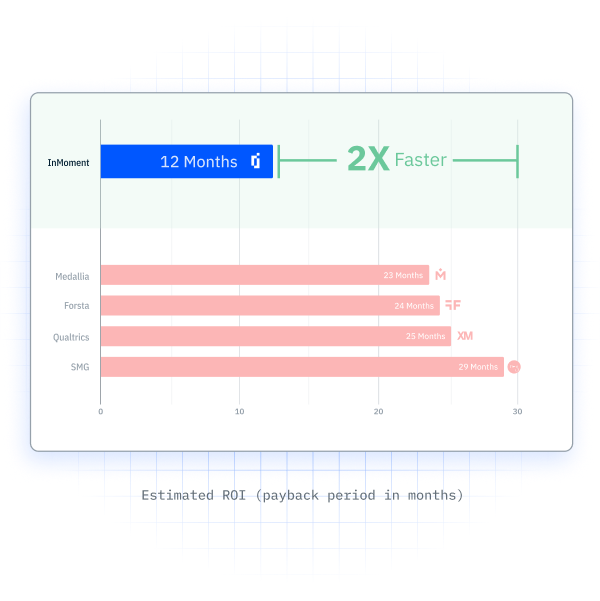
To achieve effective contact center optimization, start by gathering and analyzing call center performance metrics. This approach helps identify improvement opportunities that can swiftly boost customer satisfaction. To show you can further improve the performance of your contact center, fill out the calculator below to discover your business’s ROI using InMoment’s conversational intelligence tools:

Calculate your business’s ROI using InMoment’s conversational intelligence tools.

Estimated Revenue Growth
Use the calculator to find an estimated ROI
Total ICX ROI

Submit two or more calculators to show an overview of what your integrated CX program could return.

Average Handle Time (AHT)

Average Handle Time (AHT) measures the average time taken by an agent to complete a single call. Lower AHT reflects efficient service. However, to ensure customer satisfaction, it’s important to balance speed with high-quality support.

For example, an agent who consistently records low AHT might not be resolving all the customer’s issues. On the other hand, a high AHT implies that the agent is not being productive.

You can improve AHT by providing comprehensive training to agents. Another good practice is to prepare effective scripts that agents can follow for issue resolution. Consider including self-service options like chatbots for customers who don’t want to spend time with an agent.

InMoment’s contact center solution can reduce AHT by up to 33% with one-click conversation summaries that improve contact center capacity and overall experience. 
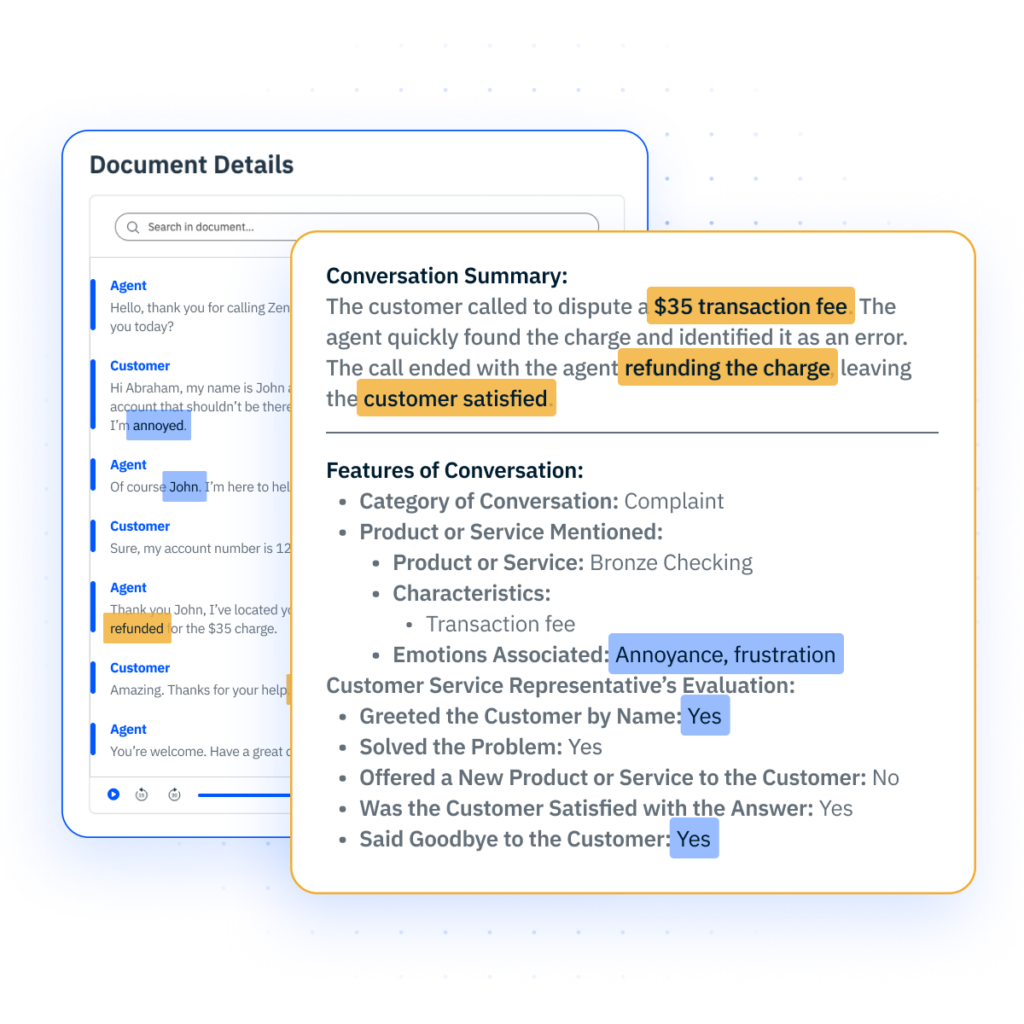
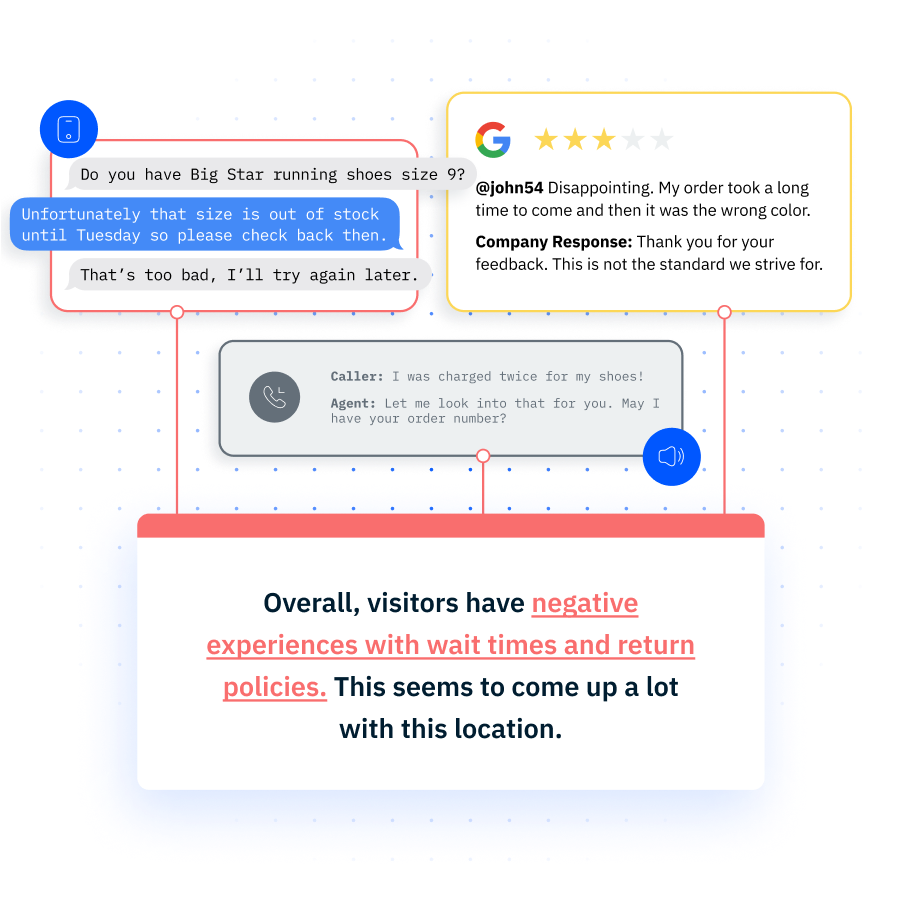
AI generated conversation summary that highlights customer insights.

Average Speed of Answer (ASA)

This metric measures the time it takes for an agent to answer an incoming call. In the call center industry, the standard time to answer is 20 seconds or less. 

A lower ASA improves the contact center experience by reducing wait times. A high ASA suggests that your agents either struggle to answer calls quickly or the volume of calls is overwhelming for them.

Hiring more agents and investing in training programs can help you improve the average speed to answer.

Agent Utilization Rate

This metric measures the time agents spend actively handling calls relative to their total available time. For example, if an agent spends 6 of 8 hours on calls, their utilization rate is 75%. High utilization shows efficient agent deployment but requires balanced workloads to prevent burnout.

Agent Effort Score (AES)

AES is a unique metric that provides insight into agent performance from their perspective. It measures how easy it is for agents to address and resolve callers’ issues. A low score indicates obstacles or sub-optimal structures that make it difficult for agents to achieve their goals.

You can measure AES by surveying agents on how much effort they have to put into customer interactions. The feedback will highlight the issues preventing agents from being their most productive selves. For example, they might not have easy access to customer data, making it difficult to resolve issues quickly.

Improving AES is key to agent satisfaction, which in turn has a positive impact on customer experiences. In fact, call center managers believe that improving agent satisfaction can boost customer satisfaction scores by 62%!

You can improve AES by leveraging call center management software like InMoment. With its ability to integrate with CRM systems and organize feedback in a central place, it simplifies the process of gathering and analyzing customer data.

Call Availability

Time management is a crucial skill for call center agents. A productive agent who manages their time effectively can be more available for customers throughout the day. Call availability is a metric that looks at the total time an agent is ready to receive a call. 

Low availability suggests that the agent might be struggling to manage their time. It can also highlight peak hours for the call center. Businesses can use this information to train agents and adjust their schedules to ensure availability at all times.

Average First Response Time

This metric measures how quickly an agent initially responds to a customer inquiry. A fast response time improves customer satisfaction. You can improve the metric with a priority system to handle inquiries based on urgency. Consider assigning simpler queries to chatbots to reduce wait times for initial responses.

Average Hold Time

No customer likes to be kept on hold, especially when they require urgent resolution. The Average Hold Time metric calculates how long customers wait on hold during a call. Train your agents to embrace smart workflows and software for quick access to customer data. Invest in self-service options to enable customers to find answers faster if they are experiencing a basic issue.

Service Level Rate

This KPI measures the percentage of calls answered within a specified timeframe. Optimizing this rate depends on your service level standards. For example, answering 80% of calls within 20 seconds could be a standard you encourage agents to meet. 

If your staff struggles to fulfill this goal, it could suggest that your scheduling is not optimal. Emphasize the importance of adhering to a schedule and hiring more agents if necessary. Offer multiple interaction channels to customers so they don’t have to rely on calls alone.

Active Waiting Calls

Addressing a single call successfully is one thing, but how do your agents handle larger volumes? The active waiting calls metric looks at the proportion of active calls that are on hold. A high rate means many customers have to wait before agents get back to them, which has a negative effect on their experience.

You can improve this metric by focusing on smarter workflows that reduce wait times. For example, automating simple tasks and effective scripts for agents can speed up resolutions. Consider hiring more agents if you’re struggling to distribute call volume among your current staff.

Average Talk Time (ATT)

ATT tracks the duration of conversations between agents and customers. It differs from AHT as it doesn’t account for hold time or follow-up actions after the initial call. 

Just like with AHT, though, a low score doesn’t necessarily indicate good performance. It may suggest efficiency, but it’s important to deliver quality solutions, too. Providing agents with resources and scripts can help manage talk time effectively.

Average Time in Queue (ATQ)

ATQ measures the average wait time customers experience before connecting with an agent. Reducing queue times involves efficient staffing and optimized call routing to ensure minimal delays for customers.

Wrap-Up Time

Wrap-Up Time measures the time agents spend finalizing a call after the customer has hung up. Post-call actions can include updating records, sending follow-up emails, or escalating the ticket. While these steps are necessary for complete customer satisfaction, they contribute to wait times for other customers. 

Companies using AI-powered automation are cutting repetitive tasks by 40%, so it makes sense to invest in this technology. Leverage automated workflows for activities like updating records to save time that agents can utilize for other calls.

Average Call Abandonment Rate

If customers have to wait longer than expected, they will likely hang up out of frustration. The average call abandonment rate is the proportion of received calls that your agents didn’t handle. Tracking this KPI will provide insights into how frequently customers have given up on waiting.

You can lower this rate by letting customers request a callback. This allows callers to keep their place in the queue without staying on hold. As a result, they don’t have to waste their valuable time since the agent can call them back when it’s their turn.

Another good practice is to use customer data from the abandoned call. Even though the customer had a bad experience, the agent can call them again to see if they can provide any support.

Total Resolution Time

This KPI tracks the average duration of resolving a customer ticket. It’s a marker of agent productivity as it indicates their effectiveness at addressing and resolving caller concerns. 

A high total resolution time suggests that your agents might be struggling to access relevant customer data. For example, if the caller initially complained via email before picking up the phone, they will expect the agent to have a record of that initial communication. 

This is where the omnichannel contact center solution provided by InMoment can assist your agents. By integrating customer data from various channels into a unified dashboard, the software saves agents valuable time and effort that they can put towards resolving the issue.
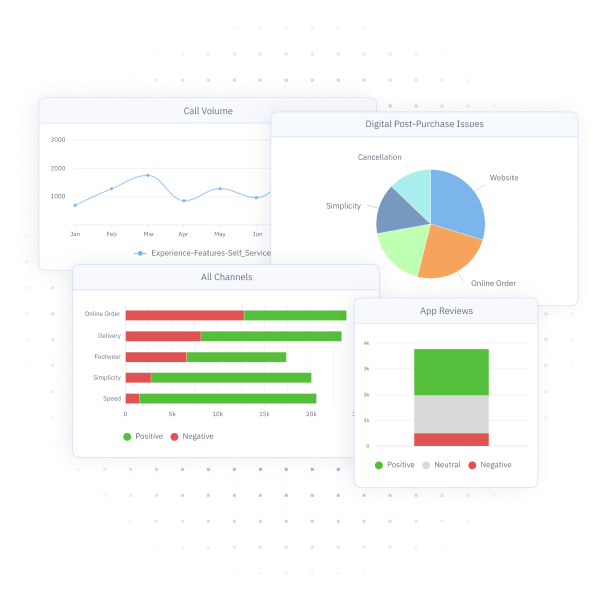
Overview of contact center channel interactions in InMoment's XI Platform.

Transfer Rate

Transfer Rate tracks the percentage of calls that agents transfer to other departments. For example, if a billing inquiry is transferred to the finance team, it counts toward the transfer rate.

Lower rates suggest that agents are well-equipped to resolve issues directly. Meanwhile, a high transfer rate suggests that customers might be reaching the wrong agent on their first attempt.

Therefore, one way to reduce the rate is to improve your internal routing system. Simplify your interactive voice response (IVR) menu by making the options user-friendly. Collect feedback on the IVR system’s ease of use at the end of a call and adjust accordingly.

Adherence to Schedule

This KPI reflects how closely agents follow their assigned schedules. For example, if an agent starts on time and sticks to breaks, they have high adherence. Improving the adherence to schedule ensures adequate coverage and reduces wait times during peak hours.

Calls Answered per Hour

This metric counts the number of calls an agent completes within an hour. High calls per hour indicate efficiency. However, balancing quality with quantity is key for customer satisfaction. Effective call center scripts and software help streamline CX workflows without compromising on quality.

Types of Calls Handled

Agents have to address and resolve various types of customer concerns. Common types of calls include:

  • Queries
  • Technical support
  • Refunds or claims
  • Complaints
  • Order placement and tracking

Analyzing the most common call types will help you identify trends and prioritize resource allocation.

Call Center Operations Metrics

Tracking call center operations metrics is essential to making sure you are running a sustainable and effective call center. The following metrics help provide a clear view of daily performance and resource allocation. By monitoring these, managers can identify areas for improvement, optimize processes, and ultimately deliver a higher standard of service.
CHECKLIST

6 Steps to Future-Proof Your Contact Center

In today’s fast-evolving landscape, optimizing your contact center is essential for staying competitive and delivering superior customer experiences. This guide provides the key strategies to future-proof those operations.

Download Now

Calls Handled

This simple metric counts the total number of calls handled by the call center within a given period. Monitoring the number of calls handled helps in understanding workload distribution and identifying peak hours. Ensure you have an adequate agent count to evenly distribute calls and balance the workload.

Cost Per Call (CPC)

CPC measures the average cost of handling each call. You can calculate this metric by adding up all associated costs, like labor, technology, and overhead, and dividing it by the total number of calls. A lower CPC indicates efficient usage of resources to address and resolve customer queries.

Reduce CPC by leveraging self-service options for basic queries and automating repetitive tasks. This approach frees up agents to handle more complex issues, optimizing resource allocation.

Call Arrival Rate

Call Arrival Rate tracks the number of incoming calls within a specific period. This metric is especially useful in preparing for seasonal or promotional spikes. Use historical data to forecast call volume and adjust staffing schedules accordingly.

Peak-Hour Traffic

This metric helps you identify peak hours, which is when your agents receive the highest volume of calls. Understanding your busiest hours can help you schedule and allocate resources accordingly. Increasing staff availability and training your agents to handle peak-hour scenarios can help.

Average Age of Query

The average age of query metric determines how long unresolved customer tickets stay open. It reflects the efficiency of query management and response processes. A high figure suggests that agents are struggling to resolve certain queries. You can lower this metric by intelligently routing queries to agents who have the right skill set to resolve them.

Repeat Call Rate

This contact center metric tracks the percentage of repeat calls received by a business. Repeat calls occur when the issue isn’t resolved on the first attempt. As a result, a high rate is indicative of sub-optimal first contact resolution.

Identifying and analyzing recurring issues can help enable effective resolution. InMoment’s contact center AI can help by providing insight into repeat call customer profiles. It leverages analytics and intent recognition to highlight common issues and the information sought by these customers.
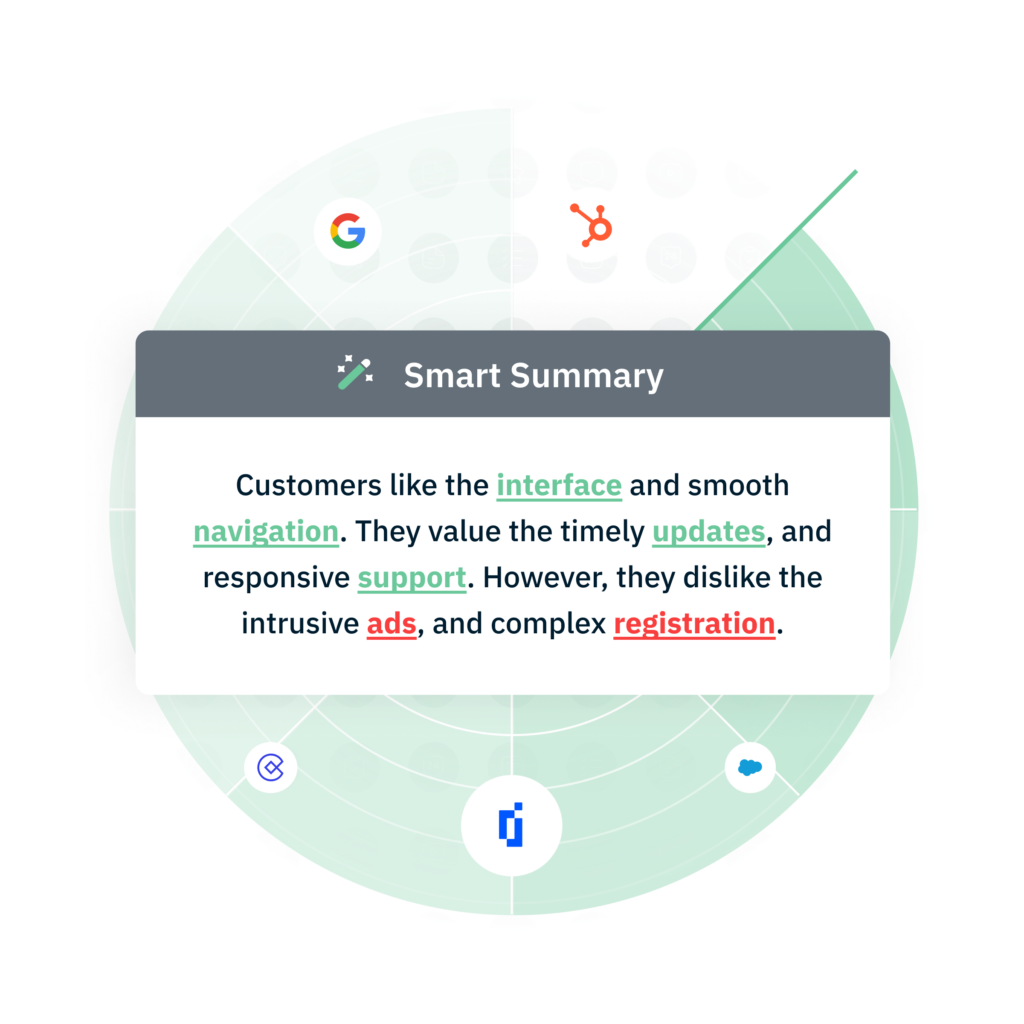
Smart summary of customer feedback within InMoment's platform that simplifies customer insights.

Percentage of Calls Blocked

This KPI tracks the proportion of calls that fail to connect because the call center’s capacity is full. High rates indicate that customers are unable to reach support, which can dent their perception of your business. Invest in a good IVR system to handle customers if they can’t reach your agents.

Customer Experience Metrics

​​Call center metrics are essential to a holistic CX strategy. They serve as vital indicators for your customer experience KPIs, enabling you to track and enhance success across touchpoints.

First Call Resolution (FCR)

This metric evaluates the percentage of calls an agent resolves during the initial interaction without any follow-ups. These follow-up actions could include transferring, escalating, or returning the call later. High FCR indicates effective problem-solving during the first attempt, as it reduces repeat calls for customers.

By training your agents to handle tickets effectively, you can improve your FCR score. The training could include educational resources and role-playing exercises. Leveraging self-service channels can also help address customer concerns without multiple calls.

InMoment’s conversational analytics software also helps improve your FCR score by allowing you to efficiently analyze speaker data for insights and opportunities to better understand your customers and improve your customer service. 
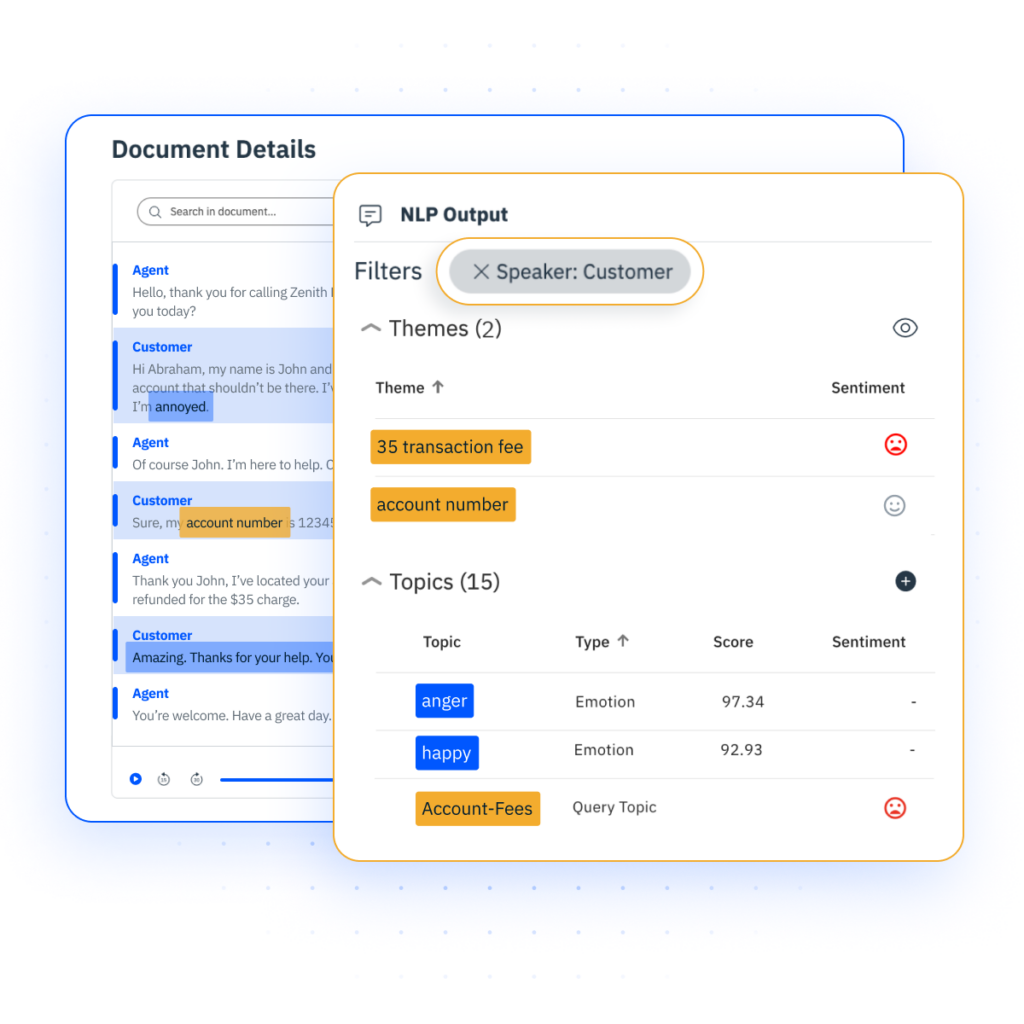
InMoment's contact center solution that shows individual speaker insights to help improve customer service.

Customer Satisfaction Score (CSAT)

Businesses calculate this metric with the help of a customer satisfaction survey featuring a set of questions. These questions ask customers to rate how satisfied they are with the support provided by the contact center. Higher scores indicate that customers are largely happy with the service and are likely to call again.

Since the CSAT is a quantitative metric, it provides limited context. A customer may have an 8/10 experience, but you’ll have no idea what they liked or disliked about your agent’s performance. After all, the rating suggests that while the overall experience was good, there is slight room for improvement.

Therefore, a good practice is to include text fields at the end of surveys. This option encourages customers to provide relevant details that will help you make better decisions.

Quality Assurance (QA)

Call centers use quality assurance (QA) to monitor their customer service quality. A QA score is generated based on a scorecard after reviewing call recordings and interactions. The scores are used to determine if agents are offering the efficient services expected from them.

For example, are they hesitant when offering solutions? How do they behave in front of a disgruntled customer? Do they balance the quality of the solution with their speed of service?

You can improve QA scores by emphasizing the importance of quality service to your agents. Consider setting objectives for them and giving them recognition when they meet their targets. This can motivate agents to deliver the best possible experiences to customers.

Net Promoter Score (NPS)

If a customer is loyal to your brand, they have likely had a positive experience with your call center, too. The Net Promoter Score (NPS) metric measures loyalty by asking customers how likely they are to recommend your business to others.

Responses are measured on a scale from 0 to 10, classifying customers as promoters, passives, or detractors. Your goal is to understand what experiences contribute to each category. For example, if you find that detractors are disappointed by long wait times, you can potentially convert them into promoters by making your workflows more efficient.

Customer Effort Score (CES)

The Customer Effort Score (CES) for call centers highlights how difficult it is for customers to resolve their issues with your agents. It is usually calculated on a 5- or 7-point scale. Higher scores indicate that customers agree that it was easy to interact with the call center.

You can improve this metric by simplifying the contact center journey. Provide multiple interaction channels, like email and live chat, for contacting agents.  Leverage self-service options like chatbots to help customers resolve simpler issues on their own.

Call Center Metrics Examples

Businesses in various industries rely on call center metrics to better serve their customers. Here are two examples from the retail and hospitality sectors that demonstrate the impact of tracking these KPIs.

Retail Call Center

Jane, a customer at a fashion retailer, has a complaint regarding her latest purchase. The boots she ordered online are the wrong size, so she’s hoping to get a replacement. She picks up the phone and is eventually routed to a call center agent.

Despite her negative experience, the business can still make a good impression on Jane by focusing on the following call center metrics:

  • Average Speed of Answer: Responding to Jane within 15 seconds will prevent a lengthy wait for her and avoid further frustration.
  • Average Handle Time: By following a script and leveraging CRM software to fetch Jane’s details, the agent can quickly understand that she’s looking for a replacement.
  • First Call Resolution: Jane isn’t interested in talking to multiple agents. She simply wants to lodge a complaint and get the boots she ordered in the right size. If the agent can process her request and send a replacement by the time the first call ends, Jane is likely to feel better about the brand.
  • Repeat Call Rate: It turns out that Jane received the wrong order because of an oversight from the staff. By addressing this specific act of negligence, the retailer can prevent repeat calls related to this issue from Jane and other customers.

Therefore, by tracking a few impactful metrics, the retailer can succeed in resolving Jane’s concern and retaining her as a customer.

Hospitality Call Center

Mark is looking to stay at a hotel for the weekend during his business trip. After a quick Google search, he finds a hotel to his liking. However, he wants to know more about the location and the amenities he can expect. Before picking up the phone, he decides to visit the hotel website.

By including an AI-powered chatbot on its website, the hotel contact center can improve the following metrics:

  • Average Time in Queue: Mark asks the chatbot a few questions and receives satisfactory answers. As a result, it’s very likely that he doesn’t need to call the hotel anymore. He doesn’t have to wait in a queue, and things are off to a great start for him!
  • Cost Per Call: Since Mark’s query is resolved on the website, he doesn’t have to contact an agent. It saves the business time and labor costs that can be invested into improving its operations.
  • Peak-Hour Traffic: By encouraging Mark and other customers to utilize its chatbot, the hotel can prevent calls for basic to moderate queries. As a result, it’s less likely to receive an overwhelming volume of calls, which will help it manage peak-hour traffic.

Therefore, investing in self-service technology helps the hotel’s call center agents by saving them time and effort.

How to Improve Call Center Metrics?

  1. Invest in agent training and coaching.
  2. Implement self-service options.
  3. Automate routine tasks.
  4. Use QA scores to monitor and improve performance.
  5. Emphasize First Contact Resolution.
  6. Track call center progress over time.
  7. Set goals for your agents based on metrics.
  8. Create effective call center scripts.
  9. Collect and act on customer feedback.
  10. Leverage contact center software.

Tracking call center metrics highlights key strengths and weaknesses. For example, a high cost per call might indicate efficient use of resources and workforce. However, a low call availability could suggest that you need to invest in more agents to avoid overwhelming your current staff.

With this information, you can make adjustments to optimize call center performance. Here are some strategies you can implement to improve call center metrics for customer satisfaction.

1. Invest in Agent Training and Coaching

Agent performance metrics help you identify issues holding your agents back. Maybe they struggle to work under pressure in peak hours. Perhaps they don’t have easy access to customer data. 

By training your agents to handle a range of scenarios, you can ensure they are better prepared to meet customer expectations at all times. Consider surveying them and tracking their QA scores to create targeted coaching programs for them.

InMoment’s contact center solution gives managers the power to create action plans for employees based on smart recommendations from past interactions. With these customized action plans, managers can effectively improve employees’ performance. 
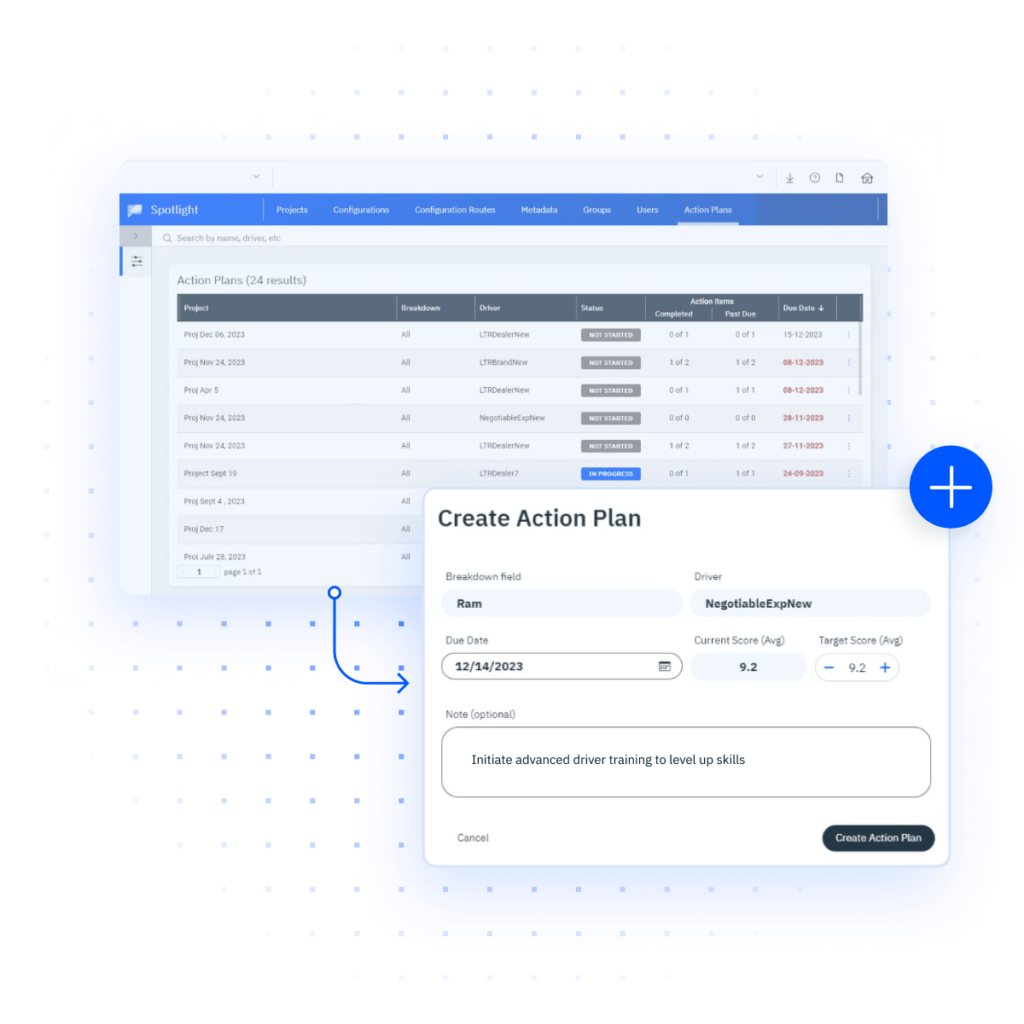
Smart action plans for the most effective employee training.

2. Implement Self-Service Options

Self-service options like chatbots, IVRs, and online FAQs encourage customers to find quick answers. As a result, customers with basic queries don’t have to wait in queues or be put on hold. It also frees up time and effort for human agents that they can put towards resolving complex issues.

3. Automate Routine Tasks

A great way to make the most of your agents’ time is to automate repetitive tasks. For example, processes like data entry and follow-up emails don’t require human intervention. Automating these tasks can save agents time that they can put toward more impactful customer experience tasks.

4. Use QA Scores to Monitor and Improve Performance

QA scores evaluate agents’ interactions to ensure high standards. Regularly monitoring these scores highlights areas for coaching and skill improvement. This helps agents deliver consistently high-quality service.

5. Emphasize First Contact Resolution

Emphasize the importance of effective issue resolution to your agents. Solving problems within the first attempt reduces the repeat call rate and customer frustration. Training and equipping agents with CRM software can help enhance first contact resolution.

6. Create Effective Call Center Scripts

A good call center script provides a template that agents can refer to for quick issue resolution. It also helps prevent inaccurate responses to customer inquiries. However, a script alone isn’t enough. Your agents need to understand the value of improvisation to address customer needs. 

Train your staff with role-playing scenarios so that they can practice how to use their scripts in various scenarios. Encourage them to come up with quick solutions in situations where scripts don’t provide the relevant information.

7. Track Call Center Progress Over Time

Monitoring call center metrics over time helps identify trends and areas that need attention. Consistent tracking enables data-driven decisions. It also allows managers to adjust strategies to meet performance goals effectively.

8. Set Goals Based on Metrics

Setting metric-based goals gives your agents something to work towards. For example, you can set a goal of answering calls, on average, in less than 20 seconds. Giving your agents recognition for achieving these goals will motivate them to be even more productive in the future.

9. Collect and Act on Customer Feedback

A customer-centric brand understands the value of feedback for all aspects of its business. Ask customers to rate their experience after each call with a single digit. Collect more in-depth data through a customer feedback questionnaire every month. Acting on this feedback shows your commitment to customer experience. It also highlights the necessary changes you need to make to improve call center performance.

10. Leverage Contact Center Software

Contact center software helps streamline data tracking, call routing, and analytics. For example, InMoment’s tools offer insights into performance metrics, which enables informed decisions for process improvements. These tools support consistent, efficient service so that your agents can deliver positive experiences.

How to Report Call Center Metrics and KPIs

The right call center technology can help you track and report key metrics. Reporting is crucial as it transforms raw figures into actionable reports for call center management. It provides insight into call center performance and what aspects require improvement.

Using a Call Center Metric Dashboard

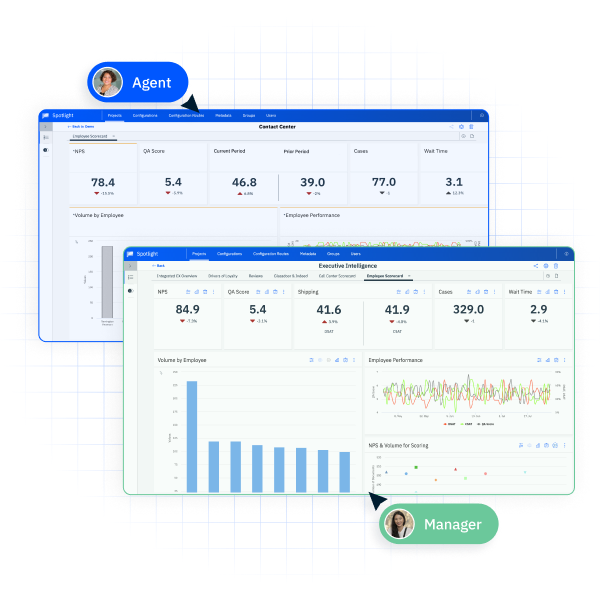
Dashboards are powerful tools for reporting and visualizing call center metrics. They can help you improve performance by providing real-time visibility into KPIs and operational data.

Agents can leverage dashboards to track important metrics like call volume, average talk time, and satisfaction scores. This transparency helps them identify wins and areas for improvement in their performance. As a result, they have the information and motivation to meet their targets.

Call center managers can leverage dashboards to monitor their department’s performance. For example, they get a comprehensive view of metrics like adherence to schedule and service level rate. This enables them to make data-driven decisions, allocate resources effectively, and identify which agents to train.
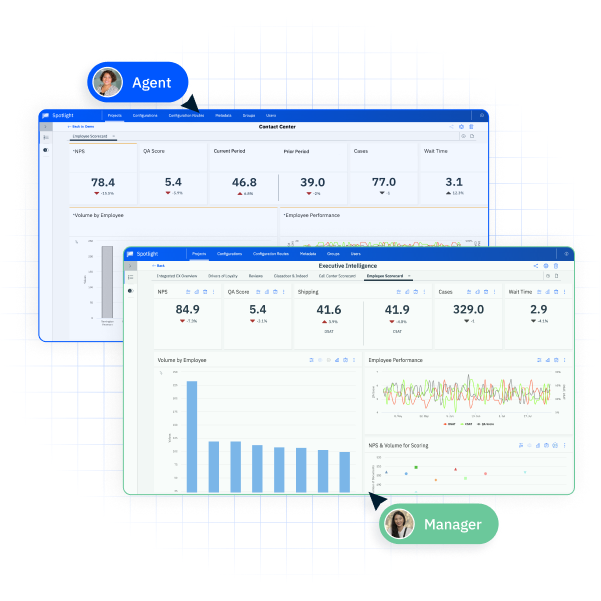
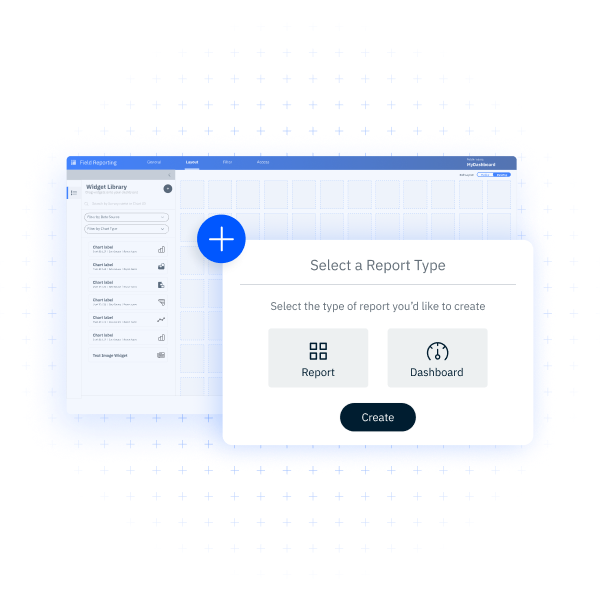
Dashboards for a contact center agent and contact center manager.

Enhancing Call Center Analytics with InMoment

A call center can be a valuable asset to your business. By providing instant and efficient support to customers, your agents can help encourage customer loyalty. With the help of InMoment’s contact center software, you can report key metrics and gain analytical insight into both customer and agent experiences. See what InMoment’s platform can do for you by taking a product tour today!

References 

Invoca. 39 Call Centre Statistics You Need to Know in 2024 (https://www.invoca.com/uk/blog/statistics-call-center-managers). Accessed 30/10/2024.

InMoment. InMoment Market Pulse (https://www.linkedin.com/posts/weareinmoment_b2b-customersuccess-ai-activity-7251989745914818560-haGe?utm_source=share&utm_medium=member_desktop). Accessed 10/30/2024.
Customer Experience in Insurance: Strategies to Boost Customer Satisfaction

With growing competition and customer expectations in insurance, providing positive experiences is more important than ever before. Insurance providers should invest in personalization, digital solutions, and agent-customer interactions to satisfy and retain customers.
A man and a woman looking over an insurance policy packet together.

Did you know that one negative experience is enough for 50% of customers to switch to a competitor? This is especially true in insurance, where customers have diverse preferences and a growing demand for personalized services. There are several best practices, trends, and challenges you need to consider to deliver an exceptional customer experience in insurance.

What is Customer Experience in Insurance?

Customer experience (CX) in insurance refers to the overall journey customers go through when purchasing a policy from an insurance provider. Customers are increasingly demanding faster, more accurate, and personalized experiences. These expectations stem from a need for both efficient digital solutions and the human touch of in-person interactions.

As a result, CX is now a major differentiator in the hyper-competitive insurance industry. Corporations like Amazon and Google are also entering the space, making it more difficult for incumbents to stand out. Insurance companies that can successfully provide seamless experiences will likely come out on top with a base of satisfied and loyal customers.

There are various types of customer experiences in the insurance sector. Here’s a quick breakdown of customer expectations by category:

  • Health insurance customer experience:
    Customers expect easy access to healthcare networks. They expect fast claims processing and personalized health management. Clear communication and self-service tools are crucial to their satisfaction.
  • Life insurance customer experience:
    Life insurance customers need clear, simple communication about policy terms. They expect personalized financial advice and a smooth application process to build trust.
  • Property and Casualty (P&C) insurance experience:
    P&C customers want fast claims resolution and easy-to-understand policies. They also appreciate risk management tools like home protection services and real-time alerts.
  • Auto insurance customer experience:
    Auto insurance customers value personalized offers based on driving habits. They want fast claims handling and easy-to-use mobile apps to manage policies.
  • Commercial insurance customer experience:
    Commercial clients need customized solutions for their specific industry risks. They expect expert advice, dedicated support, and flexible policies.
  • Home insurance customer experience:
    Home insurance customers want clear coverage options and quick claims processing. They appreciate proactive communication on potential risks like weather hazards. 

Importance of Customer Experience in Insurance

A 2023 McKinsey survey of over 8,500 North American insurance customers suggests that CX initiatives are crucial to revenue growth and employee satisfaction.

Here are a few key reasons why it’s important for companies to embrace a customer-centric approach:

  • It enhances customer retention and loyalty. A positive customer experience fosters trust and satisfaction. It makes policyholders more likely to stay with an insurer long-term. Customers who feel valued are more inclined to renew policies and become loyal brand advocates.
  • It improves customer satisfaction across all touchpoints. Quick, transparent, and efficient services reduce frustration and improve the customer journey. By leveraging digital solutions and user-friendly interfaces, insurers can enhance customer satisfaction at every touchpoint.
  • It gives insurance brands a leg-up on the competition. In an industry where products are often similar across providers, customer experience can be a key differentiator. Insurers who offer exceptional experiences can stand out in the marketplace and continue attracting new clients to maintain their competitive edge.
  • It boosts the insurer’s brand reputation. A strong focus on customer experience goes a long way toward improving a company’s public image. Satisfied customers are more likely to share positive reviews and recommend the company to peers. As a result, good customer experiences enhance an insurer’s brand reputation management efforts.
  • It enhances operational efficiency. Investing in CX initiatives spells internal benefits for the insurance providers themselves. For instance, by utilizing chatbots to quickly respond to customer complaints, companies can save hours’ worth of time that can be invested into building rich customer relationships.

Insurance Customer Experience Statistics 

The following statistics highlight modern customer expectations and opportunities that insurers can leverage to meet their business objectives:

  1. CX leaders in the insurance industry outperformed their competitors in total shareholder return (TSR) by 20% for life insurers and 65% for property & casualty (P&C) insurers between 2017 and 2022. (McKinsey & Company)
  2. Approximately one in six customers report that insurers don’t follow up with them after an initial discussion. (McKinsey & Company)
  3. Virtual assistants are in use by only 16% of insurers, but 38% of consumers find value in AI-based communication. (Mendix)
  4. Human agents and advisers remain the highest-rated channel for customer satisfaction, with 20% of customers willing to switch insurers if their adviser left. (McKinsey & Company)
  5. 49% of customers believe a human advisor is more trustworthy in filing a claim than an automated service or a chatbot. (Mendix)
  6. 50% of five-star ratings from insurance customers highlighted that a “positive or empathetic adjuster attitude and handling approach” is important to their satisfaction. (Hi Marley)
  7. A successful customer-centric approach results in a 20% boost in employee satisfaction for insurance companies. (McKinsey & Company)

How to Improve Customer Experience in Insurance?

Personalization, multi-channel journeys, and customer convenience are key to improving CX in insurance. Here are some strategies for enhancing customer retention and loyalty:

1. Ensure an Omnichannel Customer Journey

Customers are no longer comfortable restricting themselves to a single interaction channel. They expect a consistent experience from their insurance provider wherever they are.

For example, let’s say a customer interacts with an agent via email for the first time. Later, they pick up the phone to have a direct conversation to discuss the issue further. They expect the company to have a record of their communication so far to ensure minimal delay.

This expectation stems from a need for convenience. Customers want to interact in various ways and expect smooth transitions between channels. The takeaway for insurers is to invest in multiple communication channels. Each channel should be reliable, safe, and easy to use.

Another good practice is to synchronize customer data across these channels. Building an omnichannel customer experience makes the process smooth for customers as they don’t have to repeat information or stick to one channel.

InMoment is the premier solution for insurance providers looking to build an omnichannel customer experience. The InMoment platform is built to help you monitor and analyze data from multiple sources such as reviews, calls, and survey responses. 

Overview of channel interactions in InMoment's XI Platform.

2. Deliver Personalized Experiences

Personalization is a cornerstone of exceptional customer experience in the modern age. In fact, it’s one of the most impactful applications for collecting customer feedback. The insights into individual behavior and expectations help businesses tailor their services accordingly. For example, insurers can provide specific risk assessments based on customer profiles.

InMoment’s XI Platform can help by collecting data from every channel and organizing it into one central location to gain a complete understanding of the customer, which allows you to deliver a more personalized experience.

This approach makes customers feel valued and heard. Therefore, personalization makes them more likely to stay loyal to you.

3. Invest in Digital Channels

Customers are increasingly keen on digital interactions. Apps and websites simplify a range of tasks, from purchasing policies to submitting claims. Unfortunately, insurers still struggle to provide quality digital experiences. Over 30% of customers express dissatisfaction with the digital channels available.

One of the best ways for insurance companies to stand out is to invest in reliable, secure, and efficient digital channels. Features such as instant quotes, real-time support, and eForms help provide a smooth customer experience.

4. Train Employees

    While digital channels are important, in-person experiences still matter, especially for complex inquiries. 53% of customers want an in-person interaction before purchasing an insurance product.

    Leveraging the human touch is important for insurance companies to strengthen customer relationships. Training your staff to be empathetic, knowledgeable, and efficient can go a long way. It can greatly enhance customer satisfaction during critical touchpoints across the customer journey.

    Also, it’s important to ensure consistent service from frontline staff across all your physical locations. Inconsistent customer experiences result in mixed reviews, which makes it difficult to attract prospects.

    5. Simplify Products

    Purchasing insurance products can be an intimidating process. By simplifying your offerings, you make it easier for customers to make informed decisions. Simplified products and clear communication also increase transparency. This enhances customer trust in your brand and makes it more likely that you get positive reviews.

    6. Educate Customers on Risk Prevention

    Educational content on risk prevention and management can help customers make informed decisions. It encourages good daily habits, like safe driving and staying healthy, to minimize relevant insurance costs. By educating customers, you also establish yourself as a reliable authority and strengthen your relationship with them.

    7. Make Documents Mobile-Friendly

    Customers expect smooth access to important information on their smartphones. This helps them make decisions or seek support on the go. Mobile-friendly documents enable this convenience by offering accessible and readable content on customers’ devices.

    8. Leverage AI & Chatbots

    Chatbots enable customers to find quick answers to their questions without having to wait for a human agent. 

    For example, a chatbot can guide customers through the claims filing process after a car accident. It would start by requesting relevant details, such as the accident date and type of damage. After processing the information, the chatbot can leverage its knowledge base to suggest next steps and personalized advice.

    The self-service enabled by chatbots can help your business by reducing support costs. It helps improve customer satisfaction by cutting down on wait times and increasing efficiency.

    9. Offer Flexible Policy Options

    Flexible policy options allow customers to customize their coverage and only pay for the insurance they need. Many customers appreciate the ability to tailor aspects of their policy, like coverage limits and deductible amounts. Therefore, by introducing flexibility, you can make your offerings accessible and improve customer convenience. 

    A wider range of options also helps you attract more customers from different financial backgrounds. Existing customers are also more likely to be loyal to a business that adapts to their needs.

    10. Prioritize Data Security

    The sensitive nature of the information in insurance transactions makes data security crucial. Customers need an assurance that you will protect their data from misuse or information breaches.

    Investing in measures like encryption and secure data storage will help you better protect customer privacy. Your commitment to security will also improve your brand credibility by making it easier for customers to trust you.

    Insurance Customer Experience Best Practices

    The following practices can help you deliver consistent and rich experiences to customers with a focus on transparency and efficiency:

    1. Collect regular customer feedback and act on it. Gathering and analyzing customer feedback enables a deeper understanding of the individuals you’re serving. For instance, with the help of a customer feedback questionnaire, you can ask targeted questions that give you relevant information. The data can help you make immediate adjustments to customer service operations.
    2. Be transparent with your customers. Prioritizing clear communication and transparency across all touchpoints of the customer journey will help you reduce frustration and enhance long-term trust in your brand.
    3. Streamline workflows. Simplifying the application and underwriting processes will help you attract prospects away from competitors. This is because customers are always going to choose the most convenient and easy to use option. Investing in automated pipelines for tasks like claims processing and policy issuance will reduce wait times for customers. It will also save you time that can be utilized in other aspects of your service.
    4. Personalize the customer experience. Tailoring your products and services to cater to individual preferences enables you to enhance customer satisfaction and retention.
    5. Continuously improve and adapt to changing customer needs. Customer expectations will keep changing, especially during these uncertain economic times. It’s a good practice for insurers to stay flexible and track customer sentiment over time. This ensures your services stay relevant and impactful despite the economic climate.

    Popular Customer Experience Trends in Insurance

    Looking at some of the CX trends in insurance can help you identify what you’re doing right and what you can improve. The following trends are emerging as key drivers of growth for insurers:

    • There is a growing demand for personalization. Customers expect personalized services more than ever before. This comes from a growing need for convenient and relevant experiences. Insurance providers can leverage AI to tailor their services to unique individual needs. As a result, customers feel understood, which enhances their loyalty to the company.
    • Omnichannel interactions are gaining relevance. Customers want to interact with their insurers through several channels. For instance, a customer on the move would prefer a quick chat via a mobile app. However, she might feel the need to have a detailed in-person interaction once she has enough time on hand. An omnichannel approach ensures that customers receive consistent service wherever they are.
    • Customers appreciate intuitive self-service. The need for quick and seamless experiences has also given rise to the idea of self-service options. Digital tools like mobile apps, chatbots, and online portals are relevant here. These tools allow customers to complete tasks on their own without taking too much time.
    • It’s important to think about risk mitigation. Customers are starting to embrace risk prevention and mitigation incentives. For instance, by offering safe driving discounts, your company can benefit by encouraging good habits. The safer your customers drive, the less likely you are to receive claims. Moreover, the discounts will prevent customers from seeking cheaper alternatives.

    Examples of Insurance with the Best Customer Experience

    Companies can achieve impactful business outcomes by delivering excellent customer experiences. The following insurance providers demonstrate the value of adopting a customer-centric approach:

    Ohio Mutual Insurance Group

    The Ohio-based insurance company maintained its competitive edge with a Voice of the Customer (VoC) program. It leveraged the InMoment CX platform, especially its text analytics and case management features, for this purpose. 

      As a result, Ohio Mutual boosted its survey response rate to 25% and reduced survey response times from a few weeks to just a few days. Also, it captured analytical insights from feedback that provided a clearer picture of customer satisfaction levels.

      A Fortune 500 insurance company

      This P&C national insurance company had a clear goal: maintain a strong brand reputation to thrive in the competitive industry. Through their partnership with InMoment, the insurance provider gained access to an intuitive and easy-to-use reputation management software. The decision was crucial to improving their public image to prospects.

        Their average star rating increased by 8.7% from 4.48 to 4.87, while the review volume increased by a staggering 452%. The increased brand credibility enabled them to rise up the Fortune 500 list by 57 positions!

        Allianz Trade

        Allianz understood the importance of text analysis software in gaining a deeper understanding of customers. It partnered with InMoment to add over 30 contextual data points to each piece of feedback. 

        The enriched data helped identify areas for improvement in issue resolution for frontline staff. As a result, Allianz witnessed a 5.7% and 6.7% growth in business and profit, respectively.

          What are the best Customer Experience Metrics for Insurance Companies to Measure?

          Once you’ve implemented your CX strategy, it’s imperative that you evaluate and measure its performance. Here are ten key metrics to help you see if your CX initiatives are delivering the expected returns:

          1. Customer Effort Score (CES): Measures how easy it is for customers to perform tasks like purchasing a policy, filing a claim, or resolving any inquiries.
          2. Claim Processing Rate (CPR): Tracks the speed at which you process insurance claims. A faster processing rate implies streamlined and efficient workflows that are likely to maintain or enhance customer satisfaction.
          3. Claim Denial Rate (CDR): Measures the percentage of claims you are rejecting. A higher rate, especially if it’s above the industry average, can result in increased customer dissatisfaction as policyholders will feel the insurance is not serving them according to their expectations.
          4. Customer Satisfaction Score (CSAT): Evaluates customer satisfaction with specific interactions like filing a claim or talking to customer support. A higher CSAT suggests that your CX initiatives are succeeding at resolving customers’ pain points.
          5. Average Time to Quote: Measure how quickly you provide a policy quote to customers once they provide their information. A faster response time enhances customer satisfaction and makes it likely that your company will be recommended to others.
          6. Average Time to Bind: Tracks the time needed to finalize a policy after a customer accepts the quote. Shorter times indicate that you are properly utilizing digital solutions like automation to streamline your workflows.
          7. Average Handling Time (AHT): Measures how long it takes to resolve customer inquiries, whether over the phone, via chat, or through email. 
          8. Cross-Selling Rate: Measures how often existing customers purchase additional products or services, like adding home insurance to an auto policy. A higher rate implies a high level of customer trust in your brand, as they clearly find value in your offerings.
          9. Net Promoter Score (NPS): Evaluates customer loyalty by asking how likely customers are to recommend your insurance company to others. A high Net Promoter Score (NPS) suggests that your services and CX efforts are good enough to encourage positive reviews from customers.
          10. Policy Renewal Rate: Monitors the percentage of customers who renew their policies, reflecting how well you have fostered strong customer relationships.

          Customer Experience Challenges in Insurance

          A positive customer experience in insurance depends on overcoming obstacles like intense competition, fragmented journeys, and diverse preferences. Here’s a closer look at some of these challenges:

          1. Digital solutions fail to live up to customer expectations. While insurance customers appreciate apps and websites for their convenience, the current state of digital platforms leaves much to be desired. Clunky, slow, and difficult-to-understand digital channels are the reason why only 20% of customers rate them as their top choice for interactions.
          2. Customer journeys are fragmented from the beginning. There is a lack of cohesion in insurance customer journeys. Six out of ten customers switch channels before completing a purchase. Moreover, the transition between offline and online platforms tends to be sudden. These factors make it difficult for insurers to prioritize the right interaction channels.
          3. There is a strong customer need for interactions with human agents. Even the best digital systems can’t completely replace the human touch for insurance customers. Human agents are far better at handling complex issues like claims disputes and personalized advice. Therefore, it’s important for companies to maintain and train their workforce to this end.
          4. Customers have diverse channel preferences. The growing expectation for convenience means customers want to choose any communication channel at a given time. Without investing in an omnichannel approach, it will be difficult for insurers to fulfill this key demand.
          5. There is growing competition from big tech corporations. Tech giants like Google and Amazon are starting to enter the insurance space. Their resources allow them to offer innovative digital experiences and quick services. This growing competition puts pressure on incumbents to evolve and meet higher customer expectations.

          How to Select the Right CX Software to Manage Insurance Experience

          Insurance providers can streamline their customer experience management efforts by investing in intuitive and feature-rich CX software. Here’s what you should look for when selecting the right platform:

          Omnichannel Feedback Collection

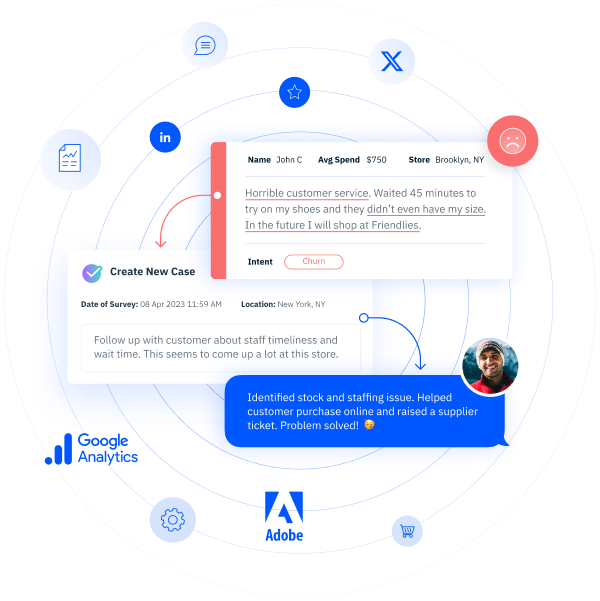
          Customers interact with their insurers through multiple channels. This makes it crucial for companies to connect experience data from various sources. InMoment’s CX integrations ensure you don’t miss out on any insights by integrating your platform with all the systems you use to collect feedback.

          Data sources from different integrations being combined to provide a better customer experience.

          AI-Driven Text Analysis

          AI empowers you to unlock meaningful information from volumes of feedback so you can make data-driven decisions. The award-winning AI text analysis software offered by InMoment helps you automate the collection of analytical insights. As a result, you can save valuable hours that your workforce can invest in acting on the feedback itself.

          Review Monitoring & Response Automation

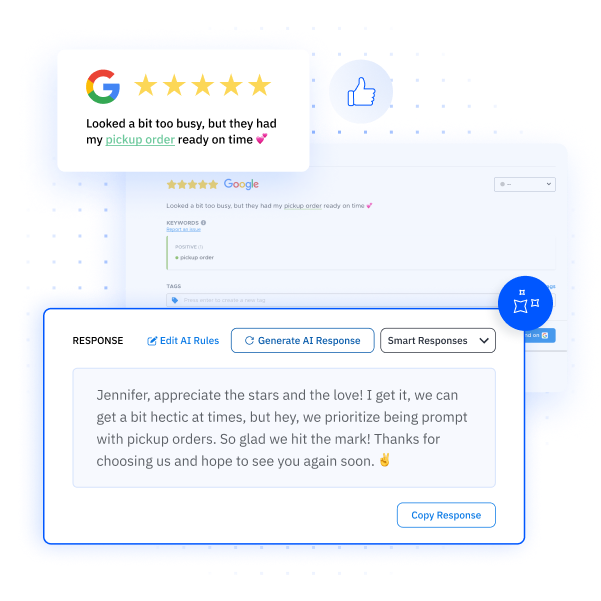
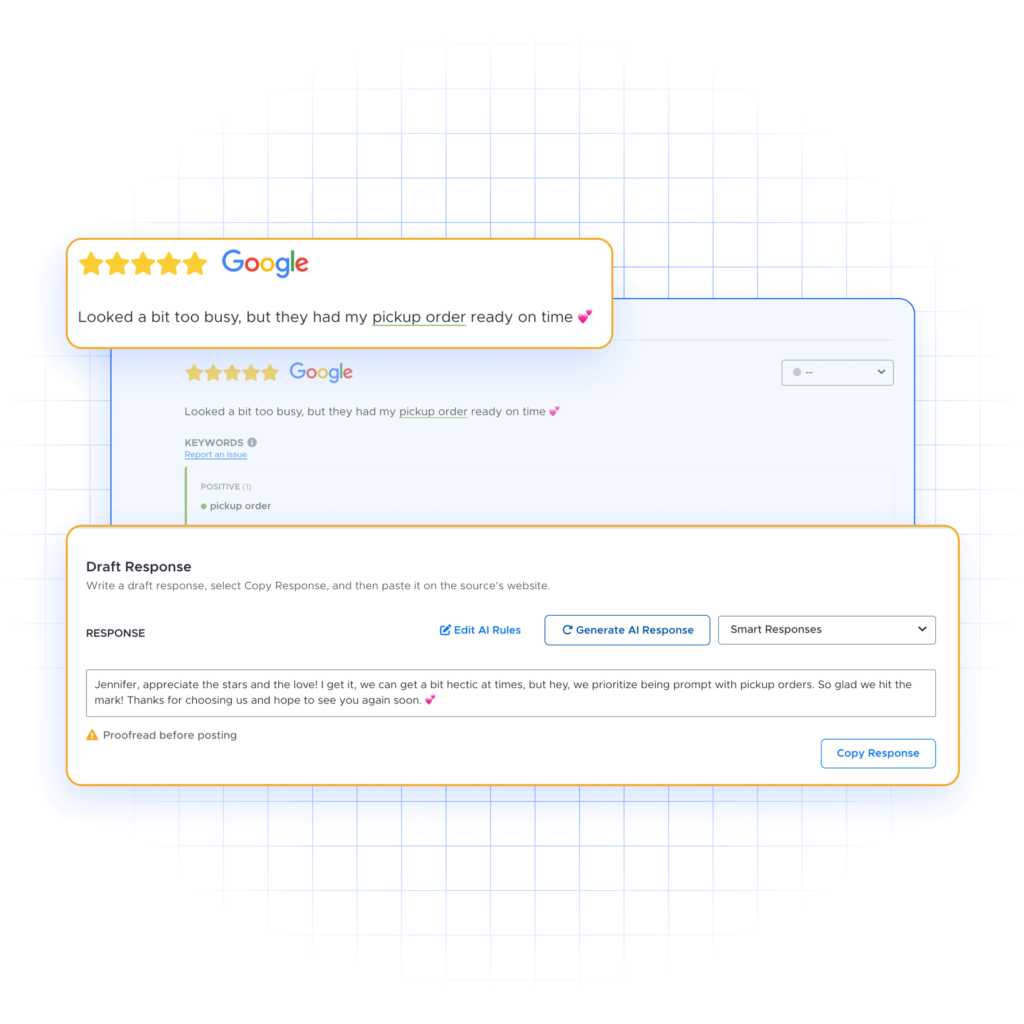
          The right CX platform should have features to monitor customer reviews across platforms such as Google, Yelp, or social media. Automating responses to these reviews helps manage your online reputation. It also shows customers you respond to them in real-time, enhancing satisfaction.

          InMoment’s platform allows you to generate review responses using AI. These responses can be set to adhere to specific brand guidelines to maintain a consistent tone across channels. 

          Review response automation using InMoment's XI Platform.

          Case Management

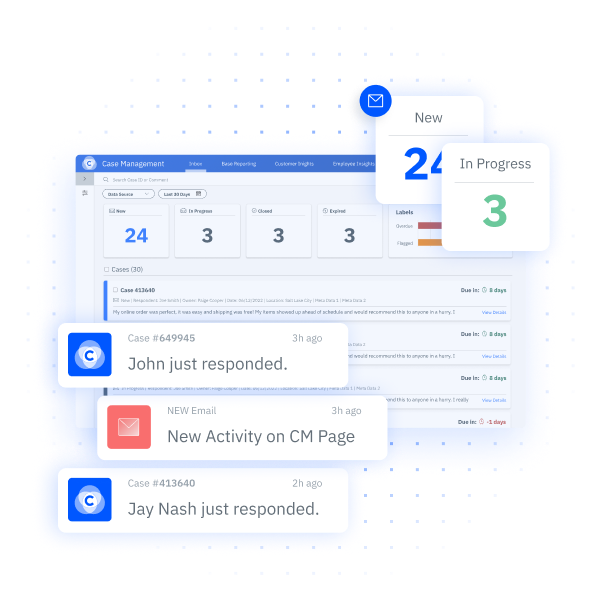
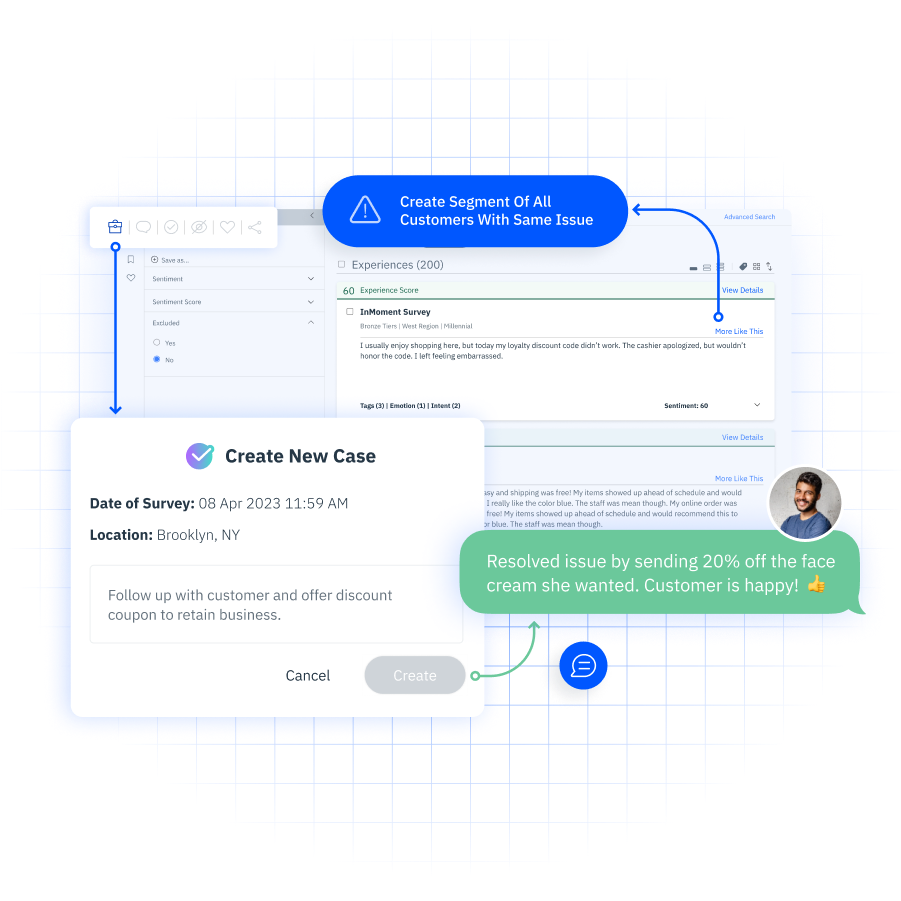
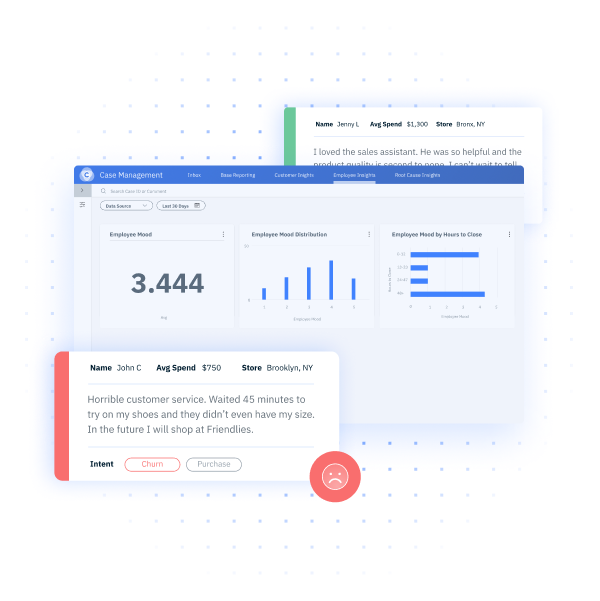
          It’s crucial to manage client concerns and issues to reduce complaints. This is where case management capabilities, such as the ones offered by InMoment, can help. These features empower your agents to address customer needs and build long-term relationships.

          InMoment’s case management software simplifies the tracking of customer experience cases by allowing you to solve cases, identify larger trends, and quickly identify the root cause of a case based on customer and employee perspectives. This solution also recommends the most efficient way to solve cases, which empowers employees to handle issues promptly.

          Case management tracking dashboard in InMoment's XI Platform

          Compliance & Security

          When selecting a customer experience software for your insurance organization, robust compliance and security are essential. Due to the sensitive nature of customer data, from health information to financial records, insurance companies must ensure that the software they select meets the requirements of strict data protection regulations. Considering this feature helps safeguard against risks while providing strong security protocols that protect your client’s privacy. 

          At InMoment, we’re dedicated to safeguarding the confidentiality, integrity, and availability of our clients’ data; and our compliance programs reflect that. We’re committed to meeting and exceeding industry standards in regulatory compliance. Our platform is SOC 2 Type II compliant and ISO 27001 certified, and we’ve partnered with a hosting provider that adheres to Sarbanes-Oxley, HIPAA, and Gramm-Leach-Bliley regulations, ensuring that your program is protected by the highest standards in the industry.

          Improve Your Insurance Customer Experience with InMoment

          Investing in excellent customer experience helps you win by boosting customer satisfaction. With InMoment’s comprehensive CX platform, you can automate the collection and analysis of feedback so that your agents can spend more time focusing on what truly matters: fostering rich relationships with customers. Schedule a demo today to experience the transformative capabilities of our platform for yourself!

          References 

          Insurtech Insights. Here’s How Google, Amazon, Facebook and Apple are Targeting the Health Insurance Market (https://www.insurtechinsights.com/heres-how-google-amazon-facebook-and-apple-are-targeting-the-health-insurance-market). Accessed 10/17/2024.
          McKinsey & Company. Elevating customer experience: A win-win for insurers and customers (https://www.mckinsey.com/industries/financial-services/our-insights/insurance/elevating-customer-experience-a-win-win-for-insurers-and-customers). Accessed 10/17/2024.
          Mendix. The Future of Insurance: 20 Stats That Show Customer Experience is Vital (https://www.mendix.com/blog/20-stats-future-insurance-depends-customer-experience). Accessed 10/17/2024.

          Hi Marley. CONSUMER AND CARRIER CX INSIGHTS: What Drives 1-Star and 5-Star Customer Satisfaction Scores in Claims (https://www.himarley.com/wp-content/uploads/2022/03/Whitepaper-What-Drives-1-and-5-Star-Scores-In-Claims-1.pdf). Accessed 10/17/2024.
          Customer Loyalty: Experiences that Increase Retention

          Customer loyalty is when customers consistently choose your brand over your competitors. You can encourage feelings of loyalty by consistently providing smooth, personalized, and convenient experiences.
          Two people and a dog inside of a business showing customer loyalty.

          A loyal customer is a valuable asset to your business. In fact, 64% of loyal customers are more likely to purchase frequently, and 31% are willing to spend more to stay with their brand of choice. Since customers have so many businesses competing for their attention, investing in customer loyalty can give you a major competitive edge.

          What Is Customer Loyalty?

          Customer loyalty defines how willing a customer is to repeat business with a company. Positive experiences compel customers to engage with you again. After all, if you’re meeting their needs and expectations, they have little reason not to trust you. Meanwhile, one negative experience can be enough to drive them to your competitors. 

          Loyal customers help your business by:

          • Purchasing your product or service repeatedly
          • Recommending your brand to friends and family
          • Boosting your engagement by interacting with you online
          • Providing thoughtful customer feedback to help you improve

          The Importance of Customer Loyalty

          Customer loyalty is crucial to business growth and sustainability. 

          Loyal customers tend to spend more over time and refer new clients. They also require less marketing effort to keep them engaged compared to new customers. Since a repeat customer has a 60-70% chance of converting, you’ll have to spend less on other conversion strategies.

          Building customer loyalty results in higher retention, increased revenue, and positive word-of-mouth, which helps you stand out in competitive markets. To see how you could maximize your business revenue and ROI with InMoment’s voice of the customer (VoC) tools, fill out the ROI calculator below!

          Calculate your business’s ROI using InMoment’s VoC tools.

          Estimated Revenue Growth
          Use the calculator to find an estimated ROI
          Total ICX ROI

          Submit two or more calculators to show an overview of what your integrated CX program could return.

          What Are the Different Types of Customer Loyalty?

          In general, loyal customers are a by-product of excellent customer service. Positive customer experiences give rise to six distinct types of loyalty.

          1. Happy customers
          2. Price-loyal
          3. Convenience-loyal
          4. Loyal-to-freebies
          5. Loyal-to-loyalty program

          6. Truly loyal

          Happy customers have never had reason to complain. They are satisfied with your offerings and customer service. Even though they often engage with you, your competitors can still sway them. For example, by selling the same product at a lower price, your competitor could convince your customer to try them out.

          Price-loyal customers love your brand because of your pricing. Since affordability is key for them, they can easily leave if they find lower prices elsewhere. Retaining such a customer might seem simple, but you’ll have to compromise on your pricing model.

          Convenience-loyal customers appreciate smooth and simple interactions. If you’re easy to find, contact, and buy from, they’ll become long-term consumers. Pricing isn’t a huge concern for them. So, if a competitor somehow offers an even smoother customer journey, they can be swayed even if it means they’ll have to spend more.

          Freebie-loyal customers are drawn to your free offerings. For example, if your cafe offers free WiFi, you’ll attract many of these customers. They might not necessarily buy your coffee or other menu items, though. As a result, these customers don’t really contribute to your revenue streams despite being loyal to you.

          Loyalty-program loyal customers appreciate your loyalty rewards more than the products themselves. When choosing between businesses, they focus on which one offers the best deals or discounts. Despite your pricing or convenience, you can retain these customers if you reward them well for their loyalty.

          Truly loyal customers love your brand in every sense. They appreciate your offerings, convenience, programs, and customer service. As a result, they interact with you repeatedly and encourage others to do the same.

          What Kind of Experiences Are Customers Loyal To?

          Customers are loyal to experiences that save their time, make them feel valued, and satisfy their needs. The following aspects contribute to experiences that drive loyalty:

          • Consistency: Customers expect reliable service and product quality whenever they interact with your business. A consistent experience builds trust and encourages repeat business.
          • Quality: High-quality products and services are crucial to excellent customer experience. When customers see an unwavering commitment to quality, they are more likely to choose you over competitors every single time.
          • Loyalty rewards: Offering rewards for repeat purchases incentivizes more loyalty. Discounts or points-based programs make customers feel valued and encourage long-term engagement.
          • Nostalgia: Experiences that evoke positive memories can strengthen loyalty. For example, a sneaker brand releasing a new product line paying tribute to an iconic athlete would help it connect with nostalgic sports fans. Familiarity and nostalgia create a sense of connection that can strengthen customer relationships.
          • Personalization: Experiences tailored to customer profiles encourage loyalty. This is because they make customers feel understood and appreciated.
          • Convenience: Customers are loyal to brands that make it easy to find, purchase, and use their services. Simple and intuitive processes create a frictionless experience that appeals to everyone.
          • Customer service: Prompt, friendly, and effective customer support is crucial to retaining customers. It’s normal for issues to arise, but how you resolve them can be the difference between a loyal customer and one who decides to leave!
          • Brand values: Customers connect with brands that reflect their own values. Brands that show commitment to sustainability, ethics, or social causes can foster loyalty through shared principles.

          What Is the Most Direct Cause of Customer Loyalty?

          The most direct cause of customer loyalty is a consistently positive experience.

          By providing reliable services and seamless interactions on a regular basis, you can build trust and loyalty over time. Customers have little to no reason to look elsewhere if you’re checking all the boxes for them.

          Additionally, businesses that resolve issues in a swift and empathetic way show customers that they care. Responding to customer feedback within 24 to 48 hours boosts retention by 8.5%. Therefore, these actions can encourage loyalty even after a negative experience.

          How Do You Build Customer Loyalty?

          Building customer loyalty requires time and consistent effort. Use these tips to lay the groundwork for lasting customer loyalty and retention:

          1. Simplify everything for your customers.
          2. Meet customers where they are.
          3. Personalize the experience.
          4. Keep evolving to meet changing customer needs.
          5. Focus on effective communication.
          6. Invest in loyalty programs.
          7. Build a deep emotional connection.
          8. Build a community around your offerings.
          9. Express gratitude.

          Simplify Everything For Your Customers.

          Customers appreciate ease at every touchpoint of their journey. Simple and convenient experiences encourage repeat business because they require very little customer effort.

          For example, you can include a chatbot on your website to offer instant support to customers. Instead of waiting for a human agent, they can find quick answers to some of their pressing questions. This ease of finding support will prevent frustration and encourage repeat interactions.

          Meet Customers Where They Are

          Another way to offer convenient experiences is to meet customers where they are. For example, if a portion of your customers are avid Instagram users, it makes sense to have an active presence there. This makes it easier for them to discover your products or reach out to you for support.

          94% of customers will spend more with businesses that offer their preferred mode of communication to contact customer service. As a result, building an omnichannel customer experience will help you satisfy customers and drive revenue.

          Personalize the Experience

          With a growing demand for personalized services, it’s important to tailor customer experiences to individual profiles. Personalization makes customers feel understood and valued, which can lead to loyalty over time. This is where collecting and analyzing feedback can be a game-changer for you. There is no better way to understand your customers’ needs than by simply asking them!

          A CX platform like InMoment simplifies this process for you. It helps you collect feedback from every possible source so that you don’t miss out on valuable data. With the award-winning InMoment AI, you can then capture analytical insights from the feedback. These insights help you better understand your customers, allowing you to personalize your services.

          Keep Evolving to Meet Changing Customer Needs.

          You need to change the way you think about customer loyalty. Instead of treating it as the final destination, you should view it as an ongoing journey. Since customers tend to be loyal to a few different brands at one time, there is no room for complacency.

          Keep up with the times by tracking customer sentiment toward you and your competitors. See what trends are going viral and where customer preferences are leaning. If you have multiple locations across the world, it’s crucial that you don’t ignore regional trends.

          You can stay relevant by adopting a customer-centric approach and tweaking offerings where necessary.

          Focus on Effective Communication

          Good communication builds trust and strengthens relationships. Customers who interact with a transparent and honest business are more likely to stay loyal to it.

          Be clear, concise, and responsive in all interactions. Address customer concerns promptly and provide regular updates when needed. Make clear announcements in case of a major change, like a product update or change in business hours. This will help you prevent misunderstandings and build trust over time.

          Responding is just half of effective communication. Listening to feedback and acting on it is just as crucial. Consistently engaging with your audience resolves issues and strengthens loyalty by making customers feel heard.

          Invest in Loyalty Programs

          Loyalty programs are a powerful tool for retaining customers. Customers who feel valued are more likely to return and spend more. 

          Offer rewards, discounts, or special perks to show appreciation for repeat business. Keep the program simple and easy to use. Exclusive deals or early access to products can also make customers feel special. 

          A well-structured loyalty program encourages long-term engagement. This drives continuous business and helps build stronger relationships.

          Build A Deep Emotional Connection

          Go beyond transactions to connect with customers on a deeper level. Forming an emotional connection is even more important if you want to elevate your marketing efforts. 

          For example, if you want to collaborate with a celebrity to promote your brand, your efforts will be more effective if customers are already emotionally invested. Otherwise, it will be difficult to generate significant interest.

          Start by establishing trust and transparency. Regularly collect and respond to feedback to show customers you are listening. Follow up with them to create a feedback loop to further show your commitment towards them.

          With the help of InMoment’s Active Listening, you can generate intelligent questions with ease that capture customer preferences and needs. This information enables you to create personalized experiences that appeal to customer emotions. As a result, you will earn emotional buy-in from customers, turning them into loyal advocates.

          Build A Community Around Your Offerings.

          Create spaces where your customers can connect with each other and your brand. This can happen through social media, forums, or events. Engage regularly by sharing content, hosting discussions, or offering exclusive insights.

          Encourage customers to share their experiences and ideas. A community fosters a sense of belonging, making customers feel part of something bigger than themselves.

          Express Gratitude

          Remember that your business succeeds because of your customers. They have several options to choose from, but they decide to trust you. Show your gratitude to them to reinforce the idea that they are valuable to you.

          Include thank-you notes after product purchase or delivery. You can take it one step further by sending special messages during the holidays. These actions add a personal touch, which creates stronger customer relationships.

          How Do You Measure Customer Loyalty Analytics?

          1. Net Promoter Score (NPS)
          2. Customer churn rate
          3. Customer retention rate
          4. Social media engagement
          5. Customer Loyalty Index (CLI)
          6. Customer Satisfaction Score (CSAT)

          Loyalty is easy to understand, but how do you quantify it? Some businesses measure loyalty by looking at how many customers they have retained. Other companies monitor social media behavior or churn rate. 

          A combination of these metrics can help provide a complete picture of customer loyalty to identify areas for improvement.

          Net Promoter Score (NPS)

          Net Promoter Score (NPS) measures how likely customers are to recommend your brand to others. A high NPS indicates strong loyalty. Meanwhile, a low score suggests room for improvement in encouraging positive feelings towards your business.

          Customer Churn Rate

          Customer churn rate shows the percentage of customers who have stopped doing business with you. A low rate suggests that most of your customers trust your brand enough to interact with it again.

          Customer Retention Rate

          Customer retention rate highlights the percentage of customers who continue doing business with you over time. This is an important metric to track if you want to gauge long-term loyalty.

          Social Media Engagement

          While it’s not a quantitative measure, your customers’ social media activity can indicate their loyalty towards you. For example, if they engage frequently with your social media profile and leave positive comments, they are likely satisfied with your services. 

          Consider using social media management software to track keywords related to your brand. It can also help you identify customers who are advocates for your business.

          Customer Loyalty Index (CLI)

          Customer Loyalty Index (CLI) measures the strength of customer loyalty towards your business. It combines metrics like NPS, repurchase rates, and upselling to build a comprehensive loyalty score.

          Customer Satisfaction Score (CSAT)

          Customer Satisfaction Score (CSAT) measures satisfaction with a product, service, or specific interaction. It typically features questions like “How satisfied are you with [product/service/interaction]?”

          Satisfied customers are likely to become repeat customers. Therefore, CSAT is a useful metric for measuring overall customer loyalty.

          What Should You Look For In Customer Loyalty Software?

          Customer loyalty software helps simplify the process of tracking key metrics and making improvements where necessary. Here are the key features to look for when choosing the right platform:

          1. Omnichannel Communication

          The ability to meet customers where they are is crucial to driving loyalty. It’s a significant part of creating smooth and convenient experiences. From Instagram DMs to emails, customers expect several options to communicate and seek support. The right software should allow you to gather customer data from every possible source in one place.

          The InMoment XI platform can help you provide an omnichannel customer experience to foster loyalty. Its purpose-built tools enable you to collect and connect high-quality data from multiple platforms into a unified interface. As a result, you don’t miss out on valuable customer insights.

          Customer signals from different channels being summarized to provide an omnichannel customer experience.

          2. Analytics and Reporting

          The software you choose should let you track and analyze key metrics like NPS, churn rate, and engagement levels. This will help you make data-driven decisions to improve the customer experience across all touchpoints.

          InMoment simplifies this process by letting you create a custom customer experience dashboard featuring your brand’s most impactful metrics. You can also create and share actionable reports that provide a clear picture of your customer loyalty efforts.

          Custom built CX dashboards and reports in InMoment's XI Platform.

          3. Social Media Management

          Social media is a key part of customer engagement. As a result, it’s important to monitor social media activity and leverage it for brand reputation. A good CX software should take care of this by helping you create content and track customer sentiment on various platforms.

          InMoment’s social media management software helps you tap into the power of social media. From content curation and scheduling to social listening features, the platform makes it possible to create targeted content and drive engagement.

          4. Custom Integrations

          The right customer loyalty software should also integrate with your existing CRM, POS, and other key systems. Custom integrations enable you to build a unified customer view so that you don’t miss out on anything essential.

          With InMoment’s CX integrations, you can easily connect all your current systems to your CX platform. As a result, you get to make the most of the customer data available to you.

          Data sources from different integrations being combined to provide a better customer experience.

          5. Automation Tools

          Automated workflows are key for closing feedback loops without wasting time. For example, it’s helpful to have automated responses and alerts that enable quick customer service. 

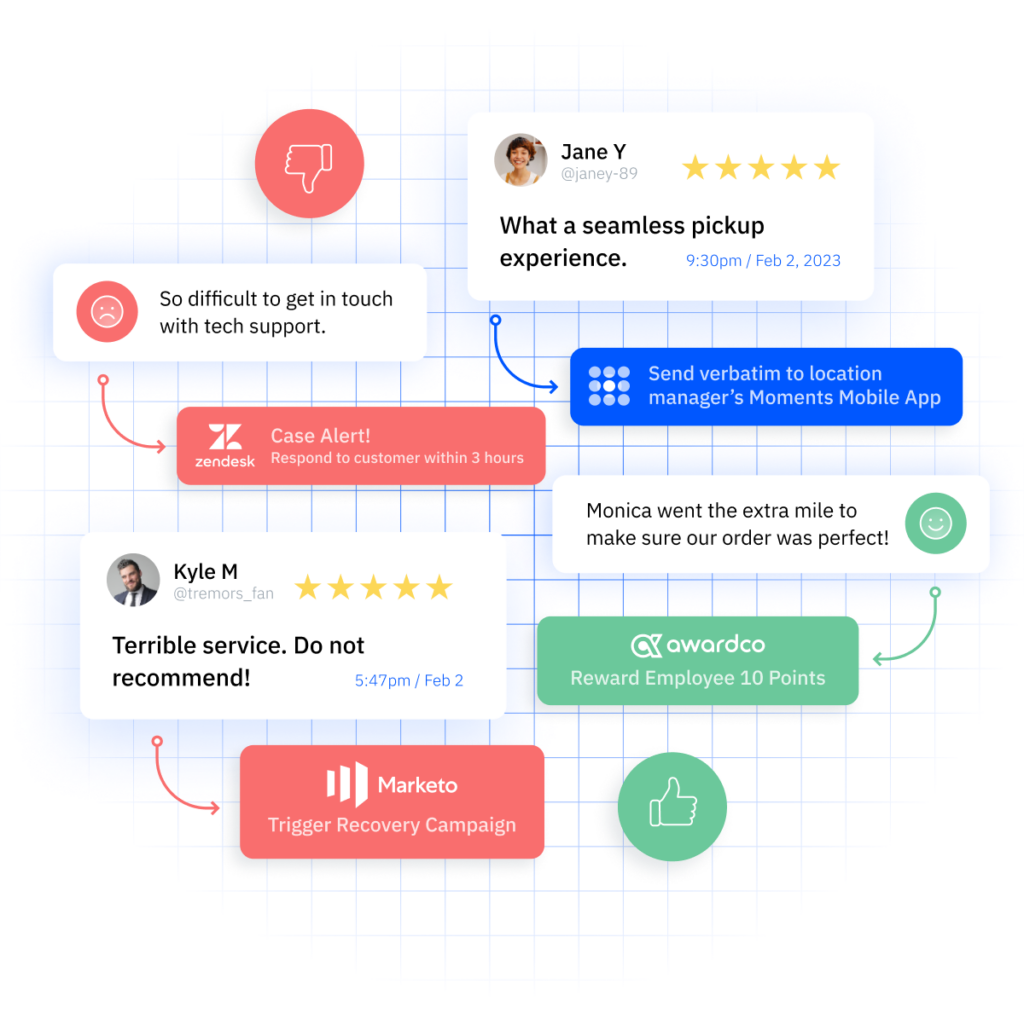
          InMoment offers automated alerts based on customer behavior so that you can act quickly and recover a customer before it’s too late. If a customer has a complaint, you are notified of it right away so that you can respond and resolve it in time. Similarly, you can use its automated tools to send personalized offers or reward notifications to customers.

          AI CX automation in InMoment's XI Platform.

          Inspiring Customer Loyalty Quotes to Get Buy-In

          Customer loyalty efforts are successful when every member of your team believes in their value. The following quotes can help you motivate your teams to focus on loyalty-driven strategies:

          • Satisfaction is a rating. Loyalty is a brand.” – Shep Hyken
          • The goal as a company is to have customer service that is not just the best, but legendary.” – Sam Walton
          • There is a big difference between a satisfied customer and a loyal customer. Never settle for ‘satisfied’.” – Shep Hyken
          • The purpose of a business is to create a customer who creates customers.” – Shiv Singh
          • “Loyal customers, they don’t just come back, they don’t simply recommend you, they insist that their friends do business with you.” – Chip Bell

          Increase Customer Loyalty with InMoment

          Loyal customers bring more revenue by repeating business with you and recommending you to others. Therefore, converting a satisfied customer into a loyal one can make a world of difference for your brand.

          With InMoment’s customer loyalty platform, you can leverage feedback collection, sentiment analysis, and actionable insights to deliver memorable experiences. Schedule a personalized demo today to see how you can keep customers coming back!

          Restaurant Reputation Management: Increase Diner Feedback & Demand

          Reviews and ratings are the biggest drivers of spending for diners. By managing your restaurant’s reputation, you can generate more positive reviews to attract more diners, boost revenue, and stand out from the competition.
          Restaurant manager making new suggestions to the employees

          When you’re thinking of ordering takeout, or planning a date at a fancy restaurant, what’s the first thing you look at? Online reviews are the most trusted source of information for most people interacting with a restaurant for the first time. This is where restaurant reputation management can be the difference between a new client and a lost opportunity.

          What is Restaurant Reputation Management?

          Restaurant reputation management is the process of monitoring, responding to, and addressing feedback from various sources. Customers love talking about their experiences, especially if they had an exceptionally good or bad time. They share their thoughts on social media platforms like Facebook or Instagram or through review platforms such as Yelp and Google reviews.

          The average customer sentiment across the online space contributes to the restaurant’s reputation. The more positive reviews a restaurant receives, the better the public perceives it. On the flip side, nothing affects business like negative feedback. In fact, 22% of customers will not dine at a restaurant after reading a single negative review!

          To assess the current state of your restaurant’s reputation, get your personalized reputation score today! The score is calculated based on customer reviews, response rate, response time, and more. It allows you to see your overall brand health and current reputation standing.

          Find Out Your Brand's Online Reputation Score

          How Reputation Management Impacts A Restaurant

          Reputation management impacts a restaurant in terms of public opinion and business metrics. When you consciously manage your restaurant’s reputation, you can better control how people perceive your business. Perception is important in the digital age, where word-of-mouth spreads faster and is more impactful than ever before.

          The value of customer feedback and reviews is evident from the following statistics:

          • 46% of diners, representing 79 million customers, say that positive online reviews made them more likely to visit a restaurant. (PYMNTS)
          • Reviews and ratings, with a share of 39%, are the biggest drivers of customer purchase and spending. (InMoment)
          • 39% of diners are extremely likely to leave a positive review after a good dining experience. (PYMNTS)
          • Bad online reviews and negative feedback from friends are among the top two reasons diners avoid certain restaurants. (TouchBistro)
          • 33% of customers say they will not choose a restaurant with an average three-star rating on review sites. (ReviewTrackers)
          • Reviews and ratings, with a share of 42%, are the most popular way customers interact with brands. (InMoment)

          Therefore, the data suggests that online reviews are a huge factor in customers’ visiting or avoiding a restaurant. More negative reviews lead to fewer customers, which has an adverse effect on revenue, profit, and business growth. 

          When you think about the competitive nature of the restaurant industry, it’s clear that online reputation management is crucial for survival.

          Benefits of Restaurant Reputation Management

          Reputation management helps restaurants improve diner trust and business performance. Here are some of the key benefits:

          • It helps restaurants attract more customers. Positive reviews and a strong online presence can draw new customers. Meanwhile, effective reputation management minimizes the impact of negative feedback.
          • It results in increased revenue. A better reputation leads to more bookings and higher diner demand. These improvements drive sales and revenue.
          • It boosts customer trust and loyalty. Responding to reviews and addressing customer concerns builds trust. As a result, customers are more likely to stay loyal to your brand and even advocate for it.
          • It improves a restaurant’s brand image. Proactively managing your restaurant’s reputation enhances your brand image and makes your business more appealing to potential customers.
          • It gives restaurants a competitive advantage. In a crowded market, a well-managed reputation helps differentiate your restaurant from competitors.

          Curious about the ROI you could achieve with InMoment’s reputation management software? Try the ROI calculator below and see the impact for yourself!

          Calculate your business’s ROI using InMoment’s reputation management tools.

          Estimated Revenue Growth
          Use the calculator to find an estimated ROI
          Total ICX ROI

          Submit two or more calculators to show an overview of what your integrated CX program could return.

          Restaurant Reputation Management Best Practices

          You can’t ignore online conversations around your business. Regardless of the sentiment, it’s important to monitor and respond to reviews. The following five best practices will help you overcome challenges and provide positive customer experiences:

          Monitor Online Reviews

          Online reviews are a key aspect of restaurant reputation management. After all, 94% of diners choose restaurants based on online reviews. The last thing you want is to miss out on prospects simply because you haven’t been tracking your reviews.

          By monitoring online reviews, you get a clearer picture of public sentiment toward your restaurant. It’s easier to plan and prioritize once you understand the general opinion around your services.

          Are diners mostly satisfied with your food quality, ambiance, and wait times? What are the most common complaints, if any? Do people believe you have done enough to address these complaints? These are the kinds of questions you can answer by analyzing customer reviews.

          Once you have the answers, you can set about making the necessary adjustments. Negative customer feedback highlights areas for improvement that you should prioritize. Positive feedback helps you boost your marketing efforts and showcase your restaurant in a positive light.

          The Melting Pot, a fondue restaurant with over 105 locations, realized the importance of diner feedback. Through its partnership with InMoment, it collected real-time feedback and analyzed it for deep insights into customer behavior. As a result, the restaurant improved the “speed of service” metric by 47%. It also significantly reduced time and risk in introducing new menu items.

          Ask for and Respond to Reviews

          Monitoring reviews is important, but it’s not enough. The next step is to address the online feedback and respond to it the right way.

          Getting your review response strategy right can give you a significant competitive edge. Leaders in the restaurant industry have a response rate of 94%, while the average is 61%. Similarly, leaders have a response rate of 1.21 days, roughly half the industry average of 2.66 days.

          So, how do you come up with the best possible response? It’s important to avoid sounding too general. Customers expect an empathetic reply to their feedback instead of something that feels automated. Address the feedback directly, explain why the issue occurred, and suggest specific solutions. Conclude with a note of thanks to show the customer that you always value their opinion.

          Your work isn’t done with that initial response. Once you’ve made the necessary adjustments, it’s crucial to follow up with the customer. The resulting feedback loop will help you better understand your customer. Meanwhile, the customer will appreciate the follow-up and feel better about you as a brand.

          As important as it is, providing a tailored response to every review can be challenging. This is where InMoment’s reputation management software can help you win over your customers. It allows you to leverage generative AI to create responses that align with your brand’s voice guidelines. As a result, you can create and close feedback loops with ease. You also save valuable time that you can invest in other parts of your operation.

          Review response automation using InMoment's XI Platform.

          Be Active on Social Media

          You can’t underestimate the importance of social media marketing for reputation management. Over 40% of diners look up a restaurant on social media before making a decision. This is because platforms like Facebook and Instagram host a ton of content from influencers and regular consumers alike.

          Much of this content comprises reviews and opinions, including those on dining experiences. If your restaurant is receiving a lot of praise or criticism on social media, you need to tune in!

          Start with your social media profile and look at the interactions with your recent posts. Then, search for your restaurant to see what comes up. It could be tags from food vloggers on their Stories or a post from a recent customer.

          All the content related to your brand will give you a better idea of the current public sentiment. You can then craft meaningful responses where applicable to show that you’re listening and taking opinions into account.

          Track Competitors’ Reputation

          It’s no secret that the competition in the restaurant space is brutal. With so many trends and viral concepts emerging daily, it’s important to stay up-to-date so you don’t fall behind the pack.

          Think about your biggest competitors and analyze their profiles. What are they doing right, and what mistakes are they making? What kind of reviews do they get from diners? Is there an opportunity for you to differentiate your offerings from theirs? 

          The insights you get from competitor analysis will help you find unique ways to win over customers to your tables.

          Showcase Customer Testimonials

          Positive customer testimonials are powerful marketing tools. Sharing glowing reviews or success stories builds trust and improves your brand equity. It also encourages potential customers to try your restaurant.

          To showcase your strengths, highlight real experiences from happy diners through written testimonials, video reviews, or social media shoutouts.

          Tips for Managing Restaurant Reputation

          The following tips will help you manage your restaurant reputation for diner satisfaction and business outcomes:

          Build a Consistent Experience

          A restaurant experience is never just about the food. Diners want to feel welcome and comfortable throughout their journey with your restaurant. 

          Even if your food quality is top-notch, diners could still have mixed or negative feelings if they had to wait too long. Or, maybe they have a pleasant time talking to your staff on call, but their in-person interactions end up being the opposite.

          It’s important to deliver a consistently positive customer experience across all touchpoints. From the food quality to service and ambiance, each aspect of your restaurant should satisfy customer expectations. Work with your staff across all departments to ensure everyone follows a customer-centric approach.

          Develop a Crisis Management Plan

          Sometimes, issues tend to crop up when you least expect it. From a diner complaint going viral to getting your account hacked, restaurants can face any number of unexpected challenges. With a crisis management plan, you can minimize the fallout from these situations.

          Start by establishing communication protocols and training your staff on them. Every member needs to know the what, where, who, and how of communication during a crisis. As a result, your team will be prepared to respond when such situations arise.

          Assign responsibilities so that everyone knows their role during a crisis. For example, if the CEO is occupied with a PR crisis, someone capable should be on standby to run the ship until the situation is resolved.

          The goal is to manage the situation before it gets out of hand. This helps you stay in control and reduce the impact on public perception. It also allows you to turn a bad situation into an opportunity to show your dedication to customer service. 

          Create Location Pages

          If your restaurant has multiple locations, it’s good practice to have specific location pages on your website. These pages help you connect with diners in specific regions and address their concerns.

          Additionally, they contribute to local SEO, making it easier for customers to find your restaurant. Include information like hours, menus, and contact details for each location.

          As a result, your business performs better across all regions. You will also be able to boost your visibility online, which brings more foot traffic through your doors.

          Train Employees 

          Training employees to provide excellent customer service makes a huge difference. Ensure your staff understands the importance of consistency, attentiveness, and hospitality. 

          Regular training sessions keep staff updated on any new protocols, menu changes, or customer service strategies. This ensures they’re always prepared to offer top-tier service.

          Well-trained staff can turn first-time diners into loyal customers by creating a welcoming and memorable experience.

          Host Special Events

          Special events and promotions are a great way to drive customer interest and boost your reputation. They help you engage the local community and show them that you’re more than just a place to dine.

          For example, you could host a monthly cooking class for a reasonable fee, with a portion of the proceeds going to a local charity. An event like this helps you generate public interest in your brand, as customers love creative events that contribute to a good cause.

          Features to Look For in Restaurant Reputation Management Software

          Investing in the right software for restaurant reputation management simplifies the process for you and helps you boost your brand. Here are the key features to look for when choosing the right tool:

          Review Monitoring and Aggregation 

          Diners provide reviews across the online space, from sites like Yelp to social media like Instagram. Your software should enable you to track each piece of incoming feedback so that you can respond to it swiftly and maintain your reputation. 

          InMoment’s review management platform helps you monitor and connect all your review data in the most accurate and reliable way possible. As a result, you don’t miss out on any insights and can prioritize your responses accordingly.

          A chart showing review sites distribution for platforms such as Google, Facebook, and Tripadvisor.

          Automated Alerts

          Reputation management is all about receiving feedback and acting quickly. Therefore, the right software should send automated alerts to inform you of real-time customer activity. The sooner you’re aware of a review, the quicker you can process and respond to it for effective management.

          Sentiment Analysis

          Tracking what your customers are saying is not enough. You need to quantify their experiences to help you better understand their overall sentiment and how you can help them. You can accomplish this with sentiment analysis, a technique that helps you capture meaning and emotion from textual reviews.

          InMoment’s sentiment analysis features empower you to gain insight into every piece of feedback you receive. The platform leverages industry-recognized metrics and real-time intelligence gathering to help you better understand customer opinion.

          By removing guesswork from the process, the right software can save you valuable hours with analytical insights into customer behavior.

          A sentiment analysis dashboard categorizing trending keywords by sentiment.

          Review Response Templates

          Not sure about the right response for diner satisfaction and issue resolution? A good reputation management software can solve this headache with review response templates. These templates can help you generate quick and effective responses to feedback while reflecting your unique brand voice.

          Social Media Management

          Without managing your social media presence, you’re at risk of missing out on vital insights. Your software of choice should help you track customer interactions across platforms like Facebook, Instagram, and X.

          InMoment enables social media management for businesses with content scheduling and curation. It also leverages AI and sentiment analysis to track keywords and brand mentions so that you can stay on top of conversations around your restaurant.

          Competitor Comparison

          Understanding how your competitors are performing is key to staying competitive. Look for software that includes competitor comparison tools, which allow you to monitor their reviews, ratings, and feedback.

          InMoment’s reputation management platform gives you access to competitor analysis software to capture key insights for staying ahead of the pack. It helps you identify competitors, see how you rank against them, and set alerts to stay informed on performance changes. As a result, you stay in the loop and can refine strategy where necessary.

          A chart showing local search rankings for a specific keyword by business.

          Local Listings Management

          Inaccurate and inconsistent business information across your listings can turn away customers. For example, a change in business hours or branch location that is not reflected in your listings will confuse diners. This can hurt your credibility as a brand. Therefore, your software should help you manage your listings to boost visibility and attract more customers.

          InMoment’s local listings management software lets you decrease ad spend by making the most of your local listings. The tool gives you insight into your local reputation by offering ROI-specific insights from your Google Maps listings. You can use the information to increase your influence, outrank competitors, and create relevant Google posts to drive organic sales.

          Google maps performance charts that show how users interact with local listings.

          Survey Tools

          Surveys are tried-and-tested means of feedback collection that can help you better understand your diners. The right software should feature survey design tools to help you gather consistent insights.

          InMoment’s XI Platform gives you the ability to build surveys from scratch or choose from pre-built templates. As a result, you collect actionable feedback quicker, which helps you improve diner satisfaction.

          Survey design builder to help collect customer feedback

          Integration with Reservation Systems 

          Your reputation management software should integrate seamlessly with your reservation or point-of-sale systems. This feature allows you to link reviews directly to specific customer interactions. It also enables automated survey requests that you can send once a reservation is complete. Therefore, you can seamlessly collect feedback and determine areas for improvement.

          Review Generation

          Review generation tools boost your online reputation by requesting feedback from satisfied diners. The software you choose should allow you to send requests that prompt customers to leave reviews after their dining experience. Since the process is automated, you can request and collect reviews with ease to enhance ratings and credibility.

          Improve Restaurant Reputation Management with InMoment

          Your restaurant could have the best chefs and attention to detail when it comes to food. But, without robust reputation management, you’ll struggle to differentiate yourself and keep diners coming through your doors. 

          With InMoment, you get access to award-winning reputation management software that helps you consistently win over customers and boost your brand. Schedule a demo today to see how you can stand out and stay ahead!

          References 

          WOWAPPS. How Restaurant Reviews Impact People’s Decisions (https://www.wowapps.com/how-restaurant-reviews-impact-peoples-decisions). Accessed 10/21/2024.

          PYMNTS. Everyone’s a Critic: 49M Consumers Recently Posted Online Restaurant Reviews (https://www.pymnts.com/restaurant-innovation/2023/everyones-a-critic-49m-consumers-recently-posted-online-restaurant-reviews). Accessed 10/21/2024.

          InMoment. Restaurant Consumer Trends Report (https://inmoment.com/wp-content/uploads/2023/03/RP-02389-03-NA-2023-Food-Service-Restaurant-Trends-Report.pdf). Accessed 10/21/2024.

          TouchBistro. 2024 Dining Trends Report: The Latest Restaurant Industry Trends (https://www.touchbistro.com/blog/diner-trends-report). Accessed 10/21/2024.

          ReviewTrackers. Powerful Restaurant Reputation Management in 5 Steps (https://www.reviewtrackers.com/blog/restaurant-reputation-management). Accessed 10/21/2024.

          Why A Customer Engagement Platform Is Crucial for Business Success

          A customer engagement platform allows your business to interact with every customer, on every channel, all in one place. Organizations that invest in customer engagement platforms see increases in revenue, loyalty, and satisfaction.
          Two women shopping in a clothing store.

          Did you know that brands that invested in customer engagement saw an average revenue increase of 68%, with top-performing brands realizing a 123% increase in revenue? With acquisition costs at an all-time high, it has never been more important to engage your customers in a way that makes them lifelong fans of your brand. This can be done by using a customer engagement platform. 

          What is a Customer Engagement Platform?

          A customer engagement platform is a tool that allows businesses to interact with customers on different platforms, all in one place. Customer engagement platforms consolidate customer data into one location and provide tools to engage customers consistently and personally, regardless of how they interact with your business. This means you never have to leave your customer engagement platform if you respond to a customer via email, SMS, online review, or chatbot. 

          What is the Difference Between a Customer Engagement Platform and  Customer Relationship Management (CRM)? 

          Debating the differences between customer engagement platforms and CRM systems is natural. When doing so, some key differences need to be considered. 

          Customer Relationship Management (CRM)

          Customer relationship management systems utilize the data of existing customers and focus internally. CRMs are typically used by teams managing the current relationships of clients or accounts. They aim to convert leads to closed deals, identify the most successful business activities, and manage the communication between businesses and current customers. 

          Customer Engagement Platform

          Customer engagement platforms, however, are external and focus on the interaction between customers and consumers. They integrate with apps, websites, and social media to provide a consistent customer experience across all channels. These platforms focus on improving customer experience metrics such as customer satisfaction, loyalty, and retention. 

          The Importance of Customer Engagement Platforms

          Today, 70% of consumers expect a response from a customer service team within the same day. If your brand takes longer than that to respond to customers, you risk damaging your customer experience and brand reputation management efforts. 

          Customer engagement platforms are crucial for organizations to maintain and improve customer experience. You can create alerts when a response is needed and respond to customers on different channels while never having to leave your chosen customer engagement platform. 

          Benefits of Using a Customer Engagement Platform

          Customer engagement platforms can be extremely valuable for organizations focused on delivering a positive customer experience. By providing the tools necessary for effective communication, personalization, and analytics, these platforms enable businesses to build stronger relationships with their customers. Here are some expected benefits of using an omnichannel customer engagement platform: 

          More Valuable Customer Interactions

          Customer engagement platforms will lead to more productive interactions with your customers. When you can engage with customers across different platforms and see where those customers have contacted you and what they have said, you are more equipped to help them with their inquiries. 

          Improved Customer Loyalty

          Customer engagement platforms increase customer loyalty by making the customer experience engaging and consistent throughout the whole customer journey. Research shows that loyal customers are 64% more likely to make more frequent purchases from your business than regular customers. 

          Higher Customer Retention 

          Organizations that are engagement leaders, companies that are trailblazing omnichannel engagement and providing a personalized customer experience, have a higher retention rate than companies that do not have mature customer engagement programs. Engagement leaders have a retention rate of 77%, whereas non-engagement leaders have a retention rate of just 43%. By succeeding in customer engagement, you have a better chance of keeping your customers coming back. 

          Competitive Advantage

          While most companies claim to be customer-obsessed, a recent study showed that only 15% are actually customer-obsessed, meaning their business is focused on growing by delivering value to their customers. One key factor in becoming a truly customer-obsessed company is using a customer engagement platform. When you reach customer-obsessed status, you set yourself apart from the competition and stand out in the market. 

          Higher Profit Margins

          Most organizations that prioritize customer engagement reported higher margins than those that do not. An omnichannel strategy plays a crucial role in this success. It ensures that customers can seamlessly transition between different platforms and communication channels during their journey—whether they start by browsing on a mobile app, switch to a desktop, and later engage via social media.

          Best Customer Engagement Platforms

          Customer engagement platforms are critical in helping businesses build long-lasting relationships with their customers by streamlining communications, enhancing experiences, and providing actionable insights. Here are five of the best customer engagement platforms available:

          1. InMoment

          InMoment is the best customer engagement platform for organizations looking for the premier solution for their customer experience initiatives. G2 ranks InMoment the highest of the available platforms, with a rating of 4.7 out of 5 stars. InMoment has also been recognized for having the fastest ROI time, the best support, and the easiest to use. 

          InMoment excels at offering a platform that connects customer data from every channel into one easily accessible location and offers consulting services from in-house industry experts. InMoment’s advanced analytics and AI-powered tools allow businesses to track customer sentiment, identify trends, and personalize interactions across the customer journey. This makes it a top choice for companies looking to improve customer loyalty, satisfaction, and overall experience.

          2. Sprinklr

          Sprinklr is a customer experience management platform specializing in social media, emails, and messaging apps. These integrations allow users to communicate directly with customers via comments and direct messages. This platform is used primarily by small businesses looking to scale their customer engagement efforts. 

          3. Zendesk

          Zendesk is a customer service and engagement platform best suited for businesses looking for a highly customizable solution. One of the most notable benefits of Zendesk is that it can be used immediately upon purchase and can be customized for a business at a later date. This solution is ideal for businesses wanting to improve their ticketing systems while maintaining personalized customer interactions. 

          4. Hubspot

          The Hubspot customer engagement platform is differentiated by its inbound marketing capabilities, which makes it an excellent choice for organizations looking to bring marketing, sales, and customer service under one roof. HubSpot offers robust tools for automating communication, creating personalized email campaigns, and tracking customer interactions throughout the entire lifecycle. It’s user-friendly and scalable, making it suitable for businesses of all sizes.

          5. Klayvio

          Klayvio is a customer engagement platform that is tailored to e-commerce businesses. It excels in creating personalized, data-driven email and SMS marketing campaigns that boost customer retention and drive conversions. Klaviyo integrates seamlessly with e-commerce platforms like Shopify and BigCommerce, allowing businesses to segment customers based on behavior, purchase history, and more. This solution is ideal for businesses looking to improve their direct-to-consumer engagement efforts with targeted communication. 

          Omnichannel Customer Engagement Platform Use Cases

          It may be easier to understand the functionality of customer engagement platforms by seeing how they work in real-world scenarios. Here are some examples of omnichannel customer engagement platforms being used to engage with customers proactively: 

          1. Retail: Retailers use customer engagement platforms to send personalized promotions, manage customer messages, and improve post-purchase support. These customer engagement strategies lead to increased customer satisfaction and repeat business. 
          2. Financial Services: Banks and financial institutions use customer engagement platforms to manage customer support, offer individualized financial advice, and ensure that customer inquiries are handled securely on different channels.
          3. Healthcare: Healthcare providers can use digital customer engagement platforms to manage patient feedback, send appointment reminders, and deliver personalized information such as a care plan. 
          4. Hospitality: Using a customer engagement platform, hotels and restaurants can streamline reservations, respond to guest messages, and manage personalized offers. 
          5. E-commerce: E-commerce companies use customer engagement platforms to manage customer service, send personalized product recommendations, and automate follow-ups after purchases.

          Key Features in a Customer Engagement Platform

          Not all customer engagement platforms are built the same. Some are more geared towards marketers and sales teams, while others focus on customer support. Regardless of your use case for an omnichannel customer engagement platform, here are some key features to look for: 

          Omnichannel Communication

          The most important feature of a customer engagement platform is effective omnichannel communication. Customer engagement platforms are built on the premise that you can interact with your customers wherever they are. Omnichannel communication means more than just being present on multiple platforms; it’s about integrating those platforms into one unified interface to build an omnichannel customer experience. This allows businesses to manage all customer interactions from a single dashboard, which can streamline workflows and ensure that no customer inquiry or engagement falls through the cracks.

          With the InMoment XI Platform, you can handle all your customer data in one place. The InMoment platform is not only built to connect data from everywhere, it also contains purpose-built tools to ensure that you collect the highest quality and most actionable data. 

          Omnichannel communication summarizing feedback from reviews, web chats, and phone calls.

          Customer Segmentation

          While some may think that customer engagement platforms are only for communication with individual customers, you also want to be able to communicate with specific segments of your customer base. Advanced segmentation allows businesses to tailor their messaging and engagement strategies based on customer preferences, behavior, or demographics. 

          For example, a retail store may realize that they are experiencing high customer churn with consumers ages 18-24. As a result of this, they will want to post a targeted message for those consumers across multiple channels and be ready to answer any comments or questions. 

          Customer churn analysis charts.

          Analytics and Reporting

          Customer engagement analytics can help you analyze metrics such as customer interactions, campaign performance, and engagement levels to refine your engagement strategies and see what you are having the most success with. 

          With InMoment, you can create your own customer experience dashboard that only shows you the most important metrics to your business. Similarly, you can also create reports that can be shared outside of the platform to stakeholders within your organization so that they can have a clear understanding of your customer engagement efforts.

          Customizable CX reports and dashboards that can be created in the InMoment platform.

          Automation Tools

          Automation tools are crucial for quick and proactive customer engagement. Automated responses, workflow triggers, and chatbots help streamline operations and ensure quick customer service.

          InMoment’s XI platform gives you an advantage over the competition by offering automated alerts based on customer sentiment or business action, meaning that your organization never misses an opportunity to recover a customer or drive a customer further down the funnel.

          Customer experience improvement alerts created with AI.

          Integration Capabilities 

          Another key factor of a successful customer engagement platform is its ability to integrate with the systems your organization is already using. The platform should integrate with other key business tools, such as CRM systems, marketing automation platforms, and sales tools, to provide a unified customer view. 

          InMoment’s CX integrations allow you to connect your customer engagement platform with every software you are currently utilizing. The integration of your entire tech stack into one place allows you to never miss an important piece of the puzzle and gets you on track to increasing acquisition, retention, and more. 

          Data from different sources being consolidated for businesses using the InMoment platform.

          Digital Customer Engagement Platform Trends

          As customer needs and preferences continue to evolve, so too will customer engagement platforms. To stay ahead of the curve, businesses must remain aware of the latest trends shaping these platforms and their capabilities. Adapting to these changes will ensure that customer communication remains effective, personalized, and secure. Here are some key trends in customer engagement platforms to keep in mind as you evaluate current and future partners:

          1. AI-Powered Engagement

          A majority of organizations already use AI in their customer-focused activities such as chatbots, recommendation engines, and more. Over 70% of marketers agree that AI helps them create more personalized content and customer experiences. As AI technology becomes more sophisticated, we can expect further advancements like natural language processing (NLP) to enable even more meaningful and human-like interactions with customers.

          The majority of businesses that currently use AI plan to increase their investment in AI-powered tools in the coming years. As AI continues to evolve, businesses leveraging these capabilities will have a significant edge in terms of efficiency, customer satisfaction, and engagement outcomes.

          2. Hyper-Personalization 

          Consumers love personalized experiences, and that will not change anytime soon. The majority of consumers agree that they will pay more for personalization. In the future, customer engagement platforms will attempt to capitalize on that by becoming more advanced in their ability to deliver hyper-personalized content, offers, and experiences based on real-time data analysis.

          Hyper-personalization goes beyond basic demographic, behavioral, or segmented targeting. It involves using AI and machine learning to predict customer needs, preferences, and behaviors, which allows businesses to deliver timely, context-aware messages and offers at each touchpoint. 

          For example, a retail digital customer engagement platform could automatically suggest products based on a customer’s browsing history, location, and purchase behavior, ensuring that each interaction feels personal and relevant.

          3. Data Privacy Regulations 

          While consumers prefer personalized experiences, they are concerned about the use of their data. Consumers across every generation agree that protecting their data is the most significant driving factor of trust in a business. However, only 48% of consumers feel confident that brands are transparent about their data usage. 

          As a result, future successful customer engagement platforms will need to incorporate robust data privacy features. This includes adopting security measures such as encryption and secure storage, as well as providing more transparent privacy settings and data control options for customers. Responsible data handling will be key for the long-term success of any customer engagement platform. 

          Choose InMoment for Your Customer Engagement Platform

          InMoment’s customer experience platform has been named a Leader in Gartner, IDC, and Forrester evaluative reports. The XI Platform is best-in-class at connecting data from everywhere to help you get a holistic view of every customer interaction. See what InMoment can do for you by scheduling a demo today!

          References 

          Statista. Acceptable response time for customer service according to consumers in the United States as of June 2022. (https://www.statista.com/statistics/1338396/customer-service-response-time-usa/). Accessed 10/11/2024. 

          Mckinsey & Company. Winning in loyalty. (https://www.mckinsey.com/capabilities/growth-marketing-and-sales/our-insights/winning-in-loyalty). Accessed 1014/2024. 

          Twilio. The State of Customer Engagement Report. (https://www.twilio.com/en-us/state-of-customer-engagement/report). Accessed 10/14/2024. 

          Forrester. The Omnichannel Difference. (https://emarsys.com/learn/white-papers/the-omnichannel-difference/). Accessed 10/14/2024. 

          PingIdentity. 2021 Consumer Survey: Brand Loyalty Earned at Login. (https://hub.pingidentity.com/surveys/3597-2021-consumer-survey-brand-loyalty-earned-at-login). Accessed 10/15/2024.

          Unmasking AI-Generated Reviews: How to Harness Authentic VoC Insights for Real Impact

          AI-generated reviews, created by models like ChatGPT, mimic authentic feedback but can deceive both consumers and AI detectors. As the use of AI reviews increases, brands must prioritize authentic Voice of the Customer (VoC) insights by gathering data from diverse sources to improve customer experiences.
          Group of business people working together

          What Are AI-Generated Reviews?

          AI-generated reviews are written by artificial intelligence models, like ChatGPT, or algorithms instead of the customers. These AI tools analyze existing review data to produce new, human-like content that mimics genuine customer feedback.

          In some cases, companies use AI-generated reviews as a quick way to boost their brand’s star rating and review volume on platforms like Google, Yelp, and Facebook and fill in the gaps where customer feedback is sparse. In its August 14, 2024 ruling, the Federal Trade Commission classifies these reviews as fake or misleading and warns businesses against using them to deceive consumers.

          There are also cases where customers use AI tools to help structure or finalize their own reviews. This approach can make it easier to articulate thoughts but should still reflect the reviewer’s true experience.

          Different Types of AI-Generated Reviews

          There are different types of AI-generated reviews that businesses and customers can create:

          • Reviews based on existing customer feedback: These reviews can be tailored to highlight particular aspects of the products or services aligned with previous online reviews. 
          • Customer AI-generated reviews: Consumers may use AI tools to quickly draft their reviews in order to save time and ensure their feedback is well-structured.
          • Reviews generated from company input: AI is used to craft reviews that feel authentic and align with the company’s messaging, but are not based on actual customer feedback. 

          How Are These AI Reviews Generated?

          AI-generated reviews that are based on existing customer feedback are created using models, like ChatGPT-4, which are trained on large datasets of real feedback. By analyzing patterns in existing reviews, these models generate new, human-like content. 

          In some cases, customers use AI tools to help structure or polish their own reviews, though the core experience remains relatively genuine. However, with the emergence of new tools, companies can also easily create AI-generated reviews with basic product information including:

          • Product name
          • Details about the product
          • Highlight the benefits and advantages of the product

          Companies can also input desired ratings, and the AI tool crafts a review that mimics authentic feedback. With the power of these AI tools, companies can efficiently generate large volumes of positive reviews, even though they are not based on real experiences. 

          Popular Free AI-Generated Review Tools You Should Avoid

          There are many popular AI-generated review tools available, but many come with ads, limitations, and premium upgrades. More importantly, most of these tools produce fake reviews, which can harm your company’s reputation and brand as the FTC has announced to ban fake online reviews. Using advanced tools to detect AI-generated reviews, the FTC is cracking down on violators who could face significant penalties and fines. 

          ToolBaz

          ToolBaz’s AI Review Generator claims to create fake reviews that look real. The tool automatically generates reviews for your product or service by either scraping review sites or using natural language processing to craft fake reviews. 

          Editpad+

          Editpad offers a free review generator that allows you to input a description of your product or service which creates an unbiased review. The tool also allows you to choose the level of creativity and tone.

          Scalenut

          Scalenute’s Online Review Generator allows you to pick from several AI-generated reviews based on the information you provide including the product name, product description, what you like about the product, and the tone. 

          Typli

          Typli’s Review Generator provides a field that allows you to enter your review, whether it’s for a product, person, or business. You’re limited to 500 characters but can upgrade to their premium service. 

          A Better Way to Capture Online Reviews

          Get authentic reviews. InMoment’s reputation management software helps increase both the volume and quality of customer feedback, providing businesses with more actionable insights. Clients like Yo-Chi have seen a rise in online reviews, particularly ratings between 4 and 5 stars. To get started, check your reputation score and see where your business currently stands. 

          Find Out Your Brand's Online Reputation Score

          Why Are AI-Generated Reviews Bad for Businesses?

          As large language models (LLMs) and generative AI evolve, it’s becoming increasingly difficult to truly understand customer sentiment and identify ways to improve their experiences.

          A recent study by Yale School of Management professor Balázs Kovács, published on April 14, 2024, reveals that AI-generated reviews can easily pass the Turing test, deceiving both human readers and AI detectors. In the study, Kovács conducted two experiments with participants from the United States, Canada, the United Kingdom, Ireland, and Australia.

          The first experiment had participants read a mix of real Yelp reviews and AI-generated reviews from ChatGPT-4. Shockingly, they only correctly identified the source 50% of the time. In the second experiment, AI created all the reviews, and the results were even more striking—64% of participants mistook AI-generated reviews for human-written ones.

          Even advanced AI detectors designed to differentiate between AI and human-written content were frequently tricked, highlighting the risks of relying on AI reviews in today’s landscape.

          How to Uncover Authentic VoC Insights to Improve Experiences?

          In the era of advanced language models, relying solely on reviews to understand needs and measure customer satisfaction is no longer sufficient. To gain a deeper understanding of the Voice of the Customer, brands must gather and integrate customer experience data from multiple sources, including reviews, contact center calls and chats, social, surveys, customer interactions, agent performance, operational metrics, and more.

          InMoment empowers you to capture and connect unstructured and structured experience data in every format, at every stage of the customer journey—all in one place.

          Through our Integrated CX approach your brand can uncover authentic insights from VoC data, helping you focus on key areas that will drive the greatest impact for both your customers and your business.

          Experience the transformative capabilities firsthand by exploring our demo

          References 

          Springer. The Turing test of online reviews: Can we tell the difference between human-written and GPT-4-written online reviews? (https://link.springer.com/article/10.1007/s11002-024-09729-3) Accessed 10/14/2024

          CBS News. FTC bans phony online reviews, seeks to deter AI-generated fakes. (https://www.cbsnews.com/news/ftc-bans-phony-online-reviews-ai-generated-fakes/) Accessed 10/14/2024.

          Survey Fatigue: How to Avoid It to Improve Response Rates

          Customers experience survey fatigue when they have to respond to frequent and lengthy surveys that don’t seem to have a positive impact on their experience. By following good survey design practices and using the right tools, businesses can prevent this fatigue from occurring and continue to strengthen customer relationships.
          Close-up Of A Businessperson's Hand Filling Online Survey Form On Digital Laptop In Office

          Sending survey requests to your customers is a great way to collect feedback and show them that you’re willing to listen. However, excessive survey requests can backfire, and you will notice a decline in both the quality and number of responses you receive over time. This drop is a result of survey fatigue, a growing concern for businesses looking to embrace the customer-centric approach.

          What is Survey Fatigue?

          Survey fatigue occurs when participants lose interest in completing a survey or find it exhausting to continue responding. There are two types of fatigue to consider here: survey-taking and survey-response.

          Survey-taking fatigue is when customers face an overwhelming number of survey requests from a business. For instance, if they interact with the business once a week but receive feedback requests daily, they are likely to stop participating in future surveys altogether.

          Survey-response fatigue, on the other hand, describes a situation in which participants lose interest in a survey midway through. This drop in their willingness to respond could be a result of too many questions or open-ended questions that require a lot of effort to answer.

          Regardless of the type of survey fatigue a participant suffers from, the main takeaway is that customers want to expend as little effort as possible. Poorly designed surveys tend to overlook this fact, which results in low response rates and even customer churn.

          What Causes Survey Fatigue?

          Customers experience survey fatigue if at least one of the following is true:

          • There are too many surveys to respond to. It’s always worth remembering that while your customers might love interacting with your business, they don’t necessarily love filling out your feedback forms. If you frequently flood their inboxes or notifications with feedback requests, you aren’t likely to elicit the feedback you’re looking for. 
          • The survey itself is exhausting to complete. Even if you issue surveys at the right times, you won’t see decent response rates if there are too many questions or if they require too much effort to respond to. In fact, once respondents begin a survey, there is a sharp increase in their drop-off rate for each additional question up to 15 questions!
          • There is no apparent impact of completing the survey. If your customers take the time to offer suggestions, but your business fails to respond to them properly or act on their feedback, they are less likely to be enthusiastic about completing surveys in the future. Uncertainty over the impact of their responses was among the top four reasons cited by customers for abandoning their last survey.

          The Business Impact of Survey Fatigue

          Survey fatigue poses several challenges for businesses, making it difficult to capture valuable customer insights. An overwhelming number of survey requests or questions within each survey results in low response rates or rushed completion. This can negatively impact businesses in three crucial ways:

          Survey Bias

          Survey bias occurs when only highly satisfied or dissatisfied customers end up completing surveys. Potential respondents who don’t fall into either category have little to no reason to complete complex surveys, which means businesses receive skewed data that misses out on a huge portion of their user base.

          For instance, let’s say you have an online banking app and you want to gauge satisfaction levels with a new QR code payments feature. Unfortunately, your survey is too long, causing 55% of respondents to abandon it because of survey fatigue. Since less than half of your users completed the survey, you will have an incomplete picture of customer satisfaction, leading to wasted time and effort.

          Increased Customer Churn

          If your respondents feel overwhelmed by your surveys, they are likely to become frustrated over time. As a result, even if your product or service is of the highest quality, a poorly designed survey strategy will eventually drive customers away. 

          You have to remember that your customers interact with your brand to achieve their own specific goals. Bombarding them with surveys means you are requesting way more time and effort from them than they are willing to put in.

          Negative Brand Equity

          Moreover, dissatisfied customers who feel like the business is simply collecting feedback for its own sake without acting on it are likely to become less loyal over time. In fact, they might even be compelled to leave negative reviews, which will adversely affect your brand equity and make you appear less trustworthy to prospects.

          Negative brand equity gives prospects even more reason to choose your competitors over you, resulting in declining market share and a poor image for your brand.

          Survey Fatigue Statistics

          The following statistics highlight the prevalence of survey fatigue and why it’s a rising concern for businesses:

          1. 74% of customers are only willing to answer five questions or less in a survey. (Enchant)
          2. The average response rate for email surveys is roughly 24.8%. (FluidSurveys)
          3. The top four reasons given for abandoning a survey are too many questions (23.4%), lack of motivation to answer questions on certain topics (10.8%), uncertainty over the impact of survey responses (8.9%), and questions requiring them to think too carefully (8.2%). (HubSpot)
          4. Response rates can fall below 2% when the respondent population is less targeted or when there is little motivation to respond. (PeoplePulse)
          5. Increasing the length of a survey from three to four questions can drop the completion rate by 18%. (Enchant)

          Examples of Survey Fatigue

          It helps to look at a few examples of survey fatigue to understand how it occurs and why it can affect feedback collection. 

          The following examples illustrate what happens if a customer gets too many survey requests, complicated surveys, or a lack of follow-up from the business:

          1. A customer who purchases supplements from an online store once a month receives feedback surveys every week in her inbox. The surveys typically ask her for her thoughts on the kind of products she would like to see and her satisfaction levels with product delivery. At this frequency, the surveys eventually start feeling repetitive to the customer. While she initially tries to complete them with rushed responses, she ends up feeling exhausted and chooses to ignore future surveys altogether. This negative impact on her ecommerce customer experience may eventually drive her to switch to a competitor for her future shopping.
          2. An employee at an IT company is overwhelmed by the sheer number of questions in his quarterly survey. Some of the open-ended questions are phrased poorly, leaving him confused as to his response. Midway through the survey, the fatigue of responding gets to him, and he settles for simple one-word answers to each question just to get it out of the way.
          3. A hospital sends comprehensive feedback surveys to patients every time they are discharged. Initially, patients take the time to complete these surveys and offer their honest thoughts. However, the hospital fails to follow up with them properly or take their feedback into account. After seeing no changes in service despite their feedback, the patients stop participating in surveys altogether, as they feel it won’t make a difference.

          How to Avoid Survey Fatigue

          Surveys remain powerful feedback collection tools to this day, but without focusing on their quality, you run the risk of negatively impacting the customer experience instead of collecting actionable insights. Here are ten best practices to keep in mind to avoid survey fatigue for feedback collection:

          1. Send Surveys in Proportion to Your Customer Interactions. 

          The frequency with which you send surveys to customers depends on their level of interaction. As a general rule of thumb, see how often your clients interact with your business and multiply that by two. For instance, if your customers interact with your business monthly, it’s optimal to send a survey every two months.

          Certain scenarios, like post-purchase, are good opportunities for surveying your customers, even if it happens frequently. In this case, you can still maintain a high response rate with short surveys featuring simple questions or clickable icons.

          2. Ask Direct and Concise Questions.

          You don’t want your survey questions to confuse your customers. The more they will have to think about their responses, the less likely they are to answer the questions. Therefore, focus on asking short and direct questions with a clear intent behind them.

          Creating these types of questions can be time-consuming, which is where you can leverage the power of AI. With InMoment’s AI-Powered Conversational Surveys, you can intelligently query and respond to your customers in real-time to gather rich insights.

          3. Consider Asking One Question At a Time.

          Some of the most difficult-to-answer questions usually ask two different things in one go. For instance, “How easy was it to find customer support, and did they successfully resolve your issue?” is likely to either confuse participants or make them think more deeply than they want to. It’s always better to ask about one aspect of the customer experience at a time to keep respondents engaged.

          If you are interested in getting deeper insights from your customers, ask them to rate a product or service and then ask them to elaborate on that rating once they have submitted it.

          A mobile survey asking a customer to explain their rating of a banking app.

          4. Determine the Average Time It Takes to Complete Your Survey.

          Test your surveys on team members to get a general idea of how long it takes to complete them. Ideally, it should take no more than five minutes to respond to all the questions in your survey. A good practice is to mention the expected time of completion at the beginning of your survey so that respondents have a realistic idea of how much effort they will have to put in.

          5. Use Consistent Rating Scales. 

          Consistency is an important element of good survey design. If you use a certain rating system, such as the Likert five-point scale, for the first question in your survey, make sure you use it for the other questions as well to avoid confusion.

          Another thing to keep in mind is maintaining a consistent order in which you present your response options. For instance, if your scale starts with “extremely dissatisfied” and ends with “extremely satisfied,” you should keep that same order for each question. Otherwise, you will end up confusing your respondents and even elicit inaccurate feedback from them.

          6. Incorporate Visual Elements to Make Your Surveys Engaging.

          Visual elements not only make your survey more engaging for respondents, but they also make you stand out in a crowd of drab surveys! Consider incorporating clickable icons or emojis to make your surveys less boring to complete.

          7. Carefully Think About the Order of Questions. 

          The order in which you ask questions in your survey should be consistent with the customer journey. For instance, it doesn’t make sense to ask customers about the registration process after querying them on their post-purchase thoughts. A seemingly random ordering of questions comes across as unprofessional and can discourage customers from proceeding with the survey.

          With InMoment’s XI Platform, you can build surveys from scratch or choose from pre-built templates to match the intent of your survey. This complete control over your survey design ensures that your customers are experiencing the survey in the exact way you anticipated.

          Survey design builder to help collect customer feedback

          8. Ask the Right Questions From the Right People.

          It might sound obvious, but you need to ensure that the people receiving your survey can respond to the questions. 

          For example, if your product is a Learning Management System (LMS) used by both teachers and students, it’s good practice to have specific surveys for each user persona. If you keep sending surveys to the wrong personas, you are unlikely to receive any responses.

          9. Be Clear About Your Reason for Surveying the Customer.

          You should clearly communicate your reasons for collecting customer feedback to boost response rates. If a customer is uncertain about why you’re asking them for their thoughts on your website, they won’t have enough motivation to respond. Therefore, when sending survey requests, do highlight why you’re collecting feedback and how it will help the customer.

          10. Show Your Customers That You’re Listening to Them.

          Customers appreciate knowing that the time and effort they put into providing feedback isn’t going to waste. One of the best ways to convert customers into loyal brand advocates is to show them that their feedback is valuable to you. You can achieve this by creating a feedback loop whereby you respond to your customers with updates and improvements according to their suggestions.

          With InMoment’s survey solution, you can avoid survey fatigue with a platform that generates three times more actionable insights than competitors and gives you the tools to build your own survey or choose from ADA-compliant survey templates. 

          InMoment survey utilizing Active Listening to get more actionable customer feedback

          Employee Survey Fatigue

          Employee survey fatigue occurs when a company’s staff gets overwhelmed by frequent or lengthy surveys, which results in a lack of enthusiasm to provide feedback over time. To prevent your employees from experiencing something similar, use the following tips for feedback collection:

          1. Send surveys after key projects or milestones. Instead of overwhelming employees with frequent survey requests, consider sending surveys after key milestones like the initial onboarding experience or the completion of a project.
          2. Keep the surveys short and simple. The easier it is for your employees to respond to the survey questions, the more likely they are to complete it. Focus on specific questions and pose them one at a time within the survey to keep employees engaged.
          3. Clearly communicate the purpose and impact. A proven way to elicit high-quality feedback from employees is to explain how their survey responses will help improve their workplace experience.
          4. Consider using pulse surveys. If you want to frequently check in with your employees without overwhelming them, pulse surveys can come in handy. These short and frequent surveys feature a few simple questions to help you track employee sentiment on a monthly or quarterly basis.

          These tips will help you gain deeper insight into staff expectations and performance without flooding their inboxes with survey requests. 

          Patient Survey Fatigue

          Patients can experience survey fatigue after receiving too many survey requests during their care journey. If you are a healthcare provider, you can avoid patient survey fatigue with the help of these tips:

          1. Limit the number of surveys you send to patients. Send patient feedback surveys at key touchpoints, such as after booking an appointment or post-discharge. By timing your survey requests, you can collect meaningful insights from patients on their journey without overwhelming them.
          2. Ask targeted and relevant questions. You can improve your patient response rates by asking questions that focus on crucial aspects of the patient’s journey. For instance, instead of asking the patient about their general thoughts on the hospital, you can ask them to rate the doctor’s communication skills or offer thoughts on the cleanliness of the facility.
          3. Design personalized surveys. The more specific a survey is to the patient’s treatment and type of care, the likelier they are to respond and engage. Consider posing questions that touch upon the patient’s condition, diagnosis, and the specific healthcare professional assigned to them.
          4. Show patients that their feedback is valuable. Patients are motivated to participate in future surveys when you respond to them and keep them in the loop about any changes made as a result of their feedback.

          Following these tips will not only help you collect actionable feedback but also enhance your patients’ trust in you. The glowing reviews and testimonials you receive as a result will contribute to your healthcare reputation management efforts, which in turn will help you acquire more patients.

          How to Measure Survey Fatigue

          The first step to managing survey fatigue is measuring it effectively, which you can do with the following methods:

          1. Evaluate post-survey fatigue with a simple question. Ask users to rate their level of fatigue or the ease of completing the survey. Questions like “On a scale of 0-10, how tiring did you find this survey?” or “Did you feel the survey was too long?” allow you to quickly gauge the amount of fatigue experienced by respondents.
          2. Track the time it takes to complete your survey. On average, it should take five minutes or less to respond to all the questions in your survey. If a survey takes longer than that to complete, it’s very likely that respondents will experience fatigue at some point, which is a good enough reason to re-design the survey.
          3. Test your survey before sending it out to customers. Your staff members can participate in your survey as part of a trial run to see if the questions make sense or if it takes too much effort to complete.

          Avoid Survey Fatigue and Improve Response Rates with InMoment

          Without prioritizing good survey design practices, you risk causing survey fatigue for respondents, making it less likely that they will provide useful insights or even participate altogether. 

          With the help of InMoment’s survey design tools, including AI-powered conversational surveys, you can boost response rates and gather the valuable feedback you need to improve as a business. Schedule a demo today to see how you can design user-friendly surveys for feedback collection!

          References 

          SurveyMonkey. Does adding one more question impact survey completion rate? (https://www.surveymonkey.com/curiosity/survey_questions_and_completion_rates). Accessed 10/07/2024.

          Enchant. 108 Customer Service Statistics & Facts You Must Know for 2023 (https://www.enchant.com/customer-service-statistics). Accessed 10/07/2024.

          FluidSurveys. Response Rate Statistics (http://fluidsurveys.com/university/response-rate-statistics-online-surveys-aiming). Accessed 10/07/2024.

          HubSpot. What Is Survey Fatigue & How to Avoid It [Research] (https://blog.hubspot.com/service/survey-fatigue). Accessed 10/07/2024.

          PeoplePulse. Survey Response Rates (https://peoplepulse.com/resources/useful-articles/survey-response-rates). Accessed 10/07/2024.

          Social Media Management Tips to Increase Visibility and Success

          Social media management is the process of maintaining your organization’s social media profiles across different platforms. It is an important component of modern marketing that will help you capitalize on the social media habits of your consumers.
          Two business women sitting at a table and working on their laptops

          Did you know that 63.7% of the global population uses social media? And over one in four users are using social media to either find things to purchase or find inspiration for things to do and buy. Social media usage is growing every year, and the rate at which consumers are using social media to interact with brands is increasing with it. To make sure your brand can benefit from the use of social media, you need to implement social media management. 

          What is Social Media Management?

          Social media management is the process of creating, managing, and reporting on content posted on various social media platforms. It includes activities that build and maintain your brand reputation such as creating posts, responding to users who engage with your content, and creating a social media strategy that will influence your business’s main metrics. 

          Hootsuite social media management dashboard

          Why is Social Media Management Important?

          Social media management is important because social media is one of the main ways that consumers interact with your brand. InMoment research found that 70% of emerging consumers purchased a new product through a social signal. If you do not prioritize social media management, you could be missing out on a large source of customer acquisition

          Social media management is also one of the biggest factors in online reputation management. Your organization’s social media profiles are one of the key building blocks of your brand reputation. Managing social media for your organization gives you a direct influence in monitoring and altering the reputation of your brand. 

          What Are the Benefits of Social Media Management?

          A recent study of social media marketers worldwide found that there were five main benefits of social media marketing and effective social media management. These benefits, ranked in order of agreement are:

          • Increased brand awareness
          • Increased traffic
          • Lead generation
          • Customer loyalty
          • Revenue growth 

          These benefits represent the importance of social media marketing and the need for dedicated social media management. Let’s dive deeper into the benefits of business social media management:

          Increased Brand Awareness

          Social media and content management can lead to increased brand awareness. 56% of marketers agree that social media has improved their brand exposure in less than 12 months, and 77% agree that social media has improved their brand awareness after one to two years. The biggest sources for increased awareness were TikTok and YouTube. These statistics prove that social media management is vital in increasing the rate at which consumers interact with your brand for the first time. 

          Increased Traffic

          Effective social media management will do more than build brand awareness, it has the power to bring consumers to you. The majority of marketing leaders agree that business social media management has improved their traffic with the most popular platforms driving that traffic being Facebook, Instagram, and YouTube. 

          Lead Generation

          Data shows that the longer you manage your social media, the more likely you are to generate leads via social media. Only 44% of businesses agree that social media generates leads after less than 12 months of social media management, but that number jumps to 66% after three years. To start generating leads from social media, you need to begin implementing social media and content management as soon as possible. 

          Customer Loyalty

          Through continued business social media management, you will increase your customer loyalty and build a customer base that is actively engaged with your business. The majority of businesses that have been utilizing social media for more than one year agreed that it has improved their customer loyalty. 

          Revenue Growth

          In the same way, you can realize more leads and more loyal customers through business social media management, you can also attribute revenue growth to your social media management efforts. The majority of business leaders agree that using social media for more than three years has had a positive impact on their revenue. 

          How Much Does Social Media Management Cost?

          Your social media management budget will vary depending on the industry you are in. For example, the average business will spend 14.9% of their marketing budget on social media. However, industries such as communications and media allocated 23.9% of their budgets to social media, while the banking and finance industry allocated an average of 9.7% of their marketing budgets to social media. This view represents a top-level view of social media as it relates to an entire organization. However, social media management entails other things that require a budget. 

          Business social media management requires fees that include, but are not limited to:

          • Platform management
          • Advertising 
          • Social media employee salaries

          Social Media Management Platform Pricing

          Social media management platforms are often one of the first steps teams take when they are beginning to take social media management seriously. These platforms allow users to manage multiple social media profiles in one place. 

          The three highest-rated social media management platforms have an average monthly cost of $479.33 and an average annual cost of $5,752. These prices represent the averages for team pricing options which include multiple access for multiple team members, post-scheduling ability, and reporting capabilities. 

          Social Media Advertising Spend

          The majority of businesses spend less than $5,000 on social media advertising per month. 24% say they spend between $100 and $1,000. And 28% say they spend between $1,001 and $5,000. 

          The average amount spent on advertising per user, also known as cost per acquisition, over the last three years, is $37.74 and is expected to grow to $40.88 by 2027. 

          Social Media Employee Salaries

          You can’t succeed in business social media management by only having a platform and money set aside for advertising, you need people actively managing those campaigns and platforms. There are two main categories of social media personnel: in-house and outsourced. 

          In-House

          In-house refers to social media personnel employed by your organization. This may include a Social Media Manager, a Social Media Specialist, or a combination of the two. These employees have an average annual salary of $53,837, or $4,486 per month. 

          Outsource

          Outsourced social media talent typically refers to a contractor who manages your social media accounts for a set amount of time, or a creator who is paid per post. This does not include agencies that spearhead the social media management process for your organization. 

          Choosing the Best Social Media Management Tools for Your Business

          While these costs provide a general overview of the cost of social media management, but the final costs are dependent on the plans or packages your organization chooses. Some platforms will charge a monthly subscription fee, while others have a variable fee for the number of accounts, users, or posts. While cost is an important factor, it is not the only factor. It is up to the stakeholders of your organization to determine which solution is best for your business. 

          Some customer experience solutions, such as InMoment, offer social media management as an add-on to your customer experience management platform. This helps give you a more holistic view of the end-to-end customer experience. For many businesses, this can result in cost savings as it keeps you from purchasing and managing another platform. 

          How To Manage Social Media

          Social media management may seem complex and intense, but having a plan to refer to ensures that you stay on track and that all your decisions are made with a specific objective in mind. If you are just getting started with social media management or are looking to improve your current processes, here are some steps to make sure that your business social media management is the best it can be: 

          Define Your Goals and Objectives

          Whether it’s increasing brand awareness, driving website traffic, or boosting sales, your social media management goals should revolve around business objectives. When setting goals, set specific and measurable goals that can be easily tracked. Some examples might include:

          • Increase engagement rate by 20% in three months
          • Drive 1,000 visitors to our website via social channels in one month
          • Generate $25,000 in sales from social media channels over the next six months

          Identify the Best Platforms For Your Brand

          After setting your goals, you need to choose the best platforms to manage for your organization. Depending on the size of your social media management team, you may only be able to manage a certain number of accounts, so it is important to know which social channels to prioritize. 

          To know which channels to prioritize, you need to understand your customers, target audience, and business type so you can align your chosen social media channels with those interests. 

          For example, Facebook, Instagram, and YouTube are the most popular social media platforms for B2C brands. Conversely, LinkedIn, Facebook, and Instagram are the most popular social media platforms for B2B organizations. 

          Create A Social Media Strategy

          Once you have decided on your platforms, you’ll want to make a social media strategy to succeed on those platforms. This will include defining content themes, posting frequency, and creating a content calendar. 

          You’ll also want to ensure that your social media strategy aligns with your overall customer experience strategy. This is important to create a seamless experience across all touchpoints. By aligning both strategies, you can ensure that the tone, messaging, and responsiveness on social media reflect the same values and quality standards that customers encounter throughout their journey with your brand.

          Engage with Audience

          It is important to set aside time for audience engagement when conducting social media management. 88% of consumers expect an organization to respond on social media within two business days. 

          When engaging with your audience, be prepared. Knowing how to respond a Google reviews, or reviews from similar sites is important to maintain the integrity of your brand and make sure the feedback loop is closed properly. 

          Monitor and Analyze 

          One of the biggest pillars of success in social media management is tracking performance. Depending on what goals you set at the beginning of your social media management journey, you can track different metrics such as engagement rate, click-through rate, or conversion rate. 

          92% of marketers are concerned about the ROI of social media to one extent or the other. This makes it extremely crucial to the success of your business social media management initiatives to be able to track the performance of social and how they relate to customer experience ROI and overall business objectives. 

          10 Social Media Management Tips

          Creating a social media management strategy is only the beginning of the journey. In order to succeed, you’ll have to navigate the ins-and-outs of social media. Here are some tips that any brand can use to improve the results of their social media management: 

          1. Utilize Influencers

          Influencer marketing is an increasingly popular and effective tool to implement into your social media strategy. The majority of organizations already leverage influencers in their social media marketing, and 50% of those organizations say they are going to increase their investment in influencer marketing. 

          There is no need to worry about wasting budget when it comes to influencer marketing, because micro influencers seem to be the most successful. 62% of influencers that drove a consumer to make a purchase had under 10k followers. 

          2. Plan Content in Advance

          A well-thought-out content calendar is the backbone of a successful social media strategy. Planning your posts in advance ensures you maintain consistency, avoid last-minute rushes, and cover key holidays, events, or promotional periods.

          3. Leverage Social Media Analytics

          Successful social media management can be achieved by regularly reviewing your social media analytics. You can use social media management software to take a detailed look at engagement, reach, and other metrics to help you understand what types of content resonate with your audience. You can use this data to refine your content, find optimal times to post and adjust your overall approach. 

          4. Stay on Top of Trends

          Social media platforms are constantly evolving. What is popular one week will fall flat the next, and a new trend can overtake a platform overnight. In order to stay relevant and fresh, keep an eye on trending hashtags, viral content, and what influencers are posting. 

          With social media trends, time is of the essence. To make sure you don’t fall behind, consider creating a separate workflow for these pieces of content that reflects their urgency. These posts should be created quickly and only have to be approved by one or two key stakeholders before posting them the day of or following day. 

          5. Run Contests and Giveaways

          Over 92% of businesses run social media giveaways, with almost a third of them doing it at least once a month. Running social media contests and giveaways are great for boosting engagement and expanding your reach. Of the businesses that run social media giveaways, the three most common benefits are increased followers, increased brand awareness, and increased engagement.  

          6. Use High-Quality Visuals

          Having high-quality visuals in your posts is essential to help capture the attention of consumers on crowded social media feeds. Platforms such as Instagram and TikTok are highly visual, so the quality of your visuals can influence whether or not a user engages with your content. 

          High-quality visuals don’t just relate to visual clarity, they relate to what is being promoted in the visuals as well. Depending on your industry, your customers are not going to want specific, jargon-filled visuals on their feed. Focus on creating simple, clear visuals that entice a consumer to engage with you and take the next step in the customer journey

          7. Post Consistently, but Don’t Overdo It

          Posting frequency can be a touchy subject in business social media management. You need to post a certain amount in order to be seen, but overposting can lead to social media fatigue among your audience. This can negatively impact engagement or worse, it may even result in a loss of followers. The best posting frequency will also vary by platform. For example, the ideal number of posts for Instagram Stories is two times per day, while the ideal number of posts for Pinterest is just once a week. 

          In order to find the frequency that makes the most sense for your business, you will need to understand the resources of your social media management team and the type of content that performs best for your business. This will help you decide how often you can produce quality content for social media. 

          8. Repurpose Content Across Platforms

          In order to maximize the effectiveness and resources of your social media management efforts, it is important to learn how to repurpose your content across different social media platforms. For example, short-form videos can be posted on Instagram Reels, TikTok, and YouTube Shorts. If a LinkedIn post that links to a guide performs well, consider hosting a webinar around that guide. 

          Different platforms have different nuances, so it is important to tailor the content to each platform’s format and niches. But, reusing content can save time and extend the life of your best-performing content. 

          9. Encourage User-Generated Content

          User-generated content (UGC) is any business-specific content that is not posted by the business itself. This can be in the form of an online review, social media post, or photo posted by a user with no affiliation to your organization. UGC is an extremely valuable asset, as 86% of consumers stated they are more likely to trust a brand that published UGC. 

          To capitalize on this, encourage your customers to share photos, videos, or testimonials related to your business. Then, repost that UGC on your accounts to engage your audience and showcase success stories. This not only creates a sense of community but also provides authentic social proof that can influence potential customers.

          10. Be Flexible

          As you probably already know, social media is not a “one-and-done” type of tool. The social media environment is constantly changing, as will your business’s social media management strategies. Be sure that you have a system in place to regularly evaluate your performance against your goals and be prepared to adjust your tactics accordingly. 

          Features to Look For in Social Media Management Software

          Business social media management can be difficult to do without a dedicated social media management software for your business to utilize. Social media management software will increase your effectiveness and success. When evaluating which software to choose, keep these key features in mind:

          Multi-Platform Management

          Multi-platform management allows you to manage different social media platforms in one place. This is crucial for effective social media management as it decreases the amount of time you have to go into an individual platform for a certain task. 

          Content Scheduling

          Part of successful social media and content management is content scheduling. You want to choose a software that gives you the ability to plan and schedule posts in advance across different platforms. This feature also allows you to upload and schedule multiple posts at once, which can help you with time management and ensure that you still have time for other important things like reporting and community management. 

          Content Curation

          Creating content, especially for social media, can be hard. It is difficult to consistently come up with content ideas to post. That is why a content curation feature in a social media management software can be a game-changer. 

          Content curation features provide content ideas based on trending topics or relevant news that relates to your audience. This can help keep your content fresh and make sure that you are always on top of the latest trends, whether they are across social media or in your industry. 

          Hashtag Management

          Similar to content curation, hashtag management will recommend trending hashtags based on your content to help increase the visibility of your posts. For example, if you are in the real estate business, you would like to know that the hashtags #homesforsale and #firsttimehomebuyer have 13.8 million and 6.4 million posts, respectively. 

          Similarly, you’ll want to make sure that you have the ability to track which hashtags perform the best on your social media platforms so that you can improve future social posts. 

          Social Listening

          Social listening might be one of the most important features in modern business social media management platforms. Social listening leverages AI and sentiment analysis to track keywords, brand mentions, and more to help you stay aware of what consumers are saying about your organization or industry. 

          Social listening tools help you understand what customers are saying, how they are saying it, and when they are saying it. Being able to properly identify customer sentiment will help you create more targeted content and drive engagement.

          A sentiment analysis dashboard categorizing trending keywords by sentiment.

          Collaboration and User Permissions

          For social media management teams, the ability to control permissions based on roles can be important to make sure that all content goes through the correct approval process and stays within brand guidelines. 

          For example, a social media specialist can create three Instagram posts for the upcoming week and upload them to the social media management platform. However, before they can be officially scheduled, the social media manager must approve them. 

          Integration Capabilities

          Obviously, your chosen social media management platform should integrate smoothly with all major social media platforms. But, you should also be able to implement other integrations that give you all the necessary data needed to effectively manage your social media. 

          For example, integrations with Google My Business, Adobe Creative Cloud, and Salesforce could help you respond to reviews, create content, and offer customer support all in one place.

          Paid Advertising Management

          Not all of your postings will be organic social posts, so you want to choose a social media management platform that tracks paid social campaigns across platforms like Facebook Ads, Instagram Ads, and more. Monitoring ad analytics in one place, rather than accessing each platform individually to track spend, impressions, and click-through rates, will help you avoid duplicate efforts and give you insights into the ROI of your paid social campaigns. 

          Analytics and Reporting

          A critical feature of social media management software is the ability to report on the success of your efforts. Look for software that provides detailed analytics on engagement, reach, clicks, follower growth, and other KPIs. 

          The ability to generate and customize reports for specific platforms, campaigns, or time frames is essential for tracking ROI. Make sure your chosen social media management platform can export reports into formats like PDF, CSV, or Excel for sharing with stakeholders.

          Security and Compliance

          Social media is a sensitive channel because everything that appears on your organization’s social media pages directly impacts your reputation and your brand equity. One mispost could cause damage to your brand that takes months or even years to recover from. Because of this, it is important to choose a social media management platform that utilizes security tools such as two-factor authentication to protect your account from unauthorized access. You will also want to ensure that your software complies with data privacy regulations, such as GDPR, particularly if your audience is international.

          Improve Your Social Media Management with InMoment

          With InMoment’s reputation management software, you get access to social media management tools through our partnership with Hootsuite. Hootsuite’s industry-leading platform gives you access to content scheduling, social listening, social media analytics, and much more. Those tools combined with InMoment’s ability to track ratings and reviews across multiple sites, manage your local business listings, and close the loop with customers will set your organization up for continued success. To see what else InMoment can do for your business, schedule a personalized demo today!

          References 

          Social Media Examiner. 2024 Social Media Marketing Industry Report. (https://www.socialmediaexaminer.com/social-media-marketing-industry-report-2024/). Accessed 9/24/2024.

          The CMO Survey. Emerging Digital, Social, and Political Trends. (https://cmosurvey.org/wp-content/uploads/2021/02/The_CMO_Survey-Highlights_and_Insights_Report-February-2021.pdf). Accessed 9/24/2024. 

          G2. Best Social Media Management Tools. (https://www.g2.com/categories/social-media-mgmt). Accessed 9/24/2024. 

          WebFX. How Much Does Social Media Marketing Cost in 2024? (https://www.webfx.com/social-media/pricing/how-much-does-social-media-marketing-cost/). Accessed 9/24/2024. 

          Statista. Social media advertising spending per internet user worldwide from 2017 to 2027. (https://www.statista.com/statistics/325160/social-media-ad-spend-user/). Accessed 9/24/2024. 

          InMoment. 2023 Retail Trends Report. (https://inmoment.com/download-2023-trends/). Accessed 9/27/2024. 

          Statista. Most used social media platforms among business-to-consumer (B2C) and business-to-business (B2B) marketers worldwide as of January 2024. (https://www.statista.com/statistics/259382/social-media-platforms-used-by-b2b-and-b2c-marketers-worldwide/). Accessed 9/25/2024.  

          Sprout Social. The 2023 Sprout Social Index™ Report. (https://sproutsocial.com/insights/index/). Accessed 9/25/2024. 

          Hootsuite. Social Trends 2024. (https://www.hootsuite.com/research/social-trends). Accessed 9/25/2024. 

          Realtyna. Real Estate Hashtags 2024 Guide. (https://realtyna.com/blog/real-estate-hashtags/). Accessed 9/26/2024. 

          HubSpot. 2024 State of Marketing. (https://www.hubspot.com/state-of-marketing). Accessed 9/27/2024. 

          HubSpot. 2024 Consumer Trends Report. (https://offers.hubspot.com/consumer-trends). Accessed 9/27/2024. 

          How to Collect Customer Feedback to Boost Business Revenue

          Collecting customer feedback helps organizations understand their customers better and manage their experiences for positive business outcomes. Focusing on the most effective methods of feedback collection enables you to save time and costs without compromising on the quality of insights you capture.
          Shot of a young call centre agent working in an office

          From onboarding the customer to converting them into a loyal brand advocate, each step of the customer journey is an opportunity to learn how your customer views your business. Are they satisfied with your overall product? Is there anything about your service they wish they could change? How likely are they to recommend your brand to their friends? Knowing how to collect customer feedback is crucial to delivering consistent value as a business and staying ahead of your competition.

          Why is Collecting Customer Feedback Important?

          Collecting customer feedback is important for businesses because it gives them a roadmap for boosting customer satisfaction and retention. This practice is at the core of a successful customer-centric approach that is impactful for the following reasons:

          • It provides insight into customer behavior and expectations. Without an understanding of their customers’ needs and goals, a business might as well be walking in the dark! A clear understanding of your customers enables you to offer personalized services, which is what 60% of customers cite as their reason for becoming repeat buyers.
          • It helps pinpoint issues that are hurting your business. Categorizing and analyzing feedback is a great way to identify aspects of your operations that are creating pain points for customers.
          • It enables you to manage dissatisfied customers. Collecting feedback is the first step to successful customer experience management. 49% of customers who left a brand they had been loyal to over the past 12 months cited poor CX as their reason. By actively listening to dissatisfied customers, you can resolve their issues more effectively and improve your chances of retaining them or, at the very least, enhancing your brand reputation.
          Summarized customer feedback that explain why customers don't like a restaurant.
          • It helps you retain satisfied customers for the long term. Not only does collecting customer feedback help identify issues, but it also highlights what’s working well for satisfied customers. By continuing to focus on features that have a positive impact, you can improve every aspect of the customer journey.
          • It generates ideas for product enhancement. Customer feedback also includes suggestions and feature requests, which can guide strategy on further improving your product to boost business revenue.
          • It helps reduce customer service costs for your business. By understanding common challenges for customers and how to resolve them quickly, your business can reduce the time it takes to offer effective customer support. As a result, you spend less on customer service.

          Successful Ways of Collecting Customer Feedback

          Collecting customer feedback doesn’t have to be tedious or inefficient. The following tried-and-test methods will help you capture actionable insights from your customers so that you can improve and evolve as a business.

          • Make it easy to provide feedback. Customers are more likely to complete simple and user-friendly surveys. In fact, once respondents begin a survey, there is a sharp surge in their drop-off rate for each additional question up to 15 questions! Therefore, a good practice is to make your feedback forms and surveys simple and concise. Tools like InMoment’s Survey Builder enable customized survey design to help you capture customer insights easily and quickly while reducing survey fatigue.
          Survey design builder to help collect customer feedback
          • Ask your customers relevant and impactful questions. Focusing on the right questions helps you keep your surveys concise and gather high-quality feedback. For instance, if you want targeted feedback on your checkout process, you need to query customers on that specific touchpoint instead of asking them about their general thoughts on your business.
          • Leverage interactions with customers via live chat. Given that 72% of customers want immediate service, the live chat feature goes a long way toward customer satisfaction. Data from live chat interactions presents opportunities to learn about customer expectations, including common complaints or remarks.
          • Use conversational surveys to engage customers in impactful dialogue. Conversational surveys provide an interactive means of collecting feedback from customers. While they can elicit higher-quality feedback due to their mobile and conversational nature, they can be time-consuming to create and manage.  InMoment’s AI-powered Active Listening™ feature can simplify this process for you by listening and responding to customers in real-time without the need for human intervention.
          Conversational intelligence in surveys that solicit more customer feedback
          • Collect feedback right after the purchase or service for accurate insights. Asking customers for feedback right after they complete a transaction helps you capture raw and honest thoughts on this key touchpoint. It also strengthens customer relationships, as buyers feel valued when their opinions are taken into consideration every step of the way.
          • Monitor social media comments and reviews. Social media is the top choice for US consumers when communicating with brands. Both positive and negative experiences are even more amplified when customers share them with their followers or online networks. A robust reputation management software like InMoment provides a complete picture of social media sentiment toward your brand and helps you generate the best possible responses by leveraging generative AI. These features empower you to make the most of online feedback and use it to enhance your brand reputation.
          AI generating responses to Google reviews.
          • Connect with your customers via an online community. You can engage with your customers on a deeper level by creating an online community around your product or service. From Discord servers to Facebook groups, these communities provide access to targeted opinions and help boost your brand culture.
          • Offer rewards to incentivize customer feedback. Collecting feedback can be challenging when customers don’t feel inclined to do so. One tried-and-tested method of incentivizing feedback is to offer a valuable reward in exchange. From discounts to gift cards, these rewards not only encourage feedback but also foster customer loyalty. 
          • Integrate feedback forms on your website. Customers like knowing that they have options to express themselves while they are using your product. Adding feedback forms to your website makes it easier to collect your customers’ opinions at crucial touchpoints and gain their trust over time.
          • Measure your CX performance. By gathering feedback on how well your customer service team and contact centers are handling customer interactions and resolving issues, you can determine key areas for improvement. This practice helps you continuously improve your customer service and contact center optimization, which results in higher satisfaction and retention rates.
          Contact center agent and manager dashboards to track performance metrics
          • Use icons and emojis to create short and sweet surveys. Customers might not be inclined to say much sometimes, especially after a neutral or even positive experience. A great way to improve response rates in these cases is to include icons (stars, thumbs up/down, etc.) and emojis that customers can simply click on to express themselves.
          • Include in-app feedback collection messages. An in-app request for feedback is convenient for customers as they don’t have to go to a third-party website to provide opinions. It’s also a great way to engage inactive users by sending them notifications for feedback after a certain period of inactivity.

          How to Collect Feedback from Clients?

          Sometimes, collecting feedback from clients calls for a tailored approach, especially when it comes to distinguishing between B2C and B2B interactions.

          Collecting Client Feedback

          When capturing insights from other businesses, you want to focus on more detailed and structured feedback collection. Methods like one-on-one interviews, comprehensive surveys, and dedicated online portals help gather specific and detailed context from decision-makers to enhance the B2B customer experience.

          Collection Consumer Feedback

          On the other hand, B2C feedback collection should prioritize simplicity and convenience while maintaining the quality of insights. This is because B2C clients usually expect quicker and more user-friendly ways to interact with the business or to resolve their issues. Methods like conversational surveys, simple feedback forms, live chat, and social media reviews are proven ways of successfully engaging B2C clients for feedback collection.

          Collecting Customer Feedback for the First Time

          A good practice for encouraging feedback from first-time customers is to keep it simple. The following feedback metrics enable businesses to quickly identify areas for improvement without intimidating new customers:

          1. Net Promoter Score (NPS) is a customer loyalty metric that measures how likely customers are to recommend a product or service to their colleagues, typically on a scale of 1-10. Based on the NPS value, customers are categorized as detractors (1-6), passives (7 or 8), and promoters (9 or 10).
          2. Customer Effort Score (CES) measures how easy it was for customers to perform a specific activity, like placing an order or reaching out to customer support. Typical methods include using a 7-point scale, emoticon survey, or even an open-ended question. A more positive CES score indicates that the customer experienced very little friction in completing a task.
          3. Customer Satisfaction Score (CSAT) queries customers on how satisfied they are with the product or service, typically on a scale of 1-5. The higher the CES provided by the customer, the more satisfied they are with the business. This metric provides a quick snapshot of customer satisfaction, which is especially useful when collecting feedback from first-time users.

          Example Questions to Gather Customer Feedback

          The quality of feedback you collect is strongly linked to the clarity and specificity of the questions you ask. Some examples of questions to capture valuable insights from customers include:

          1. On a scale of 1-10, how likely are you to recommend our productivity app to a friend or colleague? (NPS)
          2. How easy was it to track your shipment on our website? (CES)
          3. On a scale of 1-5, how satisfied are you with the overall shopping experience? (CSAT)
          4. What can we do to make your experience better? (open-ended)
          5. On a scale of 1-10, how likely are you to recommend our web hosting service for its cost-effectiveness? (B2B NPS)
          6. Was there anything about your experience that didn’t meet your expectations?

          Challenges of Collecting Customer Feedback

          Collecting customer feedback is a great way to make your brand stand out, but it comes with several challenges, including:

          1. Capturing detailed and meaningful feedback. Customers may provide short and vague responses, which can make it difficult to identify specific areas for improvement. For instance, a customer might say, “It was okay,” without going into detail as to what could have been improved. InMoment addresses the challenge of capturing detailed and meaningful feedback. Our patented Active Listening solution overcomes this by using advanced AI to encourage rich, context-driven conversations. This technology allows businesses to understand the reasons behind customer responses, ensuring that feedback is more detailed and actionable. 
          2. Asking the right questions every time. High-quality questions are likely to yield high-quality responses. However, determining the right questions to ask can be quite tricky at times. If the questions are too broad or irrelevant, the feedback may not be useful. Businesses often struggle to come up with questions that will provide actionable data aligning with their goals.
          3. Managing an overwhelming amount of feedback. The more feedback you collect as a business, the higher the volume of responses and insights you will have to manage. Sorting through and analyzing the data to find common trends or issues can be time-consuming and challenging without proper tools or processes in place. InMoment leverages artificial intelligence, machine learning, and self-serve analytical tools to uncover critical insights, enabling you to explore specific areas of interest within 100% of your experience data from various sources across your business. This saves you and your CX team significant time by eliminating the need to manually sift through large volumes of data to find valuable insights. With our software, your team can focus on prioritizing and executing actions that drive the most impact, enabling you to achieve a faster customer experience ROI.
          4. Prioritizing feedback for business goals. Even after collecting and analyzing feedback, businesses face the challenge of deciding which insights to act on first. Not all feedback will have the same impact on customer satisfaction or business growth, so prioritizing which areas to address can be difficult.
          5. Interrupting the Customer Experience. Collecting customer feedback, especially within digital interactions, can be viewed as intrusive, ill-timed, or irrelevant to the customer’s journey. This not only diminishes the overall customer experience but also creates skewed or misleading data. Customers might respond hastily or negatively due to the inconvenience, which can distort insights and lead to inaccurate reporting.

          How to Collect Customer Feedback Without Ruining the Experience

          To avoid interrupting the customer journey to obtain customer feedback, it’s essential to design requests that are integrated seamlessly into the digital experience—ensuring that they are relevant, timely, and respectful of the customer’s context. This thoughtful approach not only enhances the quality of feedback collected but also reinforces a positive brand experience.

          Tip #1: Map Out Possible Site Pathways for Customization

          Instead of drafting one intercept survey to serve your entire site, consider all the different touchpoints you want to collect data from and then craft questions.

          • Keep in mind how users are browsing your site and craft intercepts around that information. For instance, a feedback tab may be perfect for desktop users, but it’s far too small in size for mobile users. Consider using a banner on your mobile site instead.
          • Be creative by using triggers to target specific user groups for feedback. For example, if you want to collect more feedback from customers in a specific state, you can set a trigger based on IP addresses.
          • Avoid asking unnecessary questions or irrelevant questions. 

          Tip #2: Gear Questions Toward the User’s Specific Experience

          In order to get the best feedback possible, you have to ask the right questions about the right experience for each type of customer. For instance, a question asking about the checkout experience would be irrelevant to a customer who has yet to make a purchase. Instead, set a trigger for an intercept to appear for a customer with a few lingering items in their bag to learn why they haven’t taken the plunge. 

          • Keep it simple. Surveys that are too long are less likely to be completed and also take away from the user experience. Try to keep it to a few high-quality questions so you can get the information you need without losing your customer’s attention.
          • Revisit the map of possible visitor pathways you created to help prescribe questions to specific user situations. The more tailored your questions can be to a customer scenario, the better. For example, you can ask specific questions targeting those who use the mobile site in order to improve the mobile design and experience.
          • Don’t have a survey form pop up right away. 

          Tip #3: Give Customers Time to Provide Informed Feedback

          The phrase “garbage in, garbage out” is especially relevant when you’re collecting data; if you aren’t collecting quality feedback, your insights won’t create real business impact. This is why it’s especially important to give your customers the opportunity to navigate your site before asking them to give you feedback.

          • Strategically place a feedback tab or another always-available channel on the website for instant feedback. This way, customers have the ability to provide you with feedback outside of the triggers you’ve set up.
          • Set up an intercept for customers who have lingered on the site for some time but haven’t made a purchase or reached out. This allows you to check in and see if they have any questions or concerns.

          When setting up a method to collect customer feedback, consider whether it will enhance or disrupt your customer’s experience. By ensuring that each question adds value and contributes to a positive interaction, you position yourself to collect more meaningful feedback and insights, ultimately leading to a greater business impact.

          Make Collecting Customer Feedback Easy with InMoment 

          Collecting customer feedback is a powerful tool for transforming your business, especially with its positive impact on customer relationships and brand reputation. From AI-powered conversational surveys to effective social media monitoring, InMoment helps you make the most of every piece of insight you collect from your customers. To see how you can simplify the feedback collection process for your business, schedule a demo today!

          References 

          Zendesk. 35 customer experience statistics to know for 2024. (https://www.zendesk.com/blog/customer-experience-statistics/). Accessed 10/01/2024.

          SurveyMonkey. Does adding one more question impact survey completion rate? (https://www.surveymonkey.com/curiosity/survey_questions_and_completion_rates). Accessed 10/01/2024.

          Emplifi. 11 key things consumers expect from their brand experiences today. (https://go.emplifi.io/us-uk-customer-expectations-report.html). Accessed 10/02/2024.

          How to Improve Customer Experience In Your Organization

          Working to improve customer experience is an important part of CX management and something that organizations should be continuously striving for. If your customer experience does not evolve with your business, it can negatively impact your revenue and overall business performance.
          Group of people in a business meeting working to improve customer experience

          Did you know that when you improve customer experience, you can realize financial benefits that directly affect the growth of your organization? By improving customer experience, you can: 

          • Increase sales revenue by up to 7%
          • Increase cross-sell rates by up to 25%
          • Increase shareholder return by up to 10%

          These statistics show that customer experience improvement is something that should be a priority across your entire organization, rather than being a siloed effort. 

          What is Customer Experience Improvement? 

          Customer experience improvement refers to enhancing the interactions and overall satisfaction a customer has with your business across all touchpoints. This involves understanding customer needs and expectations, as well as any pain points they have in the customer journey, and working to address them. 

          The goal of customer experience improvement is to create a positive customer experience where the customer always feels supported. 

          What is A Customer Experience Improvement Program?

          A customer experience improvement program is a structured initiative designed to enhance the interactions a customer has with a brand. Customer experience programs are built upon strategies for gathering customer feedback, analyzing voice of the customer data, and implementing changes to the customer experience. 

          A customer experience program helps your organization improve customer experience by facilitating cross-functional collaboration between various departments such as sales, marketing, support, etc. 

          Benefits of Improving Customer Experience

          When you improve customer experience, you will notice benefits that reach every part of the organization. Some of the benefits of improving customer experience include: 

          Increased Customer Loyalty

          When you have a consistently positive customer experience, you will create loyal customers. Customers will become loyal to your brand after a varying number of positive experiences. 50% agree that it takes between three and four purchases, while 37% agree it takes more than five purchases. But, by improving customer experience, you will have no problem achieving these customer milestones and increasing customer loyalty

          Higher Customer Lifetime Value

          Satisfied customers tend to spend more over time, especially when compared to new customers. By improving customer experience, you increase the customer lifetime value by encouraging repeat purchases, cross-selling, and upselling opportunities. 

          Improved Customer Satisfaction 

          You will increase customer satisfaction by improving customer experience and reducing the pain points in the customer journey. As a result, those satisfied customers will be more likely to recommend your products or services to others. 

          Enhanced Brand Reputation 

          When you improve customer experience, customers will trust you more. And 88% of customers who trust a brand will become repeat customers. Improving customer experience will also result in increased brand equity, which is a key determining factor in what organizations consumers choose to give their business to. 

          Stronger Competitive Advantage

          In competitive industries, customer experience is often a key differentiating factor. As a matter of fact, 93% of businesses cite CX as either a primary differentiator or a partial differentiator. Improving the customer experience will help your business stand out in the market and attract more customers. 

          10 Ways to Improve Customer Experience

          It can be easy to get overwhelmed with all the things that can be done to improve customer experience for your organization. However, these ten action items represent the most important and impactful factors of the customer experience. 

          1. Listen to Customer Feedback

          Most companies receive customer feedback, but few organizations take the steps necessary to listen to and implement customer feedback in their organization. It is important that you actively examine the voice of customer data to understand what is going well, and what could be improved, in your customer experience. You can also improve customer experience by utilizing tools like sentiment analysis, which will help you analyze unstructured data. 

          How Can Sentiment Analysis Be Used to Improve Customer Experience

          Sentiment analysis can be a powerful tool for improving customer experience by providing real-time insights into how customers feel about your products or services. By analyzing text data from reviews, social media, surveys, and support tickets, your business can identify trends in customer emotions as well as promptly address complaints, and adjust your offering based on customer sentiments.

          A sentiment analysis that shows trending keywords by sentiment.

          2. Personalize Interactions

          The majority of today’s consumers expect personalized interactions. You can improve customer experience by tailoring communications and offerings based on individual customer behaviors. 

          Examples of Personalized Interactions

          For example, an e-commerce website might suggest a hat to go with a recently purchased shirt. Or a financial services institution might notice a customer opening a new savings account and suggest they meet with an in-house financial advisor. 

          3. Streamline Processes

          One of the best ways to improve customer experience is to improve organizational performance. If your organization is operating efficiently, your customers will almost certainly experience an efficient experience. For example, undergoing contact center optimization may help customer profiles become more easily accessible to agents. If agents can access customer information easier, they can improve issue resolution time and, as a result, improve the customer experience. 

          4. Train Employees 

          You can improve customer experience by ensuring that your employees are equipped with the knowledge and skills needed to deliver excellent service. Furthermore, suppose you understand the importance of employee loyalty. In that case, you know that employee retention is crucial in keeping costs low so that more time and effort can be spent trying to improve customer experience. 

          Employee training goes beyond the onboarding process. It is also important to effectively manage and train employees continuously throughout their careers. Tracking employee statistics and their engagement with customers will help you train them to provide the best service.

          Case management dashboard where employees can see top priority issues.

          5. Reduce Customer Churn

          It might seem counterintuitive to try and improve customer experience by decreasing customer churn. But, the two are closely related. If you analyze your customer churn rate and find out what is driving churn, you can implement initiatives to eliminate churn factors in your organization. 

          By removing the things that are causing your customers to leave, you will give them more of a reason to stay, which will improve customer experience. 

          6. Reward Loyal Customers

          Implement a customer loyalty or rewards program that acknowledges and incentivizes repeat business. 83% of consumers say that belonging to a loyalty program influences them to buy from a brand again. By offering discounts, early access to new products, or other perks, you can retain loyal customers by creating a sense of appreciation and rewarding them for doing business with your brand. 

          7. Offer Self-Service Options

          79% of consumers expect organizations to provide self-service tools, and 77% view organizations more positively when they do. By offering self-service options, you can help customers save time while simultaneously reducing the pressure on support teams. This leads to overall increased issue resolution and increased satisfaction. 

          8. Respond to Reviews

          Responding to reviews is an important part of improving the end-to-end customer experience. InMoment research shows that the majority of consumers expect organizations to respond to reviews within a week, but 63% of consumers say they’ve never heard back from a business after leaving a review. Responding to reviews is an important part of making your customers feel valued and understand the real-time performance of your customer experience efforts. 

          With InMoment’s reputation management software, you can utilize AI to generate review responses. The responses can be tailored to your organization to match your brand’s tone and style guidelines. This functionality can make sure all customer reviews receive a response in a timely manner. 

          AI generated review responses.

          9. Create an Omnichannel Experience

          An omnichannel customer experience allows customers to have a consistent journey across all platforms whether online, in person, via mobile app, or over the phone. Customers should be able to switch channels without having to repeat information or experience a delay. By creating an omnichannel experience, you make it easier for your customers to interact with your brand how they want to, which will improve their experience. 

          10. Track Customer Experience Metrics

          You can continuously work to improve customer experience by tracking customer experience KPIs. You can use metrics such as Net Promoter Score (NPS), Customer Satisfaction (CSAT), and Customer Effort Score (CES) to monitor specific aspects of your customer experience and identify areas of improvement. By attaching metrics to your customer experience efforts, you make it easier to ensure that customer needs are consistently met and also gives you the ability to show customer experience ROI to key stakeholders in your organization. 

          InMoment’s XI Platform gives you an overview of how your organization is performing on your most important metric, with the ability to dive deeper into specific aspects of the reporting. The XI platform also identifies the biggest areas for improvement to help you continue to realize CX success. 

          Customer experience dashboard that shows a drop in CSAT and where the biggest areas for improvement are.

          Improving customer experience is an initiative that requires alignment throughout your entire organization. While the tips listed above represent a great starting point in your customer experience improvement journey, some industries require more specific focuses to move the needle. 

          How to Improve Customer Experience in Retail

          The ecommerce customer experience for retail brands has become increasingly important as consumers spend more time online shopping each year. In order to improve the overall retail experience, you need to take into account the ways in which your customers prefer to shop. Here are some tips to improve customer experience in retail: 

          1. Offer Omnichannel Shopping Experiences

          Retail consumers expect to switch between channels during their shopping experience easily. In the last 5 years, buy online pickup in store (BOPIS) orders have increased by over 200%. This means that more consumers than ever are starting their shopping online, and finishing it in-store. To account for this, ensure that your store is up to date with the latest technology so that these orders can be completed seamlessly. 

          2. Implement Virtual Try-Ons

          Using augmented reality technology to allow customers to try products virtually will enhance their shopping experience. One retailer saw that when a customer engaged with AR technology, they had a conversion rate that was 90% higher than customers who did not engage with the same technology. Utilizing this technology creates an interactive and engaging experience that helps customers make informed decisions and reduces returns. 

          3. Curate Personalized Product Recommendations

          88% of consumers are more likely to continue shopping with a brand that gave them a personalized experience, and 68% of consumers bought an item that they didn’t intend to based on recommendations. Using customer data to curate personalized product recommendations will increase customer loyalty and customer lifetime value. 

          How to Improve Customer Experience in Financial Services

          The financial services customer experience has changed a lot in recent years. Consumers are rarely visiting branches, and digital banking usage has increased exponentially. However, there are some values that all financial consumers share, and capitalizing on those will help your institution improve customer experience. 

          1. Implement Personalized Financial Advice

          Use data analytics to provide personalized financial advice based on customers’ spending habits, life stages, and goals. For example, InMoment research found that 25% of Gen Z and Millennials were not interested in pensions and retirement plans. These customers would prefer to hear about other money management opportunities. Consider implementing online portals or virtual advisor meetings that allow for these consumers to get personalized advice. Offering tailored financial advice will make customers feel valued and increase customer loyalty. 

          2. Focus on Security and Fraud Prevention

          InMoment research found that 90% of financial consumers were concerned about cybersecurity. In order to retain these customers, they need to trust that your organization will keep their data secure. Implementing advanced fraud detection systems, offering two-factor authentication, and regularly educating customers on cybersecurity practices can enhance trust and create a sense of security.

          3. Develop Financial Literacy Programs

          One of the best ways to retain financial services customers is to assist in their education. Offering educational resources such as webinars, tutorials, or guides, can empower customers to educate themselves and make informed decisions. By supporting financial education, you show your customers that you care about their long-term financial well-being. 

          How to Improve Customer Experience in Healthcare

          In order to improve customer experience in healthcare, you need to make it easier for patients to engage with your practice. In an increasingly digital world, patients are spending less time making phone calls to a provider’s office and spending more time researching and booking appointments online. Here are three main things you can do to improve the healthcare customer experience

          1. Simplify Appointment Scheduling

          The majority of consumers prefer to book appointments through digital channels such as online or via a mobile app as opposed to calling an office. To match this demand, make sure your practice has user-friendly scheduling systems that can be accessed from multiple devices. By offering these services along with appointment reminders, you make it easier for new and current patients to book and attend their appointments. 

          2. Manage Local Listings and Reviews

          It has never been more important for healthcare providers to have up-to-date information online. The quality and completeness of a provider’s profile is the most important factor to someone looking to book an appointment. Reviews are also important, as patients read an average of five reviews before choosing a provider. 

          Consider choosing a local listings management software to help you ensure that your practice has the most accurate information available to prospective patients. This can also be used alongside a review management platform that will help you monitor and respond to reviews across the most important sites such as Google, Yelp, and Healthgrades. 

          3. Build Mobile-Friendly Pages

          When conducting research and reading reviews about a provider, almost 70% of patients prefer to use a smartphone or tablet. Similarly, the use of laptops or desktops to do this same research has dropped by almost 30%. In order to make your pages available to consumers on all devices, make sure that your website can support mobile devices, tablets, and desktop computers. This functionality will allow all consumers to view information about your practice and read reviews with ease. 

          Why Improving Customer Experience Is Important for Organizational Performance

          Improving customer experience is important for organizational performance because it can directly affect the amount of revenue your organization generates. Forrester research shows that improving your CX Index score by just one point can generate anywhere from $36 million to $1.2 billion in additional annual revenue depending on your industry. 

          Improving customer experience gives customers more of a reason to stay customers, as well as recommend your organization to others. By finding the relationship between CX and growth in your business, you can accurately predict the financial improvement driven by CX improvement. 

          How to Start a Customer Experience Improvement Program

          Starting a customer experience improvement program is a step forward to becoming a customer-focused organization. When starting from scratch, there are three important things to consider to improve customer experience. 

          1. Define the Vision and Goals

          Start by outlining the kind of customer experience your organization is trying to deliver. This should align closely with your brand’s values and overall business strategy. Furthermore, choose which customer experience metrics your customer experience improvement program will track. You can choose between customer satisfaction (CSAT), Net Promoter Score (NPS), customer effort (CES), or any other metric that makes sense for your business. 

          2. Secure Executive Support

          It is important to make sure that the leadership and executive team at your organization understand the importance of CX and are committed to supporting the program. This will help secure resources and drive organizational alignment. 

          After you have received executive support, you will want to appoint a CX leader. This can be a singular person or a team. The CX leader will spearhead the program’s initiatives and ensure accountability. 

          3. Map the Customer Journey

          After setting your goals and securing buy-in, you are ready to get started. You can start by utilizing customer journey mapping to understand the journey your customers go through when choosing to do business with you. This will help you understand the most important touchpoints and make an initial plan. 

          To see a more in-depth look of running a customer experience improvement program, check out all the capabilities you gain with a dedicated customer experience platform

          Improve Customer Experience with InMoment 

          InMoment’s customer experience platform is designed to help you improve customer experience, regardless of if you are just getting started or already have an established system. Our best-in-class tools and experienced consultants will help you improve your main metrics. To see how InMoment’s platform can be customized to fit your needs, schedule a demo today!

          References 

          Mckinsey & Company. Experience-led growth: A new way to create value. (https://www.mckinsey.com/capabilities/growth-marketing-and-sales/our-insights/experience-led-growth-a-new-way-to-create-value). Accessed 9/13/2024. 

          Mckinsey & Company. Prediction: The future of Customer Experience. (https://www.mckinsey.com/tr/our-insights/prediction-the-future-of-customer-experience). Accessed 9/13/2024. 

          Deloitte Insights. Challenging the orthodoxies of brand trust. (https://www2.deloitte.com/us/en/insights/topics/leadership/brand-trust-and-challenging-orthodoxies.html). Accessed 9/16/2024. 

          yotpo. How Many Purchases Does it Take to Create Brand Loyalty? (https://www.yotpo.com/blog/purchases-brand-loyalty/). Accessed 9/17/2024. 

          Forrester. How Customer Experience Drives Business Growth, 2022. (https://www.forrester.com/report/how-customer-experience-drives-business-growth-2022/RES177564). Accessed 9/18/2024. 

          Yotpo. The State of Brand Loyalty 2022. (https://www.yotpo.com/the-state-of-brand-loyalty-2022/).  Accessed 10/1/2024.

          Higher logic. 15 Customer Self-Service and Experience Stats To Know (2020). (https://vanilla.higherlogic.com/blog/customer-self-service-stats-2020/). Accessed 10/1/2024.

          Adobe. Adobe Digital Economy Index. (https://www.adobe.com/content/dam/dx/us/en/experience-cloud/digital-insights/pdfs/adobe_analytics-digital-economy-index-2020.pdf).  Accessed 10/1/2024.

          Retail Customer Experience. Why retailers should embrace augmented reality in the wake of COVID-19. (https://www.retailcustomerexperience.com/articles/why-retailers-should-embrace-augmented-reality-in-the-wake-of-covid-19/).  Accessed 10/1/2024.

          Elastic. Personalization’s critical role in converting ecommerce searches into sales. (https://www.elastic.co/explore/improving-digital-customer-experiences/personalizations-critical-role-in-converting-ecommerce-searches-into-sales). Accessed 10/1/2024.

          Q3 Product Feature Highlights

          Discover InMoment’s 2024 Q3 product release introduces advanced features designed to enhance customer feedback analysis and operational efficiency. Key innovations include API-driven competitor review data ingestion, localized search insights, and smart summaries for faster data analysis. These updates streamline decision-making, helping businesses gain deeper insights and stay competitive.
          InMoment logo

          InMoment’s Q3 product release focuses on making integrated CX more actionable, faster, and easier. With AI-powered improvement suggestions, more robust API integrations and intelligent automation, competitor review data ingestion, and individual speaker insights from customer conversations—it’s time to take your CX program to new levels.

          To dive deeper into these advancements, speak with an expert or contact a dedicated account manager.

          Smartest Actions

          1. Smart Recommendations and Summaries

          Reduce time to insights and improve program engagement with coaching recommendations

          Let AI be your sidekick to make sense of your customer voice in seconds. Generate contextual program recommendations and summaries on any widget to understand the data behind visualizations and suggestions for improvement. These summaries can be shared across teams, helping to streamline decision-making and foster engagement across the organization.

          Use Case: “As a CX Analyst, I want to quickly understand anomalies in my data and provide a summary of findings and recommendations for next steps to my Executive audience.”

          Understand Conversational Experiences: Reduce time to insights and improve program engagement

          2. Google Post Publishing

          Drive sales with easy publishing from Local Listings

          Promote your business updates, sales, and events directly on Google through streamlined post publishing. Engage local customers and enhance local business listing visibility, ensuring your business stays top-of-mind as potential customers browse online.

          Use Case: “As a marketing manager, I need to be able to share business updates, promotions, and events via Google Posts, so that we inform and engage with our customers as they browse online and allow them to make better decisions.” 

          Local Listing Management: Create and publish Google Posts.

          Google Post publishing dashboard.

          Richest Insights

          3. Pinpoint Speaker Insights

          Gain personalized insights by targeting individual speaker sections

          Target individual speaker insights with accuracy. Section-level filtering surfaces specific conversations with sections meeting your criteria, such as the exact speaker and certain mentions, ensuring you can focus on what matters most—understanding a customer’s intent or identifying agent performance improvement areas.

          Use Case: “As a CX manager, I want to focus on the insights from an individual speaker so I can identify pain points, optimize agent performance, understand the overall conversation, and create a plan to address needed areas of improvement.”

          Conversational Insights on Particular Areas of a Document: Speaker-specific insights for targeted agent training and customer understanding

          4. Add Context With Widget Comments

          Describe events in specific areas of charts and graphs

          Reduce confusion by adding comments to specific sections of widgets, offering clear context on particular events or trends. Whether explaining sudden changes in performance or a shift in customer feedback, widget comments enable clarity for better decision-making.

          Use Case: “As a CX Manager, I want to quickly explain things to my ELT viewer, such as why there is a dip in this line graph or why the NPS changed from last month to this month.”

          Enhance Understanding: Add comments describing events and observations for specific areas of charts and graphs.

          Strongest Signals

          5. Ingest Competitor Review Data via API

          Gain a competitive advantage with richer insights into how to take market share from competition

          Easily merge competitor review data from multiple review sources with other key experience signals in your preferred BI tool. Gain deeper, actionable insights that reveal your competitors’ strengths and weaknesses, allowing you to focus your strategy to increase performance and become the brand that customers prefer over others. 

          Use Case: “As a marketing manager, I need richer insights from our competitor analysis to build effective strategies to outperform the competition.”

          Competitor Review: Combine your competitor reviews with other experience signals in your preferred BI tool.

          Business intelligence dashboard showing reviews for you and your competitors.

          6. Set Local Search Zone

          Optimize your local SEO with a fixed search zone radius

          Most companies have a specific search zone radius in mind they’d like to monitor and track across their search terms and locations. Focus on the areas that matter the most in your local SEO strategy, and extract consistent search rank data, across locations and search terms, that allows for easy comparison. Quickly spot top-performing search terms with clearer, actionable insights and apply learnings to increase organic revenue.

          Use Case: “As a marketing manager, I need to be able to set and track a fixed search zone radius across all search terms and locations, so that I can focus exclusively on the area aligned with my strategy and better capture and analyze business opportunities within that zone.”

          Localized Reviews: Set a fixed local search radius across your locations. 

          Business search terms and locations being tracked within a 5 mile radius

          Discover These and Other Innovative Product Features 

          The features unveiled today offer a glimpse into the innovative products and features currently available, as well as those on InMoment’s extensive innovation roadmap. Contact us or a dedicated account manager if you want to learn more. InMoment has shared its press and release notes, highlighting its technological advancements and industry leadership.

          2024 Product Feature Releases

          Explore the latest product feature releases, with more details available below.

          Each product feature supports an integrated customer experience approach, empowering businesses to collect customer data across the entire customer journey. Our proprietary AI-based technology automates and analyzes data from every channel, revealing key areas for business growth, enhancing efficiency, and providing deeper insights into feedback, sentiment, buyer behavior, and market dynamics.

          Stay Ahead with InMoment’s Innovative Solutions

          Stay ahead of the competition with InMoment’s continuous innovation. Our latest product features empower businesses to better understand customer feedback and enhance operational efficiency, giving you the tools to make smarter, data-driven decisions. With a commitment to evolving our solutions, InMoment helps you stay agile, gain a competitive edge, and drive meaningful business outcomes. Learn more about our XI platform, the world’s most recommended CX solution. 

          Customer Experience Management: Why It’s Key for Retention and Growth

          Customer Experience Management (CXM) helps businesses oversee and manage every aspect of a customer’s interaction with their brand. By providing rich insights into customer behavior, CXM informs strategies for improving customer retention and brand reputation.
          Shot of two young businesswomen talking to each other while being seated in the office at work

          A customer’s experience doesn’t start and end with purchasing your product or service. It’s a journey encompassing every point of interaction with your brand, from the initial awareness to leaving an online review. Managing this experience through a customer-centric approach can help businesses strengthen their customer relationships for long-term success.

          What is Customer Experience Management?

          To grasp customer experience management, it’s essential to first understand customer experience itself. Customer Experience (CX) is the overall perception someone has of your brand based on their thoughts and feelings after each interaction with your business.

          From visiting your Instagram page to buying your product, each touchpoint along a customer’s journey contributes to their feelings about your brand and what it offers. If those feelings are largely positive, the customer is likely to become a loyal advocate for you and help enhance your brand reputation. In fact, businesses that prioritize CX witness an 80% increase in revenue, which further underscores the impact of a customer-centric approach. 

          Furthermore, organizations that choose InMoment for the customer experience management solution realize ROI in half the time compared to competitors

          Chart showing that InMoment software realizes ROI 2x faster than competitors.

          To see how much customer experience ROI InMoment can deliver for you by utilizing the XI platform, fill out the ROI calculator below:

          Calculate your business’s ROI using InMoment’s VoC tools.

          Estimated Revenue Growth
          Use the calculator to find an estimated ROI
          Total ICX ROI

          Submit two or more calculators to show an overview of what your integrated CX program could return.

          Customer Experience Management (CXM) is the set of processes that aims to deliver that positive experience to your customers at each step of their journey. It helps brands track, analyze, and organize each customer interaction with them. As a result, businesses gain valuable insight into customer expectations, which guides strategy on boosting retention and loyalty.

          Importance of Customer Experience Management

          Focusing on delivering a positive customer experience gives you a crucial edge over your competition. Here is how customer experience management helps make that possible for you:

          • It enhances customer retention and loyalty. 83% of customers agree that they feel more loyal to brands that listen to their concerns and resolve their pain points. CXM will help you improve customer retention by giving you a better understanding of your customers. 
          • It increases revenue by bringing more sales from existing customers. By guiding you toward practices that improve customer satisfaction, CXM helps you boost sales. This is because satisfied customers are likely to interact with you again and recommend you to their peers.
          • It enables continuous improvement. Feedback collected and analyzed from customers as a result of CXM provides insights into continuously improving your products and services.
          • It helps you stand out by offering personalized customer experiences. 77% of customers are more likely to buy from a brand that understands their specific needs and goals. CXM helps you differentiate your brand from the competition by creating memorable interactions that make customers feel heard and valued.

          CXM vs CRM: How They Differ?

          It’s easy to think of CXM and customer relationship management (CRM) as the same processes because they both offer a better understanding of customers through data. But, they have a few key differences as they address different aspects of the customer’s interactions with the brand.

          Customer Relationship Management (CRM) Definition

          CRM helps businesses understand customer profiles to increase sales and revenue. It involves the use of tools that highlight a customer’s purchasing habits. 

          For instance, if a customer actively interacts with your brand during the last week of each month, your business could enhance its marketing efforts during this time for increased customer engagement.

          Customer Experience Management (CXM) Definition

          CXM, on the other hand, focuses on improving the overall customer experience beyond just transactional touchpoints. It involves the collection and analysis of customer feedback across all touchpoints, from the first visit to the company website to conversations with customer support. The feedback is used to improve the quality of each interaction so that a customer develops and maintains a positive perception of the brand. 

          For example, you can segment customers based on shared experiences or traits. If you notice a group of customers received discount codes that didn’t work, you can group them together resolve the issue in order to prevent customer churn

          Customer segmentation and issue resolution within the InMoment XI Platform.

          Customer Experience Management Best Practices

          Effective customer experience management involves making the most of the data and tools available to your business. With the right approach, you can optimize the utilization of your resources to track the customer’s experience across all touchpoints of their journey.

          Here are a few CXM best practices to collect rich insights into your customers:

          1. Build and maintain customer profiles. Understanding all your customers is the first step toward improving their satisfaction rates. Each customer has a certain profile that describes their specific needs and goals. By evaluating these various user personas, you can deliver consistent and valued experiences to your customers.
          2. Personalize your customer interactions. Maintaining user profiles also allows you to create personalized experiences for your customers. For instance, you can send product recommendations to customers based on their specific persona, making it more likely for them to make a purchase.
          3. Collect customer feedback at each stage of the journey. Surveying your customers at each step of their journey gives you comprehensive data on their complete experience. From the onboarding stage to the moment they choose to leave, gathering feedback across all stages ensures you don’t miss out on valuable insights.
          4. Invest in a comprehensive CXM platform. You can gain a significant advantage over your competition by investing in a robust CXM platform. The right tools will offer features like real-time feedback collection, omnichannel support, and sentiment analysis to help you make data-driven decisions on enhancing customer experience.
          5. Encourage a customer-centric culture. By prioritizing customer satisfaction throughout your organization, you can align your departments toward developing the best possible CXM strategy. Customer-centric companies are also 60% more profitable than their competitors.

          Customer Experience Management Examples

          The goal of customer experience management is to make informed decisions on retaining customers and transforming them into passionate advocates for your brand. Let’s look at a few examples of how businesses put CXM into practice:

          1. An online sports watch retailer enables omnichannel support to let customers interact with them via Instagram, email, and live support chat. The options make it easier for customers to voice their suggestions or complaints.
          2. A productivity tool startup sends Net Promoter Score (NPS) surveys to its customers and analyzes the responses to see how it can further improve its product.
          3. A hotel chain implements a loyalty program to reward repeat customers with points that can be redeemed for discounts or other special offers. The program is likely to boost satisfaction and give existing customers an incentive to book rooms in the future.
          4. An e-commerce app analyzes customers’ purchasing behaviors to send personalized recommendations to them via notifications and email. This strategy makes customers feel more connected and loyal to the brand.

          Advantages of Customer Experience Management

          Customer experience management offers the following advantages to businesses:

          • It enables continuous improvement in customer experience. Improving CX is never a one-and-done process. By tracking patterns and trends in customer behavior, CXM helps businesses stay attuned to their customer’s evolving needs and goals.
          • It helps enhance customer loyalty. CXM is all about placing the customer at the core of the business. This approach makes customers feel valued, making it likely that you retain them for the long term and reduce customer churn.
          • It reduces customer service costs. By improving the contact center experience, CXM helps lower the cost of serving customers. The feedback from customers provides actionable insight into how issues can be resolved quickly. When you utilize InMoment’s conversation intelligence software, you can understand individual speaker insights with customizable NLP. 
          • It enhances brand reputation. Loyal customers are also more likely to recommend your business online or to their peers. This positive word-of-mouth enhances the brand’s online reputation by establishing it as a trustworthy business.

          Moreover, CXM helps identify pain points throughout the customer journey that can be addressed to make continuous improvements. Here is a quick look at how you can improve each phase of the journey with this approach:

          1. Awareness: CXM allows you to build user profiles that you can target with your marketing efforts to ensure more prospects find your brand during their research phase.
          2. Consideration: Your enhanced brand reputation as a result of focusing on CX will make it more likely that prospects consider your specific products and services over those of your competitors.
          3. Purchase: Collecting and analyzing the customer’s purchase will help you understand their goals and expectations from your brand.
          4. Retention: The insights gained from analyzing a customer’s purchase patterns and behavior help you retain them by offering personalized support and recommendations.
          5. Loyalty: Delivering consistent value to your customers across their journey with the help of CXM will eventually convert them into loyal consumers.

          Therefore, by engaging customers and delivering personalized experiences, CXM helps businesses drive revenue and gain a competitive edge in the market.

          Challenges of Customer Experience Management

          A keen understanding of common CXM challenges can help you invest in the right tools and strategies for your business. The majority of CX programs are ineffective at driving systemic improvements because they face one or more of the following challenges:

          • Lack of customer data. You need sufficient Voice of the Customer (VoC) data to pinpoint issues, trends, and opportunities for improvement. If your CX datasets are sparse, it will be difficult to make accurate assumptions about customer behavior and expectations.
          • Absence of qualitative data. While quantitative metrics are valuable in their own right, combining them with qualitative insights provides a more comprehensive overview of the customer experience. Focus groups, interviews, and surveys with open-ended questions are just a few ways to capture this kind of data.
          • Limited channels for feedback collection. Customers offer their thoughts and ideas through various channels, including email, social media, customer support chat, and in-app feedback widgets. Without omnichannel support, you will struggle to collect enough feedback from customers to improve your operations.
          • Inadequate tools for customer experience management. The collection, organization, and analysis of customer data requires a comprehensive CXM platform. The lack of such a platform will make it difficult for you to track and process key CX metrics across the customer journey.
          • A vague understanding of the ROI. Improving customer experience through CXM is important, but exactly how much is it helping your business? CX practitioners often have trouble linking CX to business metrics. If you’re struggling to understand the customer experience ROI, it will be difficult to justify investments in CXM strategies.
          • Siloed CX datasets. Businesses should aim to capture data across all touchpoints of the journey to get a complete picture of customer behavior. However, 87% of CX programs track CX at the touchpoint level, with only 49% evaluating the overall journey. This is partly due to inadequate CXM technology, but also a result of departmental silos that make it difficult to have all the data in one place for accurate insights.

          What Should You Look for in Customer Experience Management Software?

          The best customer experience management software will help you oversee and improve every aspect of the customer journey. Here are a few key features to look for before investing in a CXM platform:

          1. Omnichannel Voice of the Customer (VoC): The collection and organization of customer feedback from multiple channels allows for more accurate insights into the customers’ feelings and pain points. InMoment’s CX integrations ensure that your customer experience management platform can integrate with all the systems that you currently use so that you can make data-driven, customer-focused decisions. 
          2. AI-powered text analysis: The ability to analyze structured and unstructured customer data in one place can uncover valuable information about the customer’s current and intended behaviors. Industry analysts have named InMoment as a proven leaders of AI and natural language processing (NLP) with the ability to discover and automate insights from your data. 
          3. Automated workflows: From quick response resolution to smart recommendations for satisfying customers, automated workflows are key for effectively closing the feedback loop without wasting time.
          4. Custom Integrations: The software should allow you to integrate with various systems, from Salesforce to Zendesk, to make the most of the customer experience data available to you.
          5. Actionable reporting: Dashboards and comprehensive reports for visualizing the results of CX efforts help provide a clear path forward for your business. InMoment’s reporting capabilities allow you to build customized reports and easily share them across your organization.
          Customizable reports in InMoment's XI Platform

          Discover Customer Experience Management Solutions from InMoment

          InMoment’s customer experience management solutions let you track, organize, and analyze every aspect of the customer experience end-to-end to make better business decisions. From omnichannel feedback collection to AI-powered workflows, InMoment helps you better understand the customer journey so that you can enhance satisfaction and retention. Discover your ideal CX solution today!

          References 

          Zendesk. 35 customer experience statistics to know for 2024. (https://www.zendesk.com/blog/customer-experience-statistics/). Accessed 9/25/2024.

          Khoros. Must-know customer service statistics of 2024. (https://khoros.com/blog/must-know-customer-service-statistics) Accessed 9/24/2024.

          Digital Web Solutions. 9 Customer Experience Statistics You Need To Know For 2024. (https://www.digitalwebsolutions.com/blog/customer-experience-statistics/) Accessed 9/24/2024.

          Porch Group Media. Customer-Focused Companies are 60% More Profitable. How Do Your Strategies Line Up? (https://porchgroupmedia.com/blog/customer-focused-companies-are-60-more-profitable-how-do-your-strategies-line-up/). Accessed 9/25/2024.

          Forrester. The State Of VoC And CX Measurement Practices, 2023. (https://www.forrester.com/report/the-state-of-voc-and-cx-measurement-practices-2023/RES180658). Accessed 9/25/2024.

          Change Region

          Selecting a different region will change the language and content of inmoment.com

          North America
          United States/Canada (English)
          Europe
          DACH (Deutsch) United Kingdom (English)
          Asia Pacific
          Australia (English) New Zealand (English) Asia (English)