Human hand ues smartphone with call center on screen contact us, email, address, operator, customer, support, phone services agen, c

Contact centers are not new by any means. As a matter of fact, the first employed call center agents date back to the 1950s. But, these agents only made and received phone calls. It wasn’t until the turn of the century that these call centers evolved into multichannel contact centers. However, even these are quickly becoming obsolete. The future of the contact center lies in the omnichannel contact center. 

What is an Omnichannel Contact Center? 

An omnichannel contact center is a customer service model that integrates and manages various communication channels in a unified and seamless manner. Unlike traditional multichannel setups, where each communication channel operates independently, an omnichannel contact center provides a cohesive and consistent customer experience across all channels.

What’s the Difference Between Omnichannel and Multichannel Contact Center?

In an omnichannel contact center, customers can interact with a business through channels such as phone calls, emails, chat, social media, and more. What distinguishes it from multichannel systems is the integration of these channels, allowing customers to switch between them without losing the context of their interactions. For example, a customer might start a conversation via chat and then continue it later over the phone, with the contact center retaining the history and context of the entire interaction.

Is an Omnichannel Contact Center Better Than A Multichannel Contact Center?

The debate between an omnichannel contact center and a multichannel contact center often revolves around the depth and quality of customer experience. While both models involve managing customer interactions across various channels, there are distinct differences in their approaches.

While a multichannel contact center provides various communication options, an omnichannel contact center is better positioned to meet the heightened expectations of today’s customers. It not only offers diverse channels but integrates them seamlessly, creating a unified and customer-centric approach that fosters satisfaction and loyalty. Ultimately, the choice between the two models depends on the organization’s commitment to delivering a superior customer experience.

What are the Benefits of an Omnichannel Contact Center?

Embracing strategies that bolster omnichannel contact centers facilitates the delivery of seamless, convenient, and efficient customer interactions. Through the integration of various communication channels into a cohesive system, businesses can enjoy a host of benefits that greatly elevate the customer experience.

Enhanced Customer Engagement

Omnichannel contact center solutions empower businesses to engage with customers on their terms. Whether a customer prefers email, phone, chat, or social media, an omnichannel system seamlessly integrates all these channels, allowing for consistent, real-time interactions. When customers can switch between channels without losing context, it reduces frustration and leads to a more positive experience.

Imagine a customer who initiates a support request through chat but needs to step away. With an omnichannel system, they can easily switch to a phone call later, and the agent will already have the chat history, avoiding the need to repeat the issue. This level of flexibility and continuity in customer feedback fosters better relationships and builds trust.

Efficient Closed-Loop Systems

In a contact center, the value of closing the loop is of the utmost importance. Omnichannel solutions can greatly improve the efficiency of closed-loop systems within a business. When agents have access to a unified view of customer data and interaction history across all channels, they can quickly understand the context of the customer’s issue.  This is a crucial element of customer experience management as it ensures that no customer concern or query falls through the cracks and that each issue is tracked from initiation to resolution.

Omnichannel contact center solutions can also incorporate automation and AI-powered tools. These technologies can intelligently route customer inquiries to the most appropriate agent or department. For instance, a chatbot can handle routine queries, while complex issues are directed to specialized human agents. This streamlines the resolution process, ensuring that customers get the help they need as quickly as possible.

Consistent Brand Experience

Consistency is a key factor in creating a strong and recognizable brand. Omnichannel contact center solutions enable businesses to deliver a consistent brand experience across all customer touchpoints. From the tone of communication to the information provided, customers should feel that they are dealing with one unified entity, not a collection of disconnected departments.

This consistency helps to reinforce brand loyalty and trust. Whether a customer is engaging on social media, talking on the phone, or visiting a physical store, the brand experience should remain uniform. Omnichannel solutions can help achieve this by ensuring all customer-facing teams have access to the same information and guidelines for interacting with customers.

Data-Driven Insights

Omnichannel contact center solutions provide valuable data and analytics. By collecting and analyzing customer interactions across various channels, businesses gain insights into customer preferences, pain points, and behavioral patterns. These insights can inform strategic decisions, improve product and service offerings, and enhance the overall customer experience.

Data-driven insights also allow for more personalized interactions. When agents have access to a customer’s history and preferences, they can tailor their responses and recommendations, creating a more personalized and meaningful interaction. This not only improves the customer experience but can also lead to increased sales and customer retention.

What Does an Omnichannel Contact Center Solve?

An omnichannel contact center addresses several challenges and issues in customer service and provides solutions to enhance the overall customer experience. Here are key problems that an omnichannel contact center aims to solve:

Customer Friction

  • Issue: In a multichannel environment, customers may experience friction when transitioning between different channels, leading to a disjointed and frustrating experience.
  • Solution: Omnichannel contact centers eliminate friction by offering a seamless and consistent experience across all communication channels. Customers can switch between channels without losing context or having to repeat information. 

Operational Efficiency

  • Issue: Multichannel centers may struggle with the inefficiency of managing different channels separately, leading to delays, errors, and increased workload.
  • Solution: Omnichannel contact centers centralize communication management, improving operational efficiency. Agents can access all channels from a unified dashboard, streamlining processes and reducing the risk of information silos.

Enhanced Insights

  • Issue: Siloed data from separate channels can make it challenging to gain a comprehensive understanding of customer behavior and preferences.
  • Solution: Omnichannel systems provide a holistic view of customer interactions, allowing businesses to gather valuable insights. This data-driven approach enables informed decision-making and the ability to tailor services to customer needs.

Features to Look for in an Omnichannel Contact Center

When deciding on omnichannel contact center solutions, there are many things to consider. The functionalities you need will be dependent on the uses and goals of your contact center. Regardless, there are a few main features that any successful contact center should have. 

Agent Scorecards

Agent Scorecards are tools that provide a comprehensive evaluation of an individual agent’s performance within the contact center. These scorecards typically encompass a range of key employee and customer experience KPIs and metrics specific to the agent’s responsibilities. Metrics may include factors like average handling time, first contact resolution, customer satisfaction scores, and adherence to scripts or guidelines. By analyzing these metrics, managers gain insights into an agent’s efficiency, effectiveness, and overall contribution to the customer experience.
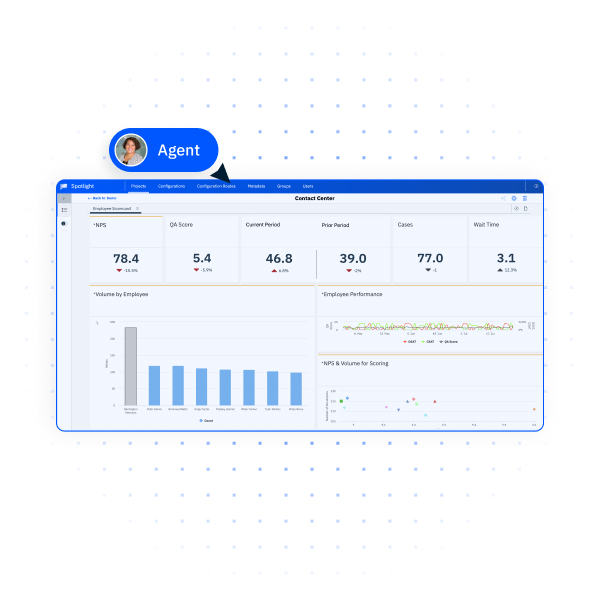
A screenshot of a contact center agent scorecard

AI-Driven Text Analytics

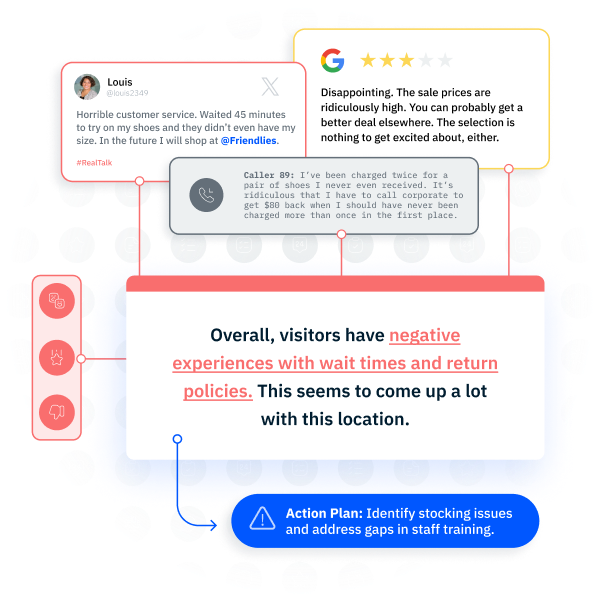
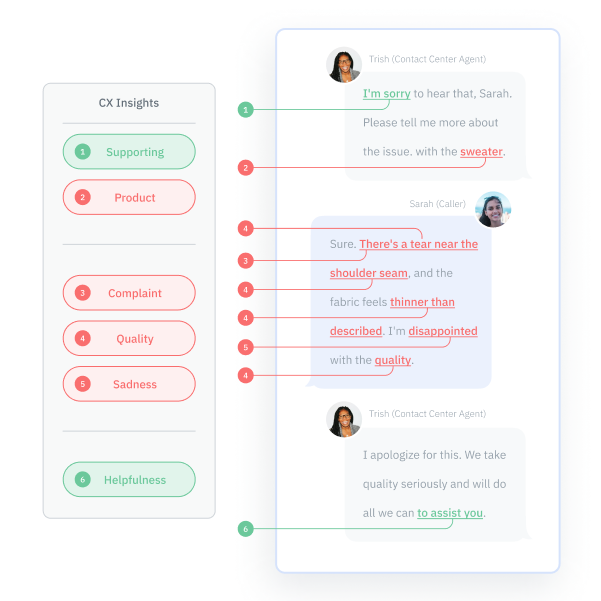
AI-Driven Text Analytics refers to the application of artificial intelligence and machine learning techniques to analyze and derive meaningful insights from unstructured text data. In the context of an omnichannel contact center, unstructured data often includes customer interactions from various sources, such as emails, chat transcripts, social media comments, and survey responses. Traditional analysis of such data can be time-consuming and challenging due to its unstructured nature, but AI-driven solutions bring efficiency and accuracy to the process.
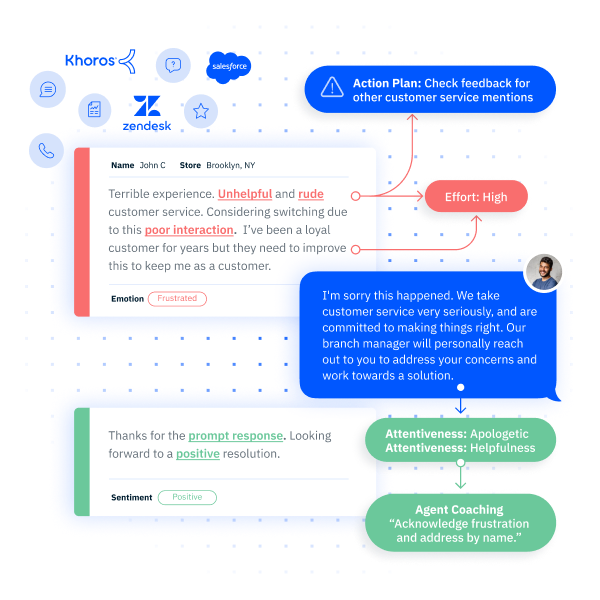
An online chat between a customer and a contact center agent

Transcription Services

Contact centers often deal with a significant volume of audio data, including customer service calls, feedback voicemails, and internal meetings. Manually processing and analyzing these recordings can be time-consuming and impractical. Transcription services streamline this by converting hours of audio content into text, making it more manageable for further analysis and exploration. This process is essential for making audio content accessible, searchable, and analyzable.

Quality Assurance

Quality Assurance in a contact center involves systematic monitoring and evaluation of customer interactions to ensure that they meet predefined standards of excellence. This process encompasses various elements, including adherence to scripts, accuracy of information provided, adherence to company policies, and the overall effectiveness of customer service.

Strategic Services

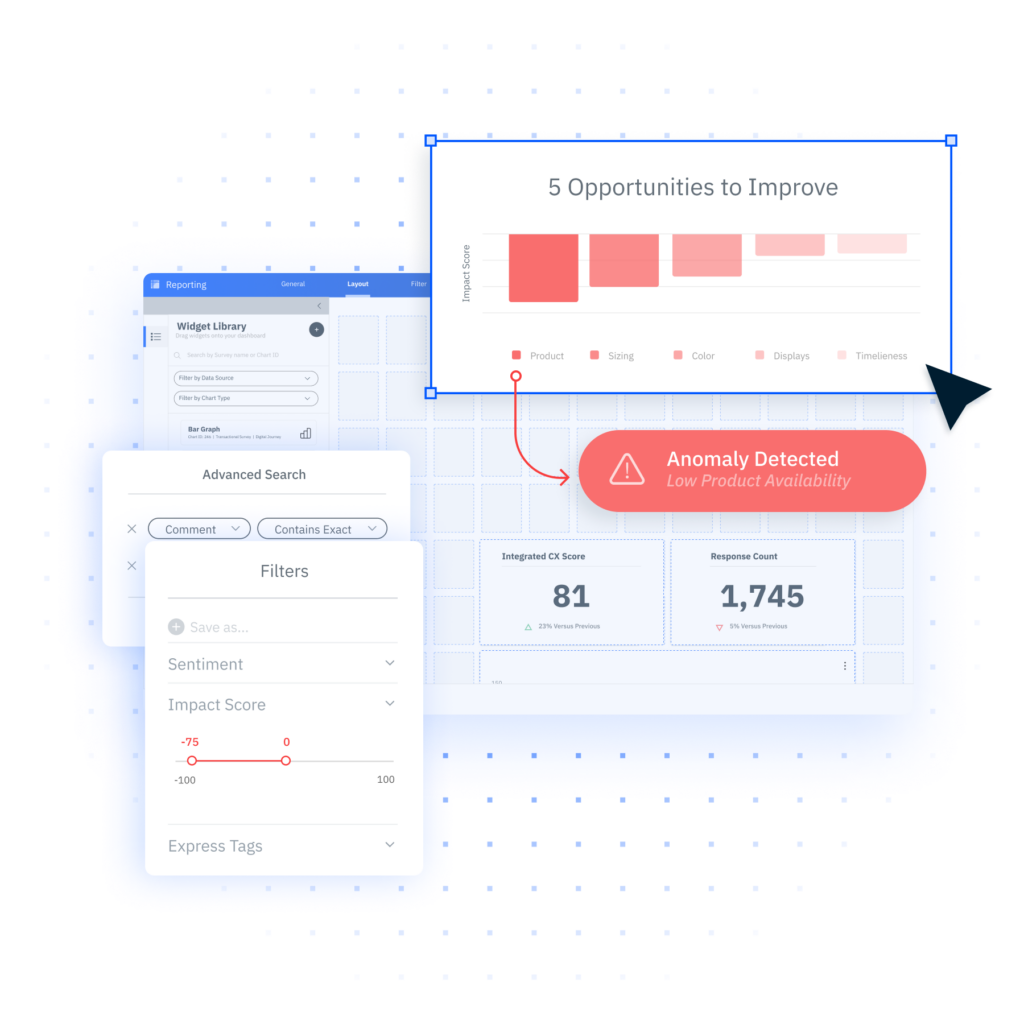
Strategic Services in an omnichannel contact center context involve a suite of specialized offerings designed to provide businesses with expert guidance and actionable insights. Engaging in strategic services allows businesses to tap into the expertise of professionals who specialize in optimizing contact center operations. These experts often have a deep understanding of industry trends, best practices, and emerging technologies. These services also include the provision of detailed and customized reports that dive into contact center analytics and answer key business questions. These questions could revolve around performance metrics, customer satisfaction, operational efficiency, and other critical aspects of contact center management.
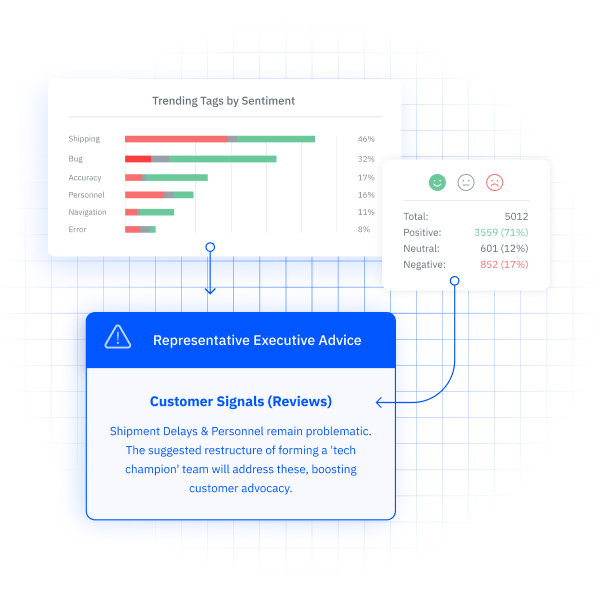
Two data pieces pointing to a piece of a feedback from a representative.

Omnichannel Contact Center Examples

Numerous organizations across various industries have successfully implemented omnichannel contact centers to enhance customer experiences and streamline communication across multiple channels. To represent the practical uses of an omnichannel contact center solution, let’s examine two customers in two different industries. 

Financial Services

A customer, Sarah, encounters an issue with a recent credit card transaction. She notices an unauthorized charge on her credit card statement and is concerned about potential fraud.

The Omnichannel Solution:

  • Mobile App Investigation: Sarah logs into the mobile banking app to review her recent transactions. The app provides detailed information about each transaction, allowing her to identify the unauthorized charge.
  • In-App Chat Support: Using the in-app chat support feature, Sarah initiates a conversation with a customer support representative. She explains the issue and provides details about the unauthorized transaction.
  • Live Video Call Option: The customer support representative, recognizing the sensitivity of the issue, suggests initiating a live video call through the mobile app. This allows Sarah to show any supporting documents or ID verification directly.
  • Context Preservation: Throughout the interaction, Sarah’s information and conversation history are seamlessly transferred from the mobile app to the video call, ensuring that she doesn’t need to repeat information and that the context is preserved.
  • Resolution and Follow-Up: The representative investigates the issue in real-time, verifies Sarah’s identity, and resolves the unauthorized charge. During the video call, the representative guides Sarah through the steps to secure her account and provides assurance. Follow-up communications are sent through secure channels, ensuring privacy.

In this financial services scenario, the omnichannel contact center enables a smooth and secure resolution for the customer, utilizing mobile app features, chat support, and live video calls to address the issue comprehensively.

Retail

Omnichannel contact centers can also succeed in other industries. Let’s say John, a retail customer, purchases a laptop online from a retail store. Unfortunately, the laptop arrives with a defect, and John needs assistance with returning and replacing the product.

The Omnichannel Solution:

  • Live Chat Support: Using the website’s live chat support, John initiates a conversation with a customer service agent. He explains the issue with the defective laptop and requests assistance with the return and replacement process.
  • Email Correspondence: To provide supporting documentation, John uploads pictures of the defective product through the live chat. The customer service agent suggests continuing the conversation via email to maintain a documented trail.
  • In-Store Return Option: The retailer’s omnichannel strategy includes an option for in-store returns. The customer service agent provides John with the option to return the defective laptop at a nearby physical store for quicker resolution.
  • Context Transfer: When John visits the physical store, the in-store staff has access to the email correspondence and live chat history, ensuring a seamless continuation of the resolution process. John doesn’t need to re-explain the issue.
  • Replacement Process: The in-store staff processes the return, facilitates the replacement of the laptop, and ensures that John leaves the store with a fully functional product. Any additional communications or confirmations are sent via email for John’s records.

In this retail scenario, the omnichannel contact center facilitates a convenient and efficient resolution for the customer, utilizing online order tracking, live chat support, email correspondence, and in-store returns to address the issue effectively.

Develop Your Omnichannel Contact Center 

With InMoment’s omnichannel contact center software, you can house all your data in one place. This capability allows you to deliver consistent, quality, and customer-centric experiences. Schedule a demo to see what InMoment can do for you. 
Two women sitting next to each other looking at a tablet

Guiding a loved one through the customer journey of senior living is an intimately personal and emotional endeavor. At the heart of it; senior care is more than finding a place for a loved one to reside. It’s about fostering a community steeped in care, safety, comfort, and boundless joy. In this context, maintaining a sterling reputation in the realm of senior living becomes pivotal—it’s the bridge aligning with the aspirations of those seeking unparalleled care for their cherished family members. Upholding this reputation ensures that your services deeply connect with and satisfy the needs of those pursuing exceptional care for their loved ones.

Why Reputation Management is Important for Senior Care

More than 90% of families heavily rely on online reviews when deciding on senior living communities, a significant increase from the 82% recorded in 2020. This highlights the critical need for a proactive reputation management strategy, not just for sustained success but as an essential component for care organizations aspiring to attract seniors and maintain a reputation for exceptional service acknowledged online. To effectively appeal to these families and surpass competitors, implementing targeted reputation management strategies within senior care is paramount.

Reputation Management Strategies for Senior Living 

Crafting a robust reputation management strategy for senior living hinges on understanding your core audience, primarily the families of prospective residents. Their needs, concerns, and expectations form the bedrock of your approach. It’s vital to define clear messaging that resonates with this audience, conveying the essence of your care services consistently across all touchpoints. This consistency in messaging cultivates trust and reliability, crucial elements in building a positive reputation within the senior living landscape. 

Once you’ve established alignment with your primary audience and messaging, there are three effective strategies to fortify your reputation: optimizing local business listings, amplifying positive reviews, and harnessing valuable insights from customer feedback. These actions work in unison to bolster your standing within the senior living community, enhancing visibility, credibility, and responsiveness to refine the overall resident experience.

Manage and Optimize Local Business Listings 

The primary step toward building your online reputation involves either creating or claiming your business listing across prominent directories like Google Business, Facebook, Bing Places, and Yelp. Given that nearly half of all Google searches, 46% to be exact, incorporate local intent, there’s a significant surge in people actively seeking services like senior care within their local area. By creating or claiming your business listing, you could show up for common search terms such as “senior living near me” or “senior care near me”, while also securing placement in local search maps such as Google Maps or Bing Places.

Ensure Accuracy and Consistency of Your Business Information

Once your business listing is verified, the subsequent stride involves furnishing comprehensive business information, encompassing the business name, address, phone number, website, and operating hours. Maintaining not just accuracy but also consistency across these details is paramount. Even minor details like abbreviations and punctuations, should be unified across all your owned business listings.

Save Time with Listing Management Tools

Managing multiple locations across diverse business directories can be time-consuming and prone to errors, potentially resulting in misinformation that may dissuade families from exploring your offerings in favor of competitors. Additionally, inconsistencies in information can negatively affect your local listing rankings. To streamline this process and minimize errors, leveraging local listing management tools becomes imperative. These tools facilitate effortless monitoring and management of your business listings with minimal effort, ensuring that your business information remains consistently accurate and reliable for online users.

Crafting an Effective Approach for Gathering Reviews

Ensuring a thriving senior residence involves not just providing exceptional care but also fostering a sense of trust and community. One effective way to achieve this is by actively seeking and encouraging reviews from residents and their families. Begin by creating a positive environment that naturally elicits positive customer feedback and optimizes your senior living reviews. Train your staff to prioritize personalized care, addressing the unique needs and preferences of each resident.

Find Out Your Brand's Online Reputation Score

Leverage Popular Review Sites

Encourage residents and their families to share their experiences on popular review sites. You can boost the volume of feedback you receive by simplifying the process like generating a feedback link such as a Facebook or Google review link and sending it directly via email. Another option worth exploring is the integration of QR codes into your mailing materials, contributing to a seamless and efficient feedback gathering process. Additionally, leverage the power of social media to engage with your community. Share heartwarming stories, testimonials, and encourage open conversations. Create an online space where residents and their families feel comfortable expressing their thoughts about the community.

Surveys and Follow-Up

Implementing a structured feedback system is crucial. Utilize online surveys and send follow-up emails after positive interactions to kindly request reviews. By showcasing the positive aspects of your senior living community and actively seeking feedback, you not only create a transparent and open atmosphere but also enhance your community’s online presence, attracting potential residents who value authenticity and personal care.

Highlight and Promote Positive Reviews

For families embarking on the journey to find the perfect senior living community is a significant step often guided by heartfelt experiences shared through reviews. While your messaging can do the best it can to persuade people to visit your community, it’s the sincere stories of families who have walked the same path that truly touch the heart and convince them to schedule a visit. Therefore, it’s important to highlight these positive reviews to showcase the compassionate care your facility provides. 

Don’t be afraid to seek feedback, instead consider it a treasure trove of shared experiences that can guide others on their senior care journey. It also opens the door to uncover opportunities to improve care and trends to outperform local competitors. People prefer to read the authentic voices of those who have interacted with your staff and experienced the warmth of your facilities. These stories hold immeasurable value as they provide a genuine take on the senior living experience. Actively seek out these stories, the ones that capture the essence of your community, and bring them to the forefront. Share them within your marketing materials, website, and social media. 

Managing these reviews and populating them on your website can be time-consuming and tedious. To help automate this process, there are many review widgets and software that can help including InMoment’s reputation management software. With this tool, your team can effortlessly weave review widgets throughout the website starting with the homepage, creating a virtual tapestry of shared moments as they navigate and explore living options. You can even dedicate a whole webpage to these stories highlighting appreciation and gratitude for current residents, offering solace and insight to those considering your community. 

For many families and seniors, these heartfelt narratives become the deciding factor in choosing a senior care service or facility. By delicately placing recent testimonials alongside the commendations from other seniors, you not only simplify the research process but also cultivate trust. It’s a testament to your commitment to transparency and creating a genuinely compassionate senior living experience. Every review is not just a reflection of your facility; it’s a shared journey of care, empathy, and support.

Extract Valuable Insights from Feedback

An integral aspect of any senior care reputation management strategy involves enhancing the overall living experience. Testimonials go beyond attracting new residents; they serve as a reflection of the quality of care. For example, you may receive responses highlighting that cleanliness is frequently associated with positive feedback, while there may be negative sentiment often related to the lack of attentiveness. Therefore, tapping into recent reviews will not only reveal the strengths of senior living but also bring to light areas of improvement that might be overlooked.

Streamline Analysis with AI

However, combing through every feedback can be a labor-intensive and time-consuming task. To accurately understand and uncover overarching themes, you would need to manually identify keywords indicative of positive or negative sentiments. This could take days or even weeks to organize and finalize insights into an actionable strategy that could improve your senior living reputation. 

However, with today’s technological advancements, this process can be automated. By harnessing customer experience AI, hundreds or even thousands of reviews can be analyzed within minutes, providing accurate keyword analysis and trending data. Obtaining this accurate and insightful data in a shorter period of time, allows your team to quickly implement operational changes to positively impact the quality of care. This not only brings satisfaction to current residents but also leaves a lasting impression on those considering your senior care facility. Taking swift action based on review data demonstrates that you’re attuned to the needs of your seniors—a crucial factor for individuals seeking senior care options.

How to Pick the Right Reputation Management Partner

Selecting the appropriate reputation management partner for a senior living community is a pivotal step in ensuring a positive and trustworthy image in the eyes of residents and their families. Begin by clearly outlining the specific needs and goals unique to a senior living environment. Identify areas that require attention, whether it’s maintaining positive reviews, managing feedback, or enhancing the overall perception of the community.

Research and Proof of Success

Conduct comprehensive research to identify reputation management companies with expertise in the senior living industry. Explore their track record, focusing on case studies, client testimonials, and online reviews related to senior care facilities. Seek recommendations from other senior living communities or industry professionals who have faced similar challenges.

Open Communication and Transparency

Transparency is crucial in this partnership, particularly in the realm of senior care where trust is paramount. Opt for a reputation management partner who is open about their strategies, methodologies, and reporting processes. Effective communication is key, ensuring that the partner keeps you informed throughout the entire process, addressing concerns and aligning their efforts with the unique values and objectives of the senior community.

Evaluate Services

While budget considerations are important, prioritize value over cost. Evaluate the services offered by potential partners, looking for options that cater specifically to the needs of a senior living community. Assess the long-term benefits of their solutions, considering how their strategies can positively impact the community’s reputation and resident satisfaction.

Streamlined Services and Technology

Seeking a reputation management partner for your senior care facility should involve those equipped with modern, advanced technology to enhance operational efficiency. Look for a partner that simplifies the monitoring and management of your reputation, utilizing cutting-edge tools like Artificial Intelligence (AI) to streamline workflows. The objective is to reduce the workload on your team, ensuring that the technology doesn’t create additional burdens but rather facilitates smoother processes. By embracing such advanced solutions, your team can redirect their focus towards more vital strategies, particularly in enhancing the overall senior living experience.

Integrations

In addition to selecting a partner with dependable technology, it’s important that they can integrate with widely-used senior living platforms. An effective reputation management strategy for senior living entails the ability to effortlessly aggregate, view, and respond to reviews on these platforms. For example, InMoment’s award-winning feedback software can easily integrate with the well-known senior care network, A Place for Mom, where hundreds of thousands of reviews offer first-hand experience from seniors and their loved ones. 

In essence, finding the right reputation management partner for a senior community involves meticulous research, transparent communication, and a keen understanding of the unique challenges and values within the senior care industry. This approach will help establish a partnership that safeguards the reputation of the community and fosters trust among residents and their families.

Take Charge of Your Senior Living Reputation Management with InMoment

Guiding a loved one through the senior living journey requires a reputation management strategy that transcends the traditional view of care facilities. It’s about fostering a community rooted in care, safety, and joy. As more than 90% of families turn to online reviews, implementing targeted reputation management strategies becomes imperative. Choosing the right reputation management partner involves thorough research and transparency, aligning strategies with the unique needs of the senior care industry. With the right approach, senior care facilities can thrive in the digital landscape, attracting contented families and standing out in the competitive senior living market. Discover how InMoment can help senior living communities navigate the evolving digital landscape successfully, by scheduling a reputation management demo. Start building a favorable reputation that not only draws in families but also distinguishes your senior living community in the competitive market.

References 

LinkedIn. The Power of Reviews: Why Senior Living Communities Need to Prioritize Online Reputation Management. (https://www.linkedin.com/pulse/power-reviews-why-senior-living-communities-need/) Accessed 1/9/24.

Creating Results. 8 Senior Living Statistics You Should Know. (https://creatingresults.com/blog/2020/08/27/8-senior-living-statistics/) Accessed 1/9/24.

Safari Digital. 18 Local SEO Statistics that Matter in 2023. (https://www.safaridigital.com.au/blog/local-seo-statistics/) Accessed 1/9/24.

Two women in a retail store looking at clothes

It can be argued that the customer experience is more important in retail than any other industry. With 93% of consumers reading reviews before making a purchase, and 58% of consumers being willing to drive further or pay more for a product with good reviews, a good customer experience and brand reputation management have never been more critical than it is today. 

The retail customer experience is also a complex one. It encompasses the in-store experience just as much as it does the online experience. In order to master the retail customer experience, you first need to understand the whats, the whys, and the hows. 

What is the Retail Customer Experience?

At its core, the retail customer experience encompasses every touchpoint a customer has with a brand, from the first interaction to post-purchase engagement. But, it goes beyond transactions, it also encompasses emotions, perceptions, and overall satisfaction with the brand from the view of the customer. 

Why is the Retail Customer Experience Important

The retail customer experience has become increasingly significant in the success and sustainability of any business operating in the modern marketplace. Consumers can quickly become lifetime customers and brand advocates when they have continuous positive experiences with a brand. But, there are more benefits to a well-crafted retail customer experience that go beyond customer loyalty. Let’s examine a few:

1. Revenue Growth

Satisfied customers are more inclined to spend more and make repeat purchases. When the retail customer experience exceeds expectations, customers feel a connection with the brand, leading to increased spending and higher lifetime value. Positive experiences contribute directly to revenue growth as customers become more engaged and willing to invest in the brand.

2. Competitive Edge

In a crowded marketplace where products and services may seem similar, the retail customer experience becomes a powerful differentiator. Businesses that prioritize delivering exceptional customer experiences gain a competitive edge over their counterparts. Customers are more likely to choose a brand that provides not only quality products but also a memorable and positive overall experience.

3. Word-of-Mouth Marketing

Satisfied customers become brand ambassadors, sharing their positive experiences through word-of-mouth marketing. Recommendations from friends, family, or online reviews play a significant role in attracting new customers. A brand that consistently delivers excellent retail customer experiences is more likely to benefit from positive word-of-mouth marketing, expanding its customer base organically.

How to Improve the Retail Customer Experience

In order to improve your customer experience in retail stores, you will need to focus on two main types of experiences: in-store and digital. These two types of experiences are equally important in cementing customer loyalty and improving the overall experience that is associated with your brand. 

Improving the Digital Retail Experience

Providing an exceptional online retail experience is crucial for capturing and retaining customers. Here are strategies to enhance the digital customer experience:

1. User-Friendly Website

Design and optimize your website for ease of use. Ensure intuitive navigation, quick loading times, and a seamless checkout process. A clutter-free and visually appealing layout enhances user experience and encourages visitors to explore and make purchases.

2. Personalization

Leverage data analytics and customer insights to personalize the online shopping experience. Implement personalized product recommendations, targeted promotions, and customized content based on individual preferences and past interactions. Personalization creates a more engaging and relevant experience for users.

3. Responsive Customer Support

Offer responsive and accessible customer support across various channels, including live chat, email, and social media. Providing real-time assistance and resolving issues promptly contributes to a positive online experience. Implement chatbots for immediate responses and streamline customer communication.

4. Mobile Optimization

Given the prevalence of mobile device usage, optimize your website for mobile responsiveness. Ensure that the online shopping experience is seamless and visually appealing on smartphones and tablets. Mobile optimization is essential for capturing the growing number of consumers who prefer to shop on mobile devices.

5. Secure and Transparent Transactions

Instill confidence in online shoppers by prioritizing the security of online transactions. Clearly communicate your website’s security measures, use secure payment gateways, and provide transparent information about shipping costs and return policies. A secure and transparent transaction process builds trust with customers.

Enhancing the In-Store Retail Customer Experience

While digital experiences are vital, the in-store customer experience remains a cornerstone of retail success. Here are strategies to enhance the in-store retail experience:

1. Store Layout and Design

Create an inviting and well-organized store layout that aligns with your brand identity. Consider factors like product placement, aisle navigation, and overall ambiance. An aesthetically pleasing and easy-to-navigate store layout contributes to a positive in-store experience.

2. Staff Training

Invest in comprehensive training programs for your staff to ensure they provide excellent customer service. Equip them with product knowledge, effective communication skills, and the ability to address customer queries. A well-trained and motivated staff enhances the overall in-store experience for customers.

3. In-Store Events and Promotions

Organize in-store events, promotions, or exclusive sales to create a sense of excitement and urgency. These initiatives not only attract foot traffic but also provide customers with a memorable and enjoyable shopping experience. Consider incorporating interactive elements or entertainment to make the events more engaging.

4. Efficient Checkout Process

Streamline the checkout process to minimize wait times and enhance convenience. Implement technologies like self-checkout kiosks or mobile payment options to offer customers faster and more efficient ways to complete their purchases. An efficient checkout process contributes to overall customer satisfaction.

5. Customer Feedback Stations

Place feedback stations within the store to encourage customers to share their opinions and suggestions. Use this feedback to make informed improvements and adjustments. Actively seeking and acting upon customer feedback demonstrates a commitment to continuously enhancing the in-store experience.

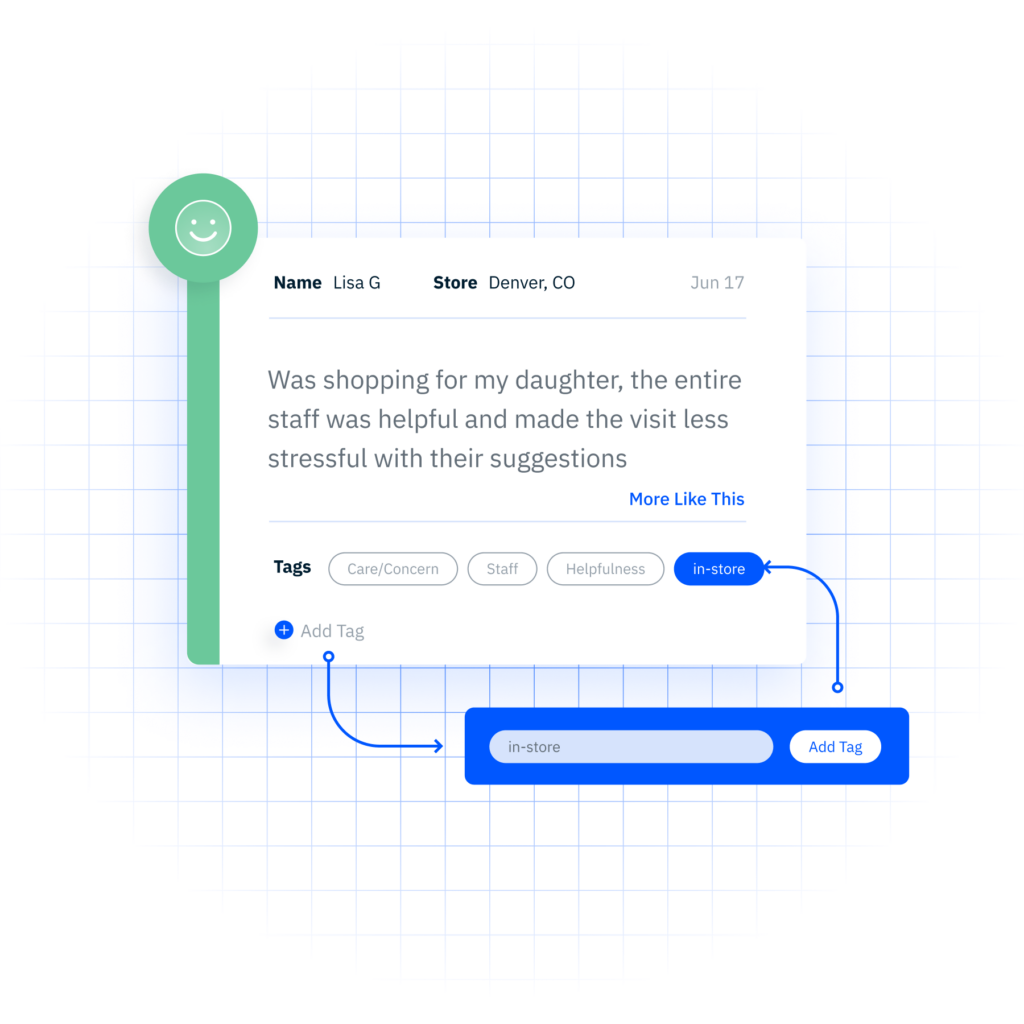
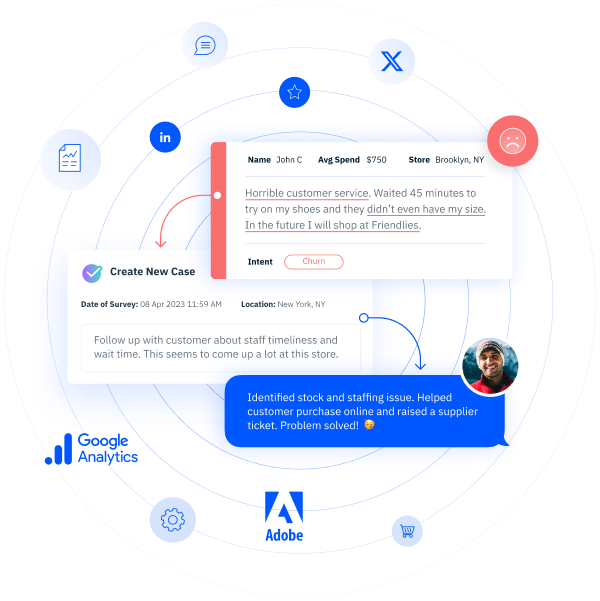
Using InMoment’s predictive customer analytics tool, you get automated insights from unstructured feedback that help you notice what needs to be improved, or what is performing well. 

A screenshot of a customer review after their visit to store

By focusing on both the digital and in-store aspects of the retail customer experience, businesses can create a cohesive and comprehensive strategy that caters to the diverse needs and preferences of their customer base. Integrating these strategies ensures a well-rounded approach that fosters customer satisfaction and loyalty across various channels.

How to Measure Customer Experience in Retail 

Effectively measuring customer experience in retail is essential for identifying strengths, areas for improvement, and overall customer satisfaction. There are three common customer experience metrics that most companies will use to measure customer experience. 

1. Net Promoter Score (NPS)

What it is: The Net Promoter Score (NPS) is a widely used metric that assesses customer loyalty by asking a simple question: “How likely are you to recommend our brand to others?”

How to measure: Customers respond on a scale from 0 to 10, categorizing them into promoters (9-10), passives (7-8), and detractors (0-6). The NPS is calculated by subtracting the percentage of detractors from the percentage of promoters.

Why it matters: NPS provides a direct indicator of customer satisfaction and loyalty. Higher NPS scores indicate a greater likelihood of customers promoting the brand.

2. Customer Satisfaction (CSAT) Score

What it is: CSAT measures overall customer satisfaction by asking customers to rate their experience on a numerical scale.

How to measure: Typically, customers respond on a scale of 1 to 5 or 1 to 10, indicating their level of satisfaction. The average score represents the CSAT score.

Why it matters: CSAT offers a straightforward way to assess customer satisfaction after specific interactions or transactions. Regularly tracking CSAT scores helps in identifying trends and areas for improvement.

3. Customer Effort Score (CES)

What it is: CES measures the ease with which customers can achieve their goals or resolve issues.

How to measure: Customers rate their agreement with statements like “The company made it easy for me to resolve my issue” on a scale. The average score represents the CES.

Why it matters: Reducing customer effort enhances satisfaction and loyalty. A lower CES indicates a more straightforward and positive customer experience.

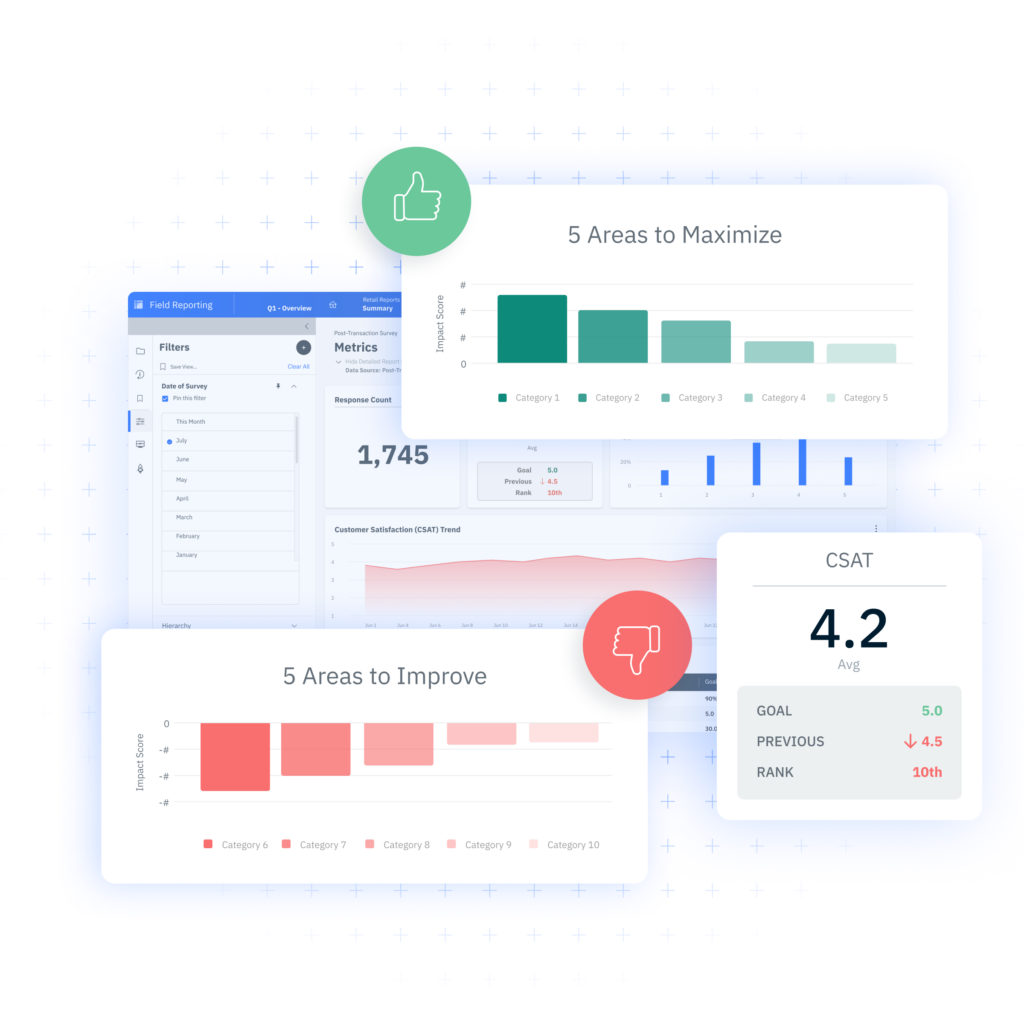
With InMoment’s reporting platform, your CX program performance can become quickly and easily digestible. We allow advanced data filters that allow you to segment insights for the audience that matters most to you. And, with our Reports and Dashboards Builder, you can create reports tailored to your business. 

A customer satisfaction (CSAT) reporting dashboard

Retail Customer Experience Trends

As a retailer, you know that the vast majority of the insights you need to shape your merchandising, product development, e-commerce, and overall business strategy are on review sites, social media, from your employees, and beyond. In order to stay ahead of your customers, you need to be utilizing all of these channels to the best of your ability. But, in an effort to help you do so, our strategic insights team has conducted independent research to uncover two major trends in retail customer experience. 

Trend #1: Consumers Will No Longer Settle for Convenience 

Convenience-based experiences such as self-checkout, buy online and pick up in-store, and flexible payment options are no longer seen as above and beyond features, they have now become the standard. That doesn’t diminish the importance of these features. As a matter of fact, without these features, consumers may not shop with you at all. 

In order to take your retail experiences to the next level, you need to embrace the power of social media and influencer marketing. In our research, we found that over 60% of retailers who had a strong TikTok and Instagram presence noted higher “purchase intent” sentiments. 

Trend #2: Consumers Now Expect Hybrid Experiences

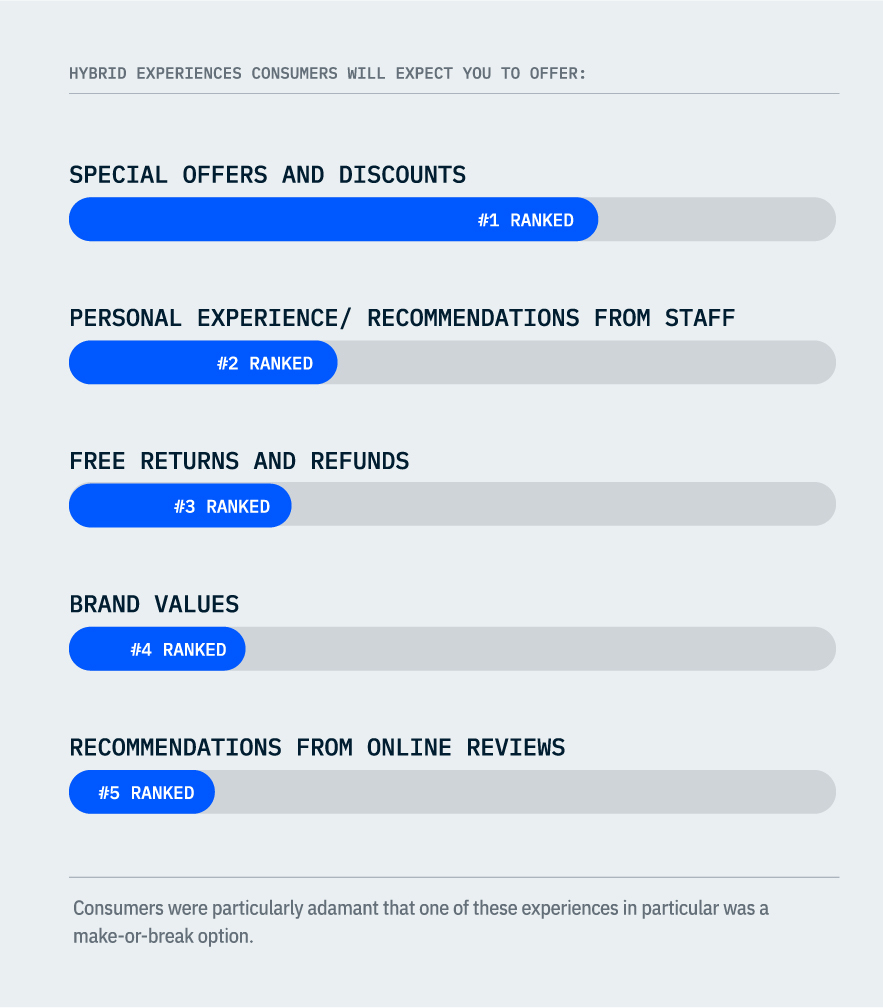
There is no longer a difference between your in-store customers and your online customers. One in three consumers now expect a blend of both in order to enjoy a seamless, hybrid experience. These hybrid experiences can take many different forms, but we asked consumers to rank the hybrid experiences they expect from retail brands:

A list of hybrid experiences ranked 1 to 5 based on importance to the consumer.

In our research, it became clear that consumers were excited at the prospect of using their mobile devices as a part of their in-store experience in a variety of ways:

  • 50% of consumers said they’d like to leverage their phone/an app to view product ratings and reviews while browsing in store
  • 50% of consumers said they’d also like to be able to view product options (such as colors or sizes) by scanning a product with their smartphone in store
  • 33% of consumers said they’d like to view recommended product pairings via an app/mobile site while in store
  • 25% of consumers said they’d like to view social media product reviews/mentions while shopping at a brick-and-mortar location

Essentially, consumers want to bring their favorite digital experience elements into the physical store with them. Whether it’s seeing what other buyers had to say in the moment, getting product pairing recommendations, or other similar options, your consumers are looking to be wowed with personalization while in store. It’s time to start delivering!

Retail Customer Experience Examples

One InMoment client that consistently delivers best-in-class retail experiences is FootLocker. FootLocker was able to utilize the XI Platform to get all of their Voice of Customer and operational data into one, easy to digest platform. As a result, they achieved: 

  • Increased OSAT score
  • Improved issue resolution 
  • Added social media capabilities to their program

Take Your Retail Customer Experience to the Next Level

Are you curious to see how InMoment can help you improve your retail customer experience? Whether it’s our AI capabilities, customer reporting, or contact center software, we have just the solution for you. Schedule a demo to see for yourself today! 

References 

Trustmary. Online Reviews: Statistics That Will Blow Your Mind [2023]. (https://trustmary.com/reviews/online-reviews-statistics-that-will-blow-your-mind/). Access 1/3/2024.

Voluntary Response Bias

If you received an invitation to take a survey, you would probably be more likely to actually participate if the topic of the survey interested you. That’s the heart of voluntary response sampling. Like all other methods of sampling, voluntary surveys have their pros and cons. It’s one of the easiest ways to sample quickly and get responses, but it can also result in voluntary response bias.

What is Voluntary Response Bias? 

A voluntary response is when someone volunteers to be a part of your sample. In doing so, you’re allowing them to skew your data and you don’t get results that are representative of the whole population. Thus, you get biased feedback. 

Voluntary response bias refers to how allowing your sample to self-select skews your data, and you don’t actually get results that are representative of your whole population. Voluntary response bias isn’t always inherently bad; it’s not considered the worst of the biases that could arise in your sampling. But it can lead to more extreme results than would actually be true for your population as a whole. 

Why Is Voluntary Response Sampling Biased? 

When you create a survey, you want to get results that are representative of your population, so you can make the right decisions based on the data. If you’re allowing your sample to self-select, you’re not getting data that shows your entire population. You’re only getting data that reflects your sample. That leaves you with results that aren’t generalizable, and generalizing them anyway is where bias becomes a real problem. 

Voluntary response also opens your survey up to the possibility of favoring more extreme results than your population actually experiences. Think about it this way: respondents are more likely to volunteer for a survey if they’re passionate about the topic. The passionate responses can skew your results. You’ll have the customers who loved your product the most (or had a terrible experience) responding instead of your average customer. That could lead to bias problems. You could end up making decisions on products and services that are slightly skewed by voluntary response bias. 

What Is an Example of Voluntary Response Bias?

To illustrate voluntary response bias, let’s consider a scenario involving a survey on customer satisfaction with an online retail platform.

Survey Design:

Imagine a company conducts an online survey to gather feedback on customer satisfaction with its e-commerce platform. The survey is distributed through email newsletters and social media, allowing customers to voluntarily respond to questions about their shopping experience.

Voluntary Response Bias in Action:

  • Customers who had an exceptionally positive or negative experience with the online retail platform may be more motivated to participate in the survey.
  • Customers with neutral or average experiences may be less inclined to take the time to provide feedback, potentially leading to a skewed representation of customer satisfaction.

Resulting Bias:

  • The survey results may disproportionately reflect the views of customers who had either highly positive or negative experiences.
  • The findings might inaccurately suggest that the majority of customers either love or strongly dislike the platform, creating a potential misrepresentation of overall customer sentiment.

Impact on Generalization:

  • If the company relies solely on these biased survey results, they may make decisions based on an exaggerated understanding of customer satisfaction, potentially overlooking the needs and opinions of the more moderate majority.

This example emphasizes how voluntary response bias can manifest in retail surveys when individuals with extreme opinions are more likely to participate, leading to a sample that may not accurately represent the broader spectrum of customer experiences. Recognizing and addressing such biases is crucial for obtaining a more balanced and reliable understanding of customer sentiments in the retail sector.

How to Avoid Voluntary Response Bias

Voluntary response bias can significantly impact the quality of your research results, and potentially lead to skewed and inaccurate conclusions. There are several steps researchers can take to minimize or avoid voluntary response bias and enhance the overall quality of their research. 

1. Use Random Sampling Techniques

Employing random sampling methods such as systematic sampling ensures that every member of the population has an equal chance of being selected. This reduces the likelihood of biased participation and contributes to a more representative sample.

2. Ensure Anonymity and Confidentiality 

Assure participants of the anonymity and confidentiality of their responses. When individuals feel that their privacy is protected, they may be more willing to participate, reducing concerns about potential repercussions and encouraging a broader range of participants.

3. Implement Post-Stratification Techniques

After data collection, post-stratification techniques can be used to adjust the weights of different groups to match the known population distribution. This helps correct any imbalances that may have occurred during the voluntary response process.

4. Pilot Test Surveys

Before launching a full-scale survey, conduct pilot tests to identify and address any issues with clarity, wording, or potential biases in the questions. Pilot testing helps refine the survey instrument and improve the quality of data collected.

5. Be Transparent About Study Objectives

Clearly communicate the objectives and goals of the research to participants. Providing transparency can attract individuals who are genuinely interested in the topic, rather than those with extreme opinions or biases, leading to a more balanced representation.

By incorporating these strategies into the research design, researchers can minimize the impact of voluntary response bias and enhance the reliability and validity of their study findings. It’s essential to carefully consider the potential biases inherent in voluntary response sampling and take proactive steps to address them throughout the research process.

Advantages of Voluntary Response Sampling

Voluntary response sampling has its own set of advantages in certain situations. Randomly selecting a population and getting those chosen to participate in the survey can be difficult, time-consuming, and expensive. Voluntary response bias can eliminate that. You aren’t spending time tracking down participants and designing your survey since your sample is just those who are already willing to participate in your survey. Here are some key advantages to consider:

1. Cost-Effective

Voluntary response sampling is often a cost-effective method as it involves minimal resources to collect data. Participants voluntarily choose to respond, reducing the need for extensive outreach efforts or financial investment.

2. Quick Data Collection

The process of collecting data through voluntary responses is generally rapid. Since individuals willingly participate, there is no need for lengthy recruitment processes or follow-ups, making it a swift method for gathering information.

3. Ease of Implementation

Implementing voluntary response sampling is relatively simple. Researchers can easily distribute surveys or questionnaires through online platforms, social media, or other accessible channels, allowing for a quick and straightforward data collection process.

4. Wide Geographic Reach

Voluntary response sampling often allows for a broad geographical reach. Through online surveys or other digital means, researchers can attract participants from diverse locations, contributing to a more extensive and varied dataset.

5. Potential for Unbiased Insights

In some cases, voluntary response sampling may provide insights into niche or underrepresented groups. Participants who choose to respond may have a genuine interest in the topic, leading to a diverse set of perspectives that might not be captured through other sampling methods.

Disadvantages of Voluntary Response Sampling

Voluntary response sampling has some very obvious disadvantages. Using voluntary responses can allow bias to creep in on the results and skew data. Voluntary response also can introduce undercoverage bias. Your population could potentially be a complex and diverse group of people. When you use voluntary responses, only those who are inclined to respond are represented in the results. While voluntary response sampling has its advantages, it is crucial to be aware of its limitations and potential drawbacks. Here are some key disadvantages to keep in mind when deciding to participate in voluntary response sampling: 

1. Selection Bias

One of the most significant challenges with voluntary response sampling is the potential for selection bias. Individuals who choose to participate may differ systematically from those who do not, leading to a skewed representation of the population and compromising the generalizability of the findings.

2. Lack of Randomization

Voluntary response sampling lacks the randomization inherent in more rigorous sampling methods. This absence of random selection can contribute to a non-representative sample, making it difficult to draw accurate conclusions about the broader population.

3. Limited Control Over Sample Composition

Researchers have limited control over the composition of the sample in voluntary response sampling. Certain demographic groups may be overrepresented or underrepresented, impacting the reliability of the collected data and potentially introducing confounding variables.

4. Potential for Misleading Conclusions

Participants in voluntary response surveys may have strong opinions or experiences related to the subject matter, leading to biased results. This can result in findings that are not reflective of the overall population and may lead to misleading conclusions.

5. Difficulty in Establishing Causation

Establishing causal relationships is challenging with voluntary response sampling, as the self-selected nature of participants makes it difficult to determine whether observed correlations are causal or influenced by other factors.

When utilizing voluntary response sampling, researchers should be aware of these disadvantages and carefully consider the appropriateness of this method for their specific research goals and the nature of the population under study.

Collecting Responses and Feedback

Voluntary response bias is a real risk researchers face when using voluntary response sampling. But considering what voluntary response bias does to a survey also opens up a discussion of the larger challenges with surveying. Choosing methods and creating accurate, simple, and powerful surveys is important, and shouldn’t be taken lightly. With InMoment, you’ll have access to best-in-class survey tools that will help you collect, analyze, and act on customer feedback. Schedule a demo today to see it for yourself!

Customer Survey Questions

How do you respond when someone asks, “Are you doing okay today?” What if someone asked, “How do you feel today?” Most likely, you would answer these two questions slightly differently. One question asks you just generally how you feel while the other implies that you might not be doing well in the first place, so you might answer differently. There was bias in the wording of one question while the other stayed more open-ended. 

You have possibly come across this phenomenon in your customer surveying experiences. Asking the right question to get responses from customers is crucial to making surveys a valuable tool. When your business decisions are influenced by the feedback you get in customer surveys, it’s even more important to make sure you’re asking the right questions to get the right feedback. But what are the right questions to ask? Read on to learn more about the different types of customer survey questions and what questions can help you get the most valuable feedback. 

What Are the Different Types of Customer Survey Questions?

There are different types of questions you can ask customers for different types of surveys. A great survey will include a variety of questions to gather a variety of feedback. Depending on your goal for the feedback, you’ll want to focus on different aspects of the problem you’re exploring. We’ll walk you through four different types of survey questions to consider. 

Open-Ended Questions

If you’re looking for deeper insights, open-ended questions can be extremely beneficial. These questions will include a section for customers to fill in or answer with more in-depth thoughts. These types of questions are sometimes more complex and can’t be answered in a word or two. The feedback you collect may also be complex, so it’s important to have a good way to understand and utilize the data. When you get longer answers, it can be difficult to mine for the key insights, so it’s important to have a strong analytics system in place. 

Open-ended questions also run the risk of customers choosing to skip these questions. These questions require more thought and effort to write up or talk about their answers that some customers may choose to go onto the next question. So open-ended questions can be extraordinarily valuable, but they need to be used sparingly to help customers finish the survey. Save open-ended questions for the insights you need that can’t be gathered from another question type. 

Yes or No Questions

While open-ended questions can provide deep insight, simple questions still serve a valuable purpose in a customer survey. A yes or no question just asks customers to select an option between yes or no. These questions are simple for customers to answer, so very few will skip the question. The main drawback of this type of question is that it will only provide a little information about how the customer feels about a topic. But, despite that, these questions prove valuable to revealing a problem. For more insight, you may need a follow-up question, but a simple yes or no question can still give you a good idea of where a problem may lie. 

Options Questions

Options questions are another simple question type that gets more specific than just yes or no questions. For these types of questions, customers will choose from a predetermined set of options. Sometimes it’s beneficial to allow customers to select more than one option, and you should make that clear to customers. Option questions are also often very useful to find insight into if something is a problem—without requiring too much effort on the customer’s part to answer the question. The data you gather from options questions can be more manageable since it’s already decently organized, and the insights can still be incredibly valuable. 

Scale Questions

Scale questions allow customers to slide or select a numeric value that aligns with their answer. Often these numbers are attached to an answer or feelings. For example, a scale question might have three numbers for disagree, neutral, and agree. Scale questions give less detailed insight than open-ended questions, but they can give more detail than some yes or no questions. Scale questions, though, can involve more effort on the part of the customer—depending on how complex the scale is. On the other hand, scale questions data is very easy to use, find the average of, and begin implementing. 

Overall, these are some of the types of questions that many people use in customer surveys. All of these questions can be utilized in many different survey formats. These are some of the most common survey formats used. 

Survey Formats

  • Email surveys. These surveys typically include a link to questions that target a customer’s experience. Sometimes email surveys come after a purchase or to just check in with customers at any point in their journey. These online surveys are usually easy for customers to respond to, but sometimes the extra step of following the link can lose some customers and potential respondents. 
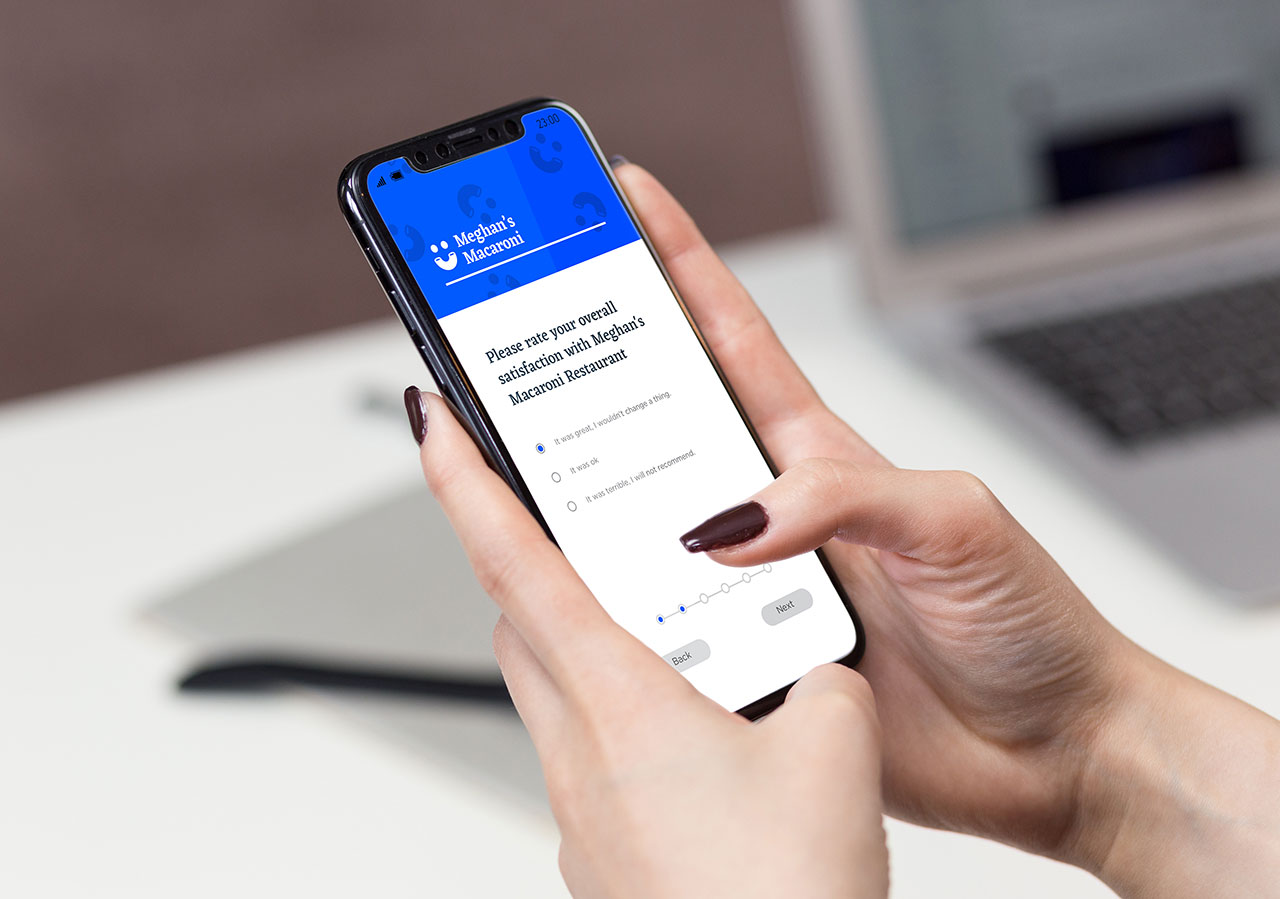
  • Pop-up surveys. Instead of sending out an email, you could use a pop-up survey to ask customers about their experience. For example, after a purchase, you might have a brief pop-up survey that asks them to rate their experience and to illustrate any challenges they faced on your website. 
  • Exit surveys. When a customer decides to leave your company, an exit survey can be a valuable tool to find out why. These are often online surveys that pop up after a customer unsubscribes, or they could be email surveys that are delivered when a customer hasn’t purchased a product in a long time. 
  • Receipt surveys. If you use a brick and mortar store, you probably hand out receipts to most customers. A link to a survey on the receipt can be a way to learn more about customers’ experiences. These links also work well for digital receipts. 
  • Comment card surveys. These surveys are an old staple, but they’re a staple for a reason. Using pen and paper, you can leave physical cards for customers to fill out and leave comments on their experience. It can take more of your time to enter this data (as online surveys are fairly simple to begin analyzing), but this survey type can reach other customers online surveys may not. 
  • In-store surveys. If you have a brick and mortar store, you can set up a survey system inside the store. Kiosks by entrances and exits are a great way to reach customers who may not subscribe to your email list or visit your website. 

What Are the Top Customer Questions to Get the Most Valuable Feedback?

The type of question and the format of the survey all influence how customers may respond, but the actual content of the questions can also have a large impact on how customers respond. What are the most valuable questions to ask in a survey? These are some of the main categories of questions and the specific questions that can help you get the most valuable feedback from customers. 

Demographic Questions

  • What is your name? This question is simple for customers to answer and can give you a way to organize the rest of the data you collect. 
  • What is your age/gender? These are more simple questions that customers likely won’t skip, but they can help you determine if there are any trends among certain demographics for your products or services. 
  • Where do you access your news? Understanding where your customers are going for information can help you determine where they could come across your products and how to best reach them in the future. 

Psychographic Questions

  • Do you prefer reading online or through a physical copy? Knowing where your customers want to get their information is important to know how to reach certain groups of customers and potential customers. If you know that your customers like to read physical copies, you’ll know it could be advantageous to have physical copies of materials for customers. 
  • How do you prefer to receive information? It can be valuable to simply ask how your customers prefer to receive information from you. If you know how they want to receive information, you can then focus your efforts on particular channels. 

For Marketing

  • How did you learn about our company? If you know how your customers learned about your company, you can begin focusing your marketing efforts on particular areas to reach more potential customers. 
  • How often do you use our product/service? Knowing when your customers use your products can help you find the specific areas where you could improve your marketing efforts to reach your customers. For example, if you learn your customers use your products or services three times a week, you could better market to future customers about how your products could be used. 
  • What made you decide to purchase from us? Learning about what drew customers to go through with a purchase can help you know where and how to enhance that to draw more customers through the marketing funnel and to commit to purchasing. 

For the Website

  • Have you used our website before? This question is simple and takes little time for customers to respond to, but it can inform you on whether or not customers use your website in the first place. 
  • Did you find what you were looking for on the website? It’s important to know how easy it is to navigate your website and how easy it is for customers to find what they’re looking for. It’s even more important to know if customers aren’t finding what they’re looking for, so you can begin to improve your website to facilitate ease and help customers make purchases. 
  • What would you change about the website? Customers may point out weak places on your website, or they might point out little points that could’ve prevented them from going through with a purchase. Knowing these things can help you fine tune your website to enhance the customer experience. 

For Product Improvements

  • Which features do you love about this product? If you know what customers love, you’ll know what’s working well. If you know what’s working well, you’ll be better able to improve your products to enhance what works. If customers love a particular part of your product, you can bring that out more, adjust the parts that aren’t working, and add what customers love to new products. 
  • What would you change about the product? If a customer would change something about the product, it’s worth knowing about. Those suggestions can help you pinpoint areas for improvement and how a customer might like to see the product improved. 
  • What do you like the least about this product? Asking customers about what they don’t like can show you where the weak spots are with your product, so you can begin finding the right ways to improve it. 

For Products That Aren’t Selling

  • What challenges are you trying to solve with this product? If you know why a customer bought the product, you can figure out how you might market the product that isn’t selling better. For example, if customers use a product that’s not selling well to solve a problem that you hadn’t intended the product for, you could shift marketing to begin targeting customers with that particular problem. 
  • What would have stopped you from buying the product? If you know where a customer would have given up, you can work to keep future customers from stopping at that point. 
  • Do you feel that the product is worth the cost? Sometimes a product isn’t selling because the price doesn’t match the product. Knowing this can help you adjust and find ways to make a product be successful. 

To Measure Customer Experience

  • How likely are you to recommend this product or service? This simple question has customers rank the likelihood of recommending the product on a scale of 1 to 10. Ultimately, this question can help you determine your Net Promoter Score
  • How satisfied are you with your experience with our company? You likely want to know how satisfied your customer is with your company and products, and customer satisfaction survey questions can help you understand that​​. Using this survey question can also help you determine your Customer Satisfaction score
  • How well did our company help you handle an issue you had? Customers come across issues regularly, and your customer service representatives will often help them. It’s important to know how your team is working and where your customer effort score is. 

5 Things Good Customer Survey Questions Should Do

Customer surveys play a pivotal role in understanding and improving the customer experience. The effectiveness of these surveys hinges on the quality of the questions posed. Let’s delve into the key attributes that define what good customer survey questions should do:

1. Elicit Specific and Actionable Responses

The hallmark of effective survey questions is their ability to extract clear and actionable feedback. Ambiguous or convoluted queries can muddy the waters, making it essential to craft questions that lead to precise and useful insights.

2. Address Relevant Topics

Good survey questions are purpose-driven, focusing on topics that directly align with the objectives of the survey. Whether gauging satisfaction levels or exploring product preferences, questions should be tailored to the specific goals at hand.

3. Consider the Customer’s Perspective

Crafting questions from the customer’s viewpoint is crucial. Language should be accessible, avoiding industry jargon or technical terms that might alienate respondents. Questions should resonate with customers, ensuring clarity and ease of understanding.

4. Encourage Honest and Unbiased Feedback

Neutral wording and a balanced approach characterize questions that elicit honest feedback. Customers should feel empowered to express their opinions candidly, even if they are critical. Minimizing bias in the questions contributes to the reliability of the responses.

5. Offer a Range of Response Options

Versatility in response formats—whether scales, multiple-choice, or open-ended—enables customers to express their sentiments in ways that suit them best. This flexibility enhances the richness of the data and ensures a comprehensive understanding of customer attitudes.

In essence, the success of customer survey questions lies in their capacity to generate actionable insights. By considering the customer’s perspective, maintaining clarity, and aligning questions with the survey’s objectives, businesses can gather valuable information to enhance their offerings and cultivate strong customer relationships.

Best Practices to Make Your Customer Questions More Fruitful

Once you have your survey questions designed, there are a few more best practices to keep in mind as you prepare your customer surveys: 

  • Always A/B test your surveys before sending them out to customers. It’s important to figure out what will work well in your survey early on. 
  • Make sure you ask satisfied customers and unsatisfied customers. Both types of customers will give you different results, so it’s important to ask both how they feel about something. 
  • Always ask short and relevant questions. Longer questions are complicated and hard to answer, and short questions will get your more response and better data. 
  • Send the surveys at the right time. Timing is key to nearly everything, including surveys. Research to determine when it would be best to send your particular surveys. 
  • Thank your customers for their feedback. People love to be valued for the work they do, so thanking your customers will help them feel valued and encourage them to respond to future surveys.

Overall, focusing on your survey questions can help you gain valuable feedback and insights from your customers. Surveys aren’t the only way to get information, but they are certainly a valuable tool to utilize. Asking the right survey questions reduces the bias that can come from wording questions in particular ways, which can lead to false information. Information gathered that is inaccurate, untruthful, or not useful can actually harm a company in the long run because there should always be a constant improvement.

Instead, it’s important to focus on choosing good survey questions that are both accurate and valuable. To learn more about how to improve your surveys, talk with an expert today!

customer experience transformation

Customer experience transformation is the key to staying ahead of your competitors and connecting with your customers. With 93% of companies embarking on a digital transformation and taking a digital-first approach to their business, it is important that your business keeps up in an increasingly online world by practicing customer experience transformation to ensure you are being proactive—not reactive—about your customer’s expectations.

What is Customer Experience Transformation?

Customer experience transformation refers to the strategic and holistic process by which a business fundamentally reimagines and reshapes its entire approach to interacting with customers across various touchpoints and throughout the customer journey. This transformation is driven by the recognition that providing an exceptional customer experience is not merely a nice-to-have, but a critical element for business success in today’s competitive landscape.

Customer experience transformation goes beyond cosmetic changes and surface-level improvements. It involves a comprehensive overhaul of internal processes, technologies, organizational culture, and customer engagement strategies. The ultimate goal is to create meaningful, seamless, and personalized experiences that meet and exceed customer expectations, fostering customer loyalty, advocacy, and ultimately driving business growth.

If you do not undergo continuous customer experience management to help your business keep up with customer and industry competitors, you may develop a static CX program. A stagnant CX program, or stagnant customer experience strategy, can lead to declining customer satisfaction, loss of competitive edge, and missed growth opportunities. As customer preferences change and new technologies emerge, businesses that fail to adapt risk being left behind.

Signs that Customer Experience Transformation is Needed

The signs of a static CX program are not only signals of current shortcomings but also alarm bells indicating the need for immediate transformation. These signs act as wake-up calls that should prompt businesses to reassess their strategies and take proactive steps toward revitalizing their approach to customer engagement.

  • Consistent customer complaints: Consistent and recurring customer complaints are undeniable indicators that something isn’t working with your CX program. When customers express frustration, dissatisfaction, or disappointment through repeated complaints, it suggests that their expectations are not being met. These complaints highlight areas where your business is falling short of delivering the experiences that customers desire. Ignoring these complaints or treating them as isolated incidents can result in a negative impact on your brand reputation management strategy and customer loyalty.
  • Outdated processes: As technology evolves and customer behaviors change, outdated processes can hinder your ability to provide seamless and efficient experiences. If customers find themselves navigating convoluted processes, encountering unnecessary delays, or facing unnecessary hurdles, it’s likely that your CX program is stuck in the past. 
  • Low employee engagement: The quality of customer experiences is closely tied to employee commitment. If your employees are disengaged or disconnected from the company’s mission, values, and customers, it will inevitably reflect in customer interactions. Employees who feel unsupported, undervalued, or disconnected from the organization are less likely to provide exceptional service.

Acknowledging these signs of a static CX program is the crucial first step toward igniting a transformational journey. Businesses must confront these indicators head-on and view them as opportunities for growth. Each complaint, outdated process, missed personalization opportunity, and instance of low employee engagement holds valuable insights that can guide strategic changes. 

5 Ways to Begin Your Customer Experience Transformation

When looking at ways to revive your CX program, it can be easy to get overwhelmed. But, we’ve narrowed down five of the most important things you need to focus on when undergoing a customer experience transformation. These five areas will make sure you are developing a CX program that is efficient, scalable, and successful!

#1: Collect and Analyze Real-time Data

Gone are the days of relying solely on periodic surveys to understand your customers. Real-time data collection, unstructured data analytics, and predictive customer analytics are essential for gaining insights into customer sentiment and behavior. Leveraging this data empowers you to make informed decisions and address issues promptly, ensuring a more satisfying customer experience.

#2: Implement Personalization Strategies

Customers today expect personalized experiences that cater to their unique preferences. Implementing personalization strategies, such as tailored product recommendations and customized communications, can greatly enhance the customer journey. By showing that you understand and care about each individual, you create a stronger emotional connection.

Learn how InMoment client, FootLocker, was able to consolidate all of its Voice of the Customer (VoC) programs and operational data into one platform, giving it the intelligence needed to create a unique experience for every customer.

#3: Embrace Omnichannel Engagement

Customers interact with businesses across various channels, both digital and physical. To provide a seamless experience, it’s essential to embrace an omnichannel customer experience approach. Integrating these channels ensures that customers receive consistent service and information, regardless of where they choose to engage.

La-Z-Boy partnered with InMoment to do just that. By using the XI Platform and InMoment’s Integrated CX approach, they were able to get structured and unstructured feedback from their customers into one hub. 

#4: Empower Employees

Happy employees lead to happy customers. Fostering a customer-centric culture and empowering your employees to take ownership of customer interactions can make a significant impact. When employees feel valued and motivated, they are more likely to go the extra mile to create exceptional experiences.

#5: Continuous Improvement

Innovation is the lifeblood of any successful CX transformation. Staying ahead requires a commitment to continuous innovation, adapting your approach to new technologies and customer trends. Companies that dare to innovate often find themselves leading the pack in customer satisfaction and loyalty.

At InMoment, we utilize the Continuous Improvement Framework with our clients to help them set their CX program up in a way that can change with their business and customer expectations. 

Driving Your Customer Experience Transformation

Undergoing customer experience transformation can be a daunting task. Luckily, we’re here to help! Schedule a demo today to chat with one of our experts and see what InMoment can do for you!

References 

Foundry. Digital Business Study 2023 (https://resources.foundryco.com/download/digital-business-executive-summary). Access 12/1/23.

Systematic Sampling

Data runs the business world these days. It’s great to always use data to back everything from major business decisions to website tweaks. But data is only as good as the survey that pumped it out. If you put bad information into your survey, your data isn’t reliable to base your business decisions on. How do you prevent this from happening? After all, you don’t want to have bad data at the helm of your decisions. 

One way researchers try to ensure their information is reliable is to use random sampling, specifically systematic sampling. By adding the element of randomness, results are more representative of the population you’re trying to study. 

Consider a retail business that wants to understand customer satisfaction with recent in-store experiences to pinpoint specific aspects needing attention, such as staff friendliness, store cleanliness, and product availability. They can use systematic sampling to gather feedback from every 15th customer that enters the store until they reach the desired sample size. Since these customers were chosen at random, the results can be used to represent and measure the entire customer base. 

What Is Systematic Sampling? 

Systematic sampling is a type of probability sampling that uses a specific interval to select participants. Probability sampling is when every member of the population (the entire group you want to study) has an equal chance of being selected. It’s the foundation of good data collection. However with systematic sampling, you choose a regular interval and select your participants that way. 

Imagine you have a list of 100 people in your population, and you want to use systematic sampling to select your sample. You decide on an interval of five. The best way to use systematic sampling is to choose a random place to start on your list. Maybe you start at the second name listed. From there, you would choose every fifth name to be a participant. That’s systematic sampling. 

The key features of systematic sampling are that it’s probability-based and that there’s a specific number interval used to select your sample. 

Types of Systematic Sampling

The basics of systematic sampling are the same, but there are a few different ways you can perform a systematic sample. The three types of systematic sampling are systematic random sampling, circular systematic sampling, and linear systematic sampling.

Systematic Random Sampling

Systematic random sampling is the classic way to use systematic sampling. It involves choosing a particular interval that is used to randomly select participants. But how do researchers choose effective intervals? Most use their population size and figure out how many they want in a sample. For example, if you have 100 people in your population, and you know you want to survey 20 of them, you know your interval will be 5.

Circular Systematic Sampling

Circular systematic sampling is most useful if you know you want to sample your entire population, but you still want the element of randomness in your sampling methods. Circular systematic sampling works the same as classic systematic sampling at first. But instead of stopping selection after you reach the end of the population list, you start again and keep selecting using your numeric interval until you’ve sampled everyone in your population. 

For example, let’s return to our list of 100 people. You choose the interval of 5 for your sampling and randomly select starting on the fourth name. You sample every fourth name until you reach the end of the list. But instead of stopping there, circular systematic sampling has you keep sampling every fourth name until you’ve gone through the whole list. It’s a great way to continue to select randomly while sampling your whole population. Circular systematic sampling isn’t a great choice if you have a very large population, and you only need a small sample and a way to whittle the list down. 

Linear Systematic Sampling

Linear systematic sampling is another variation, but it’s different from circular sampling. Linear systematic sampling doesn’t repeat and continues until the whole population is sampled. Instead, linear sampling uses a form of skip logic to select. Skip logic is something you might use to send participants in a survey to a different spot in the survey based on their answers. The researcher uses skip logic to select where to start on the survey and the interval to use. If you think of the list of 100 population members, here you would use skip logic to determine where the sampling starts and who is chosen, and it doesn’t repeat at the end.

When Is Systematic Sampling Used? 

When do researchers choose to use systematic sampling? Systematic sampling provides a unique way to use random sampling without having to have a lot of details on your population or on a tight budget or timeline. These are some of the scenarios when systematic sampling is commonly used: 

  • Budget or timing restrictions: If you have an upcoming deadline or a small budget for sampling, systematic sampling is simple to implement and quick for picking a sample under a time crunch. You can very quickly number a population list and randomly select an interval and starting point and choose participants quickly. This same process also requires few resources, and you don’t have to know much about your population to get started with systematic sampling. 
  • Simple outcomes: Systematic sampling is a simple way to choose a sample, so it’s best when used when the outcomes are simple. A complicated survey isn’t the place for a simple systematic sample. 
  • Absence of data patterns: Systematic sampling is used when the data aren’t arranged or have an obvious pattern or opportunity for data manipulation. That could lead to problems. But without that, systematic sampling is a great choice. 

How to Conduct Systematic Sampling

Performing systematic sampling involves a series of steps to ensure randomness and representation. Here’s a step-by-step guide:

1. Define Your Population

Clearly identify the entire population you want to study. This could be a list of customers, employees, or any group relevant to your research. 

If you do not have a list readily available, you can go into the field to survey the intended group. Take the retail example from earlier, an employee at the register could ask every 15th customer “Did you find everything you were looking for today?” This way of surveying customers mirrors the randomization process that a formal population list would give you. 

2. Determine Your Sample Size

Decide how many participants you want in your sample. This should be a reasonable fraction of your population and is often based on your research objectives and available resources.

3. Calculate the Sampling Interval

Divide the total population size by the desired sample size to determine the sampling interval. For example, if you have 100 people and want a sample of 20, your interval is 5 (100/20).

4. Randomly Choose a Starting Point

Begin at a randomly selected point in your population. This could involve using a random number generator or another method to ensure true randomness.

5. Select Participants Systematically

Starting from your randomly chosen point, select every nth individual, where n is the sampling interval. For instance, if your interval is 5, select every fifth person until you reach your desired sample size.

6. Avoid Biases

Ensure your list is randomly ordered at the outset to prevent bias. If there’s a discernible pattern in your population list, it could compromise the randomness of your sample.

7. Record Your Methodology

Document the steps you took in selecting your sample. This transparency aids in replicability and allows others to assess the validity of your sampling method.

Examples of Systematic Sampling

Let’s explore a couple of real-world examples to illustrate how systematic sampling works:

Example 1: Customer Satisfaction Surveys

Imagine you run a business with a customer database of 500 clients, and you want to gauge overall satisfaction. You decide to systematically sample 100 customers. Here’s how:

  • Define Population: Your population is the entire customer database.
  • Determine Sample Size: You decide on a sample size of 100 customers.
  • Calculate Sampling Interval: Divide 500 (total customers) by 100 (desired sample size) to get an interval of 5.
  • Random Starting Point: Choose a random starting point in your customer list.
  • Select Participants: Systematically survey every 5th customer from your starting point until you reach 100 responses.

Example 2: Employee Training Evaluation

In a company with 200 employees, the HR department wants to assess the effectiveness of a recent training program. They opt for systematic sampling:

  • Define Population: The population is all 200 employees who underwent the training.
  • Determine Sample Size: The HR team decides on a sample size of 40 employees.
  • Calculate Sampling Interval: Divide 200 (total employees) by 40 (desired sample size) to get an interval of 5.
  • Random Starting Point: Choose a random starting point in the list of trained employees.
  • Select Participants: Systematically evaluate the performance of every 5th employee until they reach 40 responses.

These examples demonstrate how systematic sampling can be applied in different scenarios, providing a structured and representative approach to data collection.

Common Mistakes in Implementing Systematic Sampling

While systematic sampling is a relatively straightforward method, certain pitfalls can compromise the integrity of your results. Avoiding these common mistakes is essential to ensure the accuracy and representativeness of your sample.

1. Non-Randomized Starting Point:

  • Mistake: Choosing a starting point that is not truly random can introduce bias. If the starting point follows a pattern or is influenced by external factors, the entire sample may not be representative of the population.
  • Solution: Use a randomization method, such as a random number generator, to select the initial participant. This helps eliminate any unintentional biases at the starting point.

2. Incorrect Calculation of Sampling Interval

  • Mistake: Calculating the sampling interval incorrectly can lead to an unrepresentative sample. Errors in determining the interval may result in oversampling or undersampling certain segments of the population.
  • Solution: Double-check your calculations to ensure the sampling interval is accurate. Verify that it aligns with your desired sample size and the total population.

3. Failure to Randomly Order the Population List

  • Mistake: Neglecting to randomize the order of the population list before implementing systematic sampling can introduce systematic biases. If there is an existing order or pattern, it may carry through to the sample.
  • Solution: Randomly order the population list before starting the systematic sampling process. This helps ensure that each individual has an equal chance of being selected.

4. Misinterpretation of Results

  • Mistake: Misinterpreting the results or drawing conclusions beyond the scope of the study can lead to inaccurate insights. Failing to recognize the limitations of systematic sampling may result in unwarranted generalizations.
  • Solution: Clearly define the objectives of your study and acknowledge the limitations of systematic sampling. Present the results with a clear understanding of what the sample can and cannot represent.

5. Ignoring Population Changes

  • Mistake: Assuming that the population remains static throughout the study without accounting for potential changes can lead to inaccurate results. Population dynamics, such as growth or decline, should be considered.
  • Solution: Periodically reassess the population characteristics and adjust the sampling process if there are significant changes. This ensures that your sample remains representative of the current population.

By being aware of these common mistakes and taking proactive measures to address them, researchers can enhance the reliability and validity of their systematic sampling approach. Regular checks, documentation, and attention to randomization principles are key to a successful implementation.

Advantages of Systematic Sampling

Systematic sampling offers several advantages that make it a preferred choice in certain situations:

  • Simple to understand: Not every method of sampling randomly is easy for researchers to understand—especially not with an extensive background in statistics. Systematic sampling is easy to grasp and easy to get started with.
  • Easy to implement: Nothing’s worse than having extremely difficult sampling requirements to grapple with that take forever to actually get started. Systematic sampling avoids that. Instead, it’s easy to get started quickly. 
  • Organized method of sampling: Organization with your data is key to making analysis simple and doable down the road. Systematic sampling is exactly what it sounds like: systematic. And systematic is organized and can help you keep track of what’s going on. 
  • Low risk for bias or contamination when done well: Data contamination and bias can leave you with bad results and bad data to base your decisions on. Systematic sampling can be a way to combat that. So long as the population list can be ordered randomly, there’s a low risk for bias or data contamination when you use this sampling method. 

Disadvantages of Systematic Sampling

While systematic sampling has its advantages, it also comes with certain limitations and challenges. Researchers have to plan for and make sure to avoid these when using systematic sampling: 

  • Risk of bias: While there’s a low risk of bias, there’s still a risk that has to be managed. The list of population members must be ordered randomly, or there’s sampling bias. That’s easy when you have a list of names and can order that randomly but could be complicated for other populations.
  • Risk of data manipulation: When you use systematic sampling, you’re setting up a system to use. There’s a risk that researchers might set up a system to intentionally give them the results they want, introducing a world of problems into their data. 
  • Requires population size: The other risks can be controlled for, but this disadvantage is an inherent one. To effectively use systematic sampling, you have to be able to number your population. That means you have to know your population size exactly before you can sample. It might be easy when you’re sampling the employees at your company, but it might be more difficult when you have a potentially massive population that you aren’t sure what it entails.  

Maximize the Potential of Systematic Sampling with InMoment

Overall, systematic sampling is a form of probability sampling and can be incredibly valuable on a tight timeline or budget with simple populations. The key is to make sure you’re using the right sampling method for your surveys. InMoment integrated CX approach gives you the power to combine data from multiple sources and discover value insights that drive better business decisions. Whether your sample size is in the hundreds or millions, the XI Platform can be changed to fit your business needs and help you make the most of your data—from sampling methods to analysis. Schedule a demo to see how InMoment can help you!

Your Guide to Mastering Brand Reputation Management

Brand reputation management is essential for businesses to maintain a positive public image and build trust with their customers. By actively monitoring and addressing public perceptions, companies can mitigate negative feedback, foster customer loyalty, and enhance their overall market presence.
a woman rating her experience online through a brand reputation management survey

Your company’s reputation is arguably more important than your product or service. That’s why maintaining a positive brand reputation is crucial for business success. Consumers today rely heavily on online information and reviews, making brand reputation management a top priority. In this comprehensive guide, we will delve into the intricacies of brand reputation management, exploring strategies, key components, pitfalls to avoid, and the role of online and employee reputation management.

What is Brand Reputation Management?

Brand reputation management is the proactive effort to shape and control the public’s perception of a brand. It involves monitoring, influencing, and maintaining the overall sentiment surrounding a business to ensure a positive image.

How to Create a Brand Reputation Strategy

Creating a brand reputation strategy may seem daunting at first. But it may be easier than you might think. Creating a business reputation management strategy starts with defining who you are as a business, and then making sure you are acting in accordance with that. 

1. Define Your Brand Identity:

Establish a clear and consistent brand identity that aligns with your values and resonates with your target audience. Doing this allows you to cultivate a strong and recognizable presence in the market. When your brand identity is cohesive and mirrors the values that matter most to your business, it becomes a powerful tool for connecting with consumers on a deeper level.

2. Monitor Online Presence:

Use tools to monitor mentions of your brand across various online platforms. Google Alerts, social media monitoring tools, and specialized software can help you stay informed. These tools are essential for understanding how your customers are talking about your brand.

3. Engage with Your Audience:

Build strong relationships with your audience through active engagement. Respond to customer feedback, both positive and negative, to show transparency and dedication to customer satisfaction. Doing this will help you foster a community around your brand, where customers feel heard, valued, and connected.

4. Establish Brand Guidelines:

Define clear guidelines for how your brand should be represented across different channels. Establishing brand guidelines is a pivotal step in creating a cohesive and recognizable brand identity. These guidelines serve as a roadmap for how your brand is visually and verbally presented across various channels. Consistency builds trust and recognition.

5. Employee Training:

Train employees to be brand ambassadors. Ensure they understand the brand values and guidelines, especially those who interact with customers directly.

6. Measure Your Success:

Crafting an effective brand reputation strategy is not a one-time endeavor; it’s an ongoing process that requires continuous evaluation and adaptation. Tracking results and measuring the impact of your strategies are essential components of ensuring your brand reputation management efforts align with your business objectives. 

In order to do that, you need to adopt an integrated CX approach to brand reputation management that makes data from multiple sources easily digestible in user-friendly reports. 

What are the Key Components of Brand Reputation Management?

Brand reputation management is a multifaceted discipline that involves strategic planning, continuous monitoring, and proactive engagement. Understanding the key components is essential for developing a comprehensive approach to safeguarding and enhancing your brand’s image. Let’s delve into the core elements that constitute effective brand reputation management. 

1. Trust Building

Trust is the cornerstone of a positive brand reputation. Establishing and nurturing trust requires consistent delivery on promises, transparency in communication, and a commitment to ethical business practices. Building trust is a continuous process that involves every interaction your brand has with its audience.

2. Customer Satisfaction

The satisfaction of your customers directly influences your brand’s reputation. Providing high-quality products or services, responsive customer support, and personalized experiences contribute to positive reviews and recommendations. Happy customers become brand advocates, amplifying positive sentiments.

3. Online Presence and Perception

Your online presence significantly shapes your brand’s perception. Monitoring and managing online reviews, social media mentions, and search engine results are critical. Strategic online reputation management ensures that your brand is portrayed positively across various online platforms.

4. Employee Engagement

Your employees are integral to your brand’s reputation. A positive internal culture translates into positive external perceptions. Investing in employee training, recognizing achievements, and fostering a workplace that aligns with your brand values contributes to a harmonious and authentic brand representation.

5. Crisis Management

No brand is immune to challenges, and how you navigate crises profoundly impacts your reputation. Developing a robust crisis management plan that includes timely communication, genuine apologies, and proactive solutions is essential for mitigating the potential damage to your brand.

Find Out Your Brand's Online Reputation Score

What to Avoid with Brand and Business Reputation Management

While there are proactive steps to take for a positive image, it’s equally important to be aware of potential pitfalls that could tarnish your reputation. Here are key aspects to avoid when navigating the realm of brand and business reputation management:

1. Ignoring Customer Feedback

One of the most common mistakes is neglecting customer feedback, both positive and negative. Ignoring customer comments, reviews, or complaints can create the impression that your brand is indifferent to customer concerns. Actively engage with your audience, address issues promptly, and demonstrate a commitment to customer satisfaction.

2. Reacting Emotionally to Criticism

Criticism, whether justified or not, is inevitable. Reacting emotionally or defensively to negative feedback can escalate the situation and harm your reputation further. Instead, approach criticism with a calm and constructive mindset. Acknowledge concerns, address them professionally, and seek solutions.

3. Lack of Social Responsibility

In today’s socially conscious environment, consumers appreciate brands that contribute positively to society. Avoid the perception of being solely profit-driven by actively engaging in social responsibility initiatives. Showcase your commitment to ethical practices, sustainability, and community involvement.

Reputation Management Software

Managing your brand and business reputation requires more than just vigilance; it demands strategic precision and technological assistance. That’s where reputation management software comes into the picture. Reputation management software should be a part of your brand reputation strategy, but it is also an important factor in ensuring your success with online brand reputation management. Here is a brief overview on what it is, and how it can help your business. 

What is Reputation Management Software?

Reputation management software is a specialized set of tools and applications designed to help businesses proactively monitor, analyze, and influence their online reputation management. These platforms aggregate data from various online sources, including social media, review sites, news articles, and other digital channels, providing comprehensive insights into how a brand is perceived.

Key Features and Functions

1. Sentiment Analysis

Reputation management software employs advanced sentiment analysis algorithms to assess the tone of online mentions related to your brand. This feature helps you understand the overall sentiment—positive, negative, or neutral—surrounding your business.

2. Review Monitoring

Online review management is crucial to efficiently keep track of customer feedback across multiple platforms. From popular review sites to social media, reputation management software consolidates reviews, allowing you to respond promptly to customer feedback and address concerns before they escalate.

3. Competitor Analysis

Many reputation management tools offer features that enable you to monitor the online reputation of your competitors. Analyzing competitor strategies and market perceptions provides valuable insights for refining your own brand positioning.

4. Customizable Alerts

Receive real-time alerts when your brand is mentioned online. Customizable notification settings ensure that you stay informed about both positive and negative mentions, allowing for swift responses and proactive reputation management.

5. Data Visualization and Reporting

These tools often provide intuitive dashboards and reports that present key performance indicators, sentiment trends, and other crucial metrics. Data visualization simplifies the interpretation of complex information, facilitating informed decision-making.

How Reputation Management Software Helps Your Brand

1. Proactive Issue Resolution

By monitoring online mentions in real-time, reputation management software allows you to address potential issues swiftly. Proactive issue resolution can prevent negative sentiments from escalating and protect your brand from reputational harm.

2. Strategic Decision-Making

Data-driven insights provided by these tools empower businesses to make strategic decisions. Whether refining marketing strategies, responding to customer trends, or adapting to market shifts, reputation management software supports informed decision-making.

3. Time-Efficiency

Monitoring your brand manually across various online channels can be time-consuming. Reputation management software streamlines this process, providing a centralized platform for monitoring, analysis, and response, saving valuable time for your team.

4. Enhanced Customer Engagement

Responding promptly to customer feedback, whether positive or negative, demonstrates attentiveness and dedication to customer satisfaction. Reputation management software facilitates streamlined engagement, fostering stronger connections with your audience.

5. Competitive Advantage

By staying ahead of industry trends and monitoring competitor activities, reputation management software provides a competitive advantage. This foresight allows you to position your brand effectively and capitalize on emerging opportunities.

Reputation management software is a strategic ally for businesses seeking to maintain and enhance their brand and business reputation. Investing in these tools not only streamlines the monitoring process but also equips your business with the insights needed to navigate the complex landscape of online perception effectively. By leveraging the power of reputation management software, you can stay ahead of the curve, mitigate potential risks, and ensure a positive and influential brand presence.

Online Reputation Management

It is hard to discuss business reputation management without discussing online reputation management. Understanding and controlling your online reputation has never been more important than it is today. 

Online reputation management is the practice of actively monitoring and influencing the way a brand is perceived on the internet. It encompasses various strategies aimed at shaping positive online narratives, addressing negative content, and fostering a strong, trustworthy digital presence.

2 Strategies to Kickstart Your Online Reputation

While online reputation management is a complex topic that can be approached in a number of different ways, there are two things that every brand should have on their online reputation management checklist, and you should too! 

1. Monitor Online Mentions

Utilize tools like Google Alerts, social media monitoring platforms, and reputation management software to keep a close eye on online mentions of your brand. Real-time monitoring allows you to swiftly respond to customer feedback, engage in relevant conversations, and stay ahead of potential reputation issues.

2. Respond to Customer Reviews

Actively engage with customer reviews across platforms such as Yelp, Google Reviews, and industry-specific review sites. Responding promptly and professionally to both positive and negative reviews demonstrates your commitment to customer satisfaction and showcases transparency.

The Impact of Thought Leadership and Expertise in Reputation Management

Thought leadership plays a pivotal role in shaping how your brand is perceived. By positioning your brand as an authority in your industry, you not only enhance credibility but also proactively manage your reputation. Let’s explore how cultivating thought leadership can be a game-changer in your brand reputation management strategy.

1. Establishing Authority in the Industry

Thought leadership positions your brand as an authority in your field. By consistently producing high-quality, insightful content—whether through blog posts, whitepapers, or speaking engagements—you demonstrate a deep understanding of industry trends, challenges, and solutions. This positioning contributes to a positive brand image, as consumers are more likely to trust and engage with brands they perceive as experts.

2. Positive Media Coverage

Media outlets are drawn to thought leaders. A strong thought leadership presence can attract positive media coverage. Journalists often seek expert opinions to provide valuable insights in their articles. This positive media attention contributes to a favorable public perception and enhances your brand’s reputation.

3. Differentiating Your Brand

In a crowded market, thought leadership sets your brand apart. It differentiates your brand from competitors by showcasing unique perspectives, innovative solutions, and a deep understanding of industry challenges. This differentiation contributes to a positive brand image and can become a significant factor in the decision-making process for consumers.

4. Attracting Top Talent

Thought leadership extends beyond customer perception; it also attracts top talent. Professionals in your industry are more likely to be drawn to a brand that is recognized for its thought leadership. A talented and knowledgeable team contributes to a positive workplace culture, which, in turn, enhances your brand’s overall reputation.

5. Leveraging a Multi-Channel Presence

Effective thought leadership extends across various channels. From traditional articles and speaking engagements to digital platforms and social media, a multi-channel approach amplifies your brand’s reach. Consistency in thought leadership across these channels enhances your reputation by ensuring that your expertise is accessible to a diverse audience.

Level-Up Your Brand Reputation Management with InMoment

It should be clear that your brand and online reputation is not something to be taken lightly. Fortunately, InMoment’s platform gives you all the tools you need to combine social reviews with voice of the customer (VoC) feedback from every channel. Utilizing our platform you’ll be able to track and compare competitive feedback, close the feedback loop, and improve search performance, all in one place! Schedule a demo with one of our customer experience experts today to see for yourself.

Want More?
Ready to improve your brand’s reputation? Watch our webinar to learn practical tips that can make a real difference.

Voice of Customer

If your brand isn’t capturing customer feedback, unfortunately it won’t know how to improve—this is where the voice of customer (VoC) comes in. This article is designed to give you InMoment’s take on what voice of the customer examples look like.

In the customer experience industry, we call capturing customer feedback a “voice of customer” program, and at InMoment—we know that it’s not enough to capture feedback, you need to capture it, understand it, take action, and make sure customers know their feedback is being heard. We call this “experience improvement.”

Listening to the Voice of Customer Examples

Here are some specific voice of customer examples that can help you listen to customers and gather their valuable feedback.

Direct Feedback Methods

Direct feedback methods involve obtaining explicit and immediate insights directly from customers. By directly engaging with customers, businesses gain valuable, unfiltered feedback that helps them understand specific needs, address concerns, and make targeted improvements to enhance overall satisfaction. Direct feedback methods serve as a proactive approach to understanding and meeting customer expectations in real-time, fostering a more responsive and customer-centric business strategy.

Email Surveys

Email surveys offer a non-intrusive and convenient way to gather valuable insights from customers. By seamlessly integrating a survey link into email communication, you allow customers to share their thoughts at their own pace. This method not only ensures a broad reach but also provides a comfortable environment for customers to express their opinions, resulting in a diverse range of feedback that can uncover both positive experiences and areas for improvement.

Website Surveys

Strategically placed on webpages, these surveys enable organizations to capture real-time insights from visitors navigating their online platforms. By seamlessly integrating survey prompts within the website interface, businesses create an unobtrusive channel for users to share their experiences and preferences. 

Furthermore, incorporating net promoter score metrics (NPS) into website surveys provides businesses with a quantitative and standardized way to assess overall customer satisfaction and loyalty. By asking the ultimate question – “How likely are you to recommend our website to a friend or colleague?” – organizations can distill complex customer sentiments into a single, actionable metric.

SMS Surveys

Engaging customers through SMS surveys taps into the immediacy and ubiquity of text messaging. This method leverages the personal nature of text messages, prompting quick responses and enabling businesses to capture real-time feedback. The concise format encourages customers to share their opinions on the go, providing a snapshot of their sentiments. Incorporating SMS surveys into your strategy allows for a direct and immediate channel to connect with customers, fostering a more dynamic understanding of their experiences.

Customer Interviews

Conducting one-on-one quantitative interviews with targeted customers allows for a deeper exploration of individual experiences. By tailoring questions to specific demographics or usage patterns, businesses can gain nuanced insights into the factors influencing customer satisfaction. These interviews provide a qualitative depth to quantitative data, offering a more comprehensive understanding of customer needs, preferences, and pain points. This personalized approach enables businesses to address individual concerns while identifying overarching themes that may impact a broader customer base.

Live Chat 

Leveraging live chat for capturing customer commentary in real-time is a powerful way to uncover recurring themes and immediate concerns. Chatbots facilitate instant interactions, allowing businesses to identify emerging issues, challenges, or opportunities. Monitoring these conversations provides a valuable window into customer sentiment, enabling timely interventions and improvements. By analyzing the patterns in live chat interactions, businesses can proactively address common pain points, enhance customer experiences, and showcase a commitment to responsiveness.

Focus Groups

Engaging specific customer segments in focus groups goes beyond surface-level feedback, offering a rich source of qualitative insights. By inviting targeted groups to share their experiences, businesses can delve into the intricacies of individual journeys and preferences. This method provides a platform for customers to express nuanced opinions, uncovering aspects of their interactions that may not be apparent through broader surveys. The in-depth nature of focus groups enables businesses to tailor strategies to meet the unique needs of distinct customer segments, fostering a more personalized and customer-centric approach.

Indirect Feedback Methods 

Indirect feedback methods involve gathering insights from various sources that may not involve direct interaction with customers. These methods offer a more observational and nuanced understanding of customer sentiments, preferences, and challenges. Indirect feedback provides valuable context, uncovering trends, patterns, and public perceptions that may not be immediately apparent through direct channels.

Call center recordings 

Analyzing call center recordings provides a direct window into customer interactions, allowing businesses to gauge call frequency and identify pain points experienced by customers. These recordings not only reveal the volume of inquiries but also shed light on common challenges faced by customers. By understanding the nature of customer concerns and the frequency with which they arise, businesses can optimize call center processes, allocate resources efficiently, and implement targeted improvements to enhance overall customer satisfaction.

Social media commentary 

Utilizing review management to mine social media commentary unveils unfiltered opinions about your brand’s reputation and customer advocacy. Publicly available comments on platforms like Twitter, Facebook, and Instagram serve as a rich source of insights into customer sentiments, recommendations, and criticisms. By understanding how customers express their opinions in the public domain, businesses can tailor strategies to amplify positive sentiment, address concerns, and cultivate a positive brand image.

A picture of a 5 star online review from a customer named Jane Y.

Product or location reviews 

Monitoring product or location reviews provide a valuable indirect feedback channel, offering insights into the comparative standing of your offerings in the market. Reviews not only reveal customer satisfaction levels but also highlight areas where your product or location excels or falls short compared to competitors. 

Web chat transcripts 

Examining web chat transcripts provides a detailed record of customer inquiries, offering valuable insights into the topics that matter most to your audience. From queries about product details to inquiries about stock levels or product quality, these transcripts reveal customer priorities and concerns. By analyzing the frequency and nature of these interactions, businesses can tailor their communication strategies, optimize website content, and address common customer queries proactively. This method not only enhances customer satisfaction but also contributes to a more informed and responsive customer support system.

a screenshot of a web chat transcript between a contact center agent and a caller

Employee Experience

Employees, often on the frontline of customer interactions, possess a unique perspective that can indirectly reveal common issues and roadblocks customers encounter. Focusing on employee experience not only fosters a positive workplace culture but also unveils critical information about the challenges employees face in providing optimal customer support.

Inferred Feedback Methods

Customer behaviors on your website

Use this data to see behaviors such as if customers are abandoning items in their cart, or perhaps there are web pages that are visited less often than others and have room for optimization. 

CRM data

Whether your brand uses Salesforce or another brand, it can be helpful to overlay operational feedback with CRM elements like purchase history, a loyalty program, or a customer’s store account, which will show an important operational and segmentation piece of the puzzle.

Common Examples of Voice of Customer Questions

When crafting a Voice of Customer (VoC) survey, the customer survey questions you ask play a pivotal role in unveiling valuable insights. Here are three common questions to consider incorporating into your survey to capture a comprehensive understanding of customer experiences:

1. “On a scale from 1 to 10, how likely are you to recommend our product/service?”

This Net Promoter Score (NPS) question provides a quantitative measure of customer loyalty. It not only gauges overall satisfaction but also offers a clear indication of the likelihood that customers will advocate for your brand.

2. “What aspect of our product/service do you value the most, and why?”

This open-ended question encourages customers to articulate specific features or aspects that resonate with them. By understanding what customers find most valuable, you can focus on enhancing and promoting these key attributes.

3. “Can you share a recent experience with our customer support team? How would you rate the service received?”

This question delves into the customer’s interaction with your support team, providing insights into the effectiveness of your customer service. The combination of qualitative feedback and a quantitative rating allows for a comprehensive evaluation of customer support experiences.

These common VoC questions are designed to elicit specific, actionable feedback that can guide strategic decision-making and drive continuous improvement. You can tailor these customer survey questions to align with your business goals and the unique aspects of your customer journey for maximum impact.

What is the Voice of Customer Process?

At InMoment, the VoC process is called “Continuous Improvement,” and can be broken down into five easy steps: design, listen, understand, transform, and realize. 

Step #1: Design Your Program

In this stage, you have the opportunity to set up a strong foundation for your program; a strategy that aligns with the overall business values, financial objectives, and brand promises. This is one of the most important stages that is often overlooked, as you have one shot upfront to invest the time, energy, and resources into getting your program right from the start. You will thank us later throughout the process!

Step #2: Listen To Your Customers

Over the years, listening to customers has dramatically evolved. What used to be limited to sending out surveys through direct feedback, the industry has evolved to include indirect and inferred customer data sources as well. This can include listening posts like customer support interactions, emails, live chats, direct surveys, online product reviews, social media comments, and more!

Step #3: Understand Your Customer Data

For any data to be useful, of course you need to take the time to dig in and understand what your customers are actually saying. Most brands with a VoC or experience improvement program will centralize the data streams and use advanced analytics and behavioral science experts to identify what customers are actually saying. In the modern experience landscape, we have AI machine learning tools that can take your data even further, enabling you to look into customer emotions, intent, and sentiment. This understanding of the customer data stage is critical, and will set you up for the next step.

Step #4: Transform Through Taking Action

In the transformation stage, this is where you’ll thank us that you took the time up front to design your program and identify what success looks like. Now, you have the opportunity to take action on customer data.

Here’s a voice of customer example in action: maybe you can see customers are purchasing lots of one specific product, but the repeat purchases are extremely low. This is an opportunity to figure out the drivers of repeat purchases for your specific brand and its products, and apply those across the board. Can you lower the price? Can you rebrand or repackage the product to match more successful ones?

Step #5: Realize Business Value

This is where voice of customer and experience improvement programs shine. After you pull the necessary triggers in the transformation process, you’ll get the opportunity to evaluate and demonstrate real and tangible results for your business. Whether it’s reducing costs, avoiding customer churn, acquiring new customers, or something else—voice of customer programs will help you get there.  

Bringing Voice of Customer Examples to Life

InMoment clients who have strategically implemented the data collection strategies discussed earlier to enhance both customer and employee experiences have continuously realized success. Take a look at these customer experience case studies to see how they have improved their organizations through voice of customer programs.

Foot Locker

As you can imagine, Foot Locker had a ton of data points on their hands. The brand had loads of customer behavior intelligence, but this data was coming from so many sources that it was hard to see the big picture. Using the InMoment XI Platform, this brand was able to consolidate all of its operational data sources and listening posts into one platform, giving it the intelligence needed to create a unique experience for every customer. The result? Foot Locker reduced customer listening costs, added new listening posts across video and social media, and experienced faster and more accurate resolution to its business challenges. 

Docusign

Signing a digital agreement is now table stakes for most companies. That’s in large part thanks to DocuSign, a brand where growth is driven by customers who share the easy, secure e-signature experience with colleagues and clients. To listen to its customer feedback, the DocuSign product team uses in-app NPS microsurvey feedback to continually optimize end user experience. This Net Promoter Score program, powered by InMoment, also identifies brand enthusiasts who are the engine of a robust customer advocacy program.

Glassdoor 

This brand uses the InMoment Platform to capture a unified view of employer experience, and now thousands of cross-industry employers across use the Glassdoor website to help them recruit and hire quality candidates.

Putting the five phases of continuous improvement to the ultimate test, Glassdoor monitors and improves the entire customer journey using microsurveys to capture sentiment at moments that matter for employees. Integration with Salesforce enables front line teams to close the loop with customers in real-time. Advanced text and sentiment analytics empower Glassdoor teams to analyze feedback, and customized dashboards ensure that each team can quickly see what is important to them and prioritize improvement efforts.

Elevating Your Business with Voice of Customer Examples

Voice of customer and experience improvement programs have dramatically evolved over the last few decades—what used to be limited to direct survey feedback has extended to include indirect and inferred feedback methods too. The power of a VoC program is in the five elements of achieving continuous improvement: design, listen, understand, transform, and finally, realize business value. We truly believe it’s improving experiences that turn customers into lifelong brand advocates, helping your business achieve its objectives at the same time. 

InMoment has been a trusted partner for numerous businesses on their journey to harness the power of Voice of Customer (VoC). Through a proven track record of providing comprehensive VoC solutions, InMoment has empowered organizations to gain deep insights into customer experiences, preferences, and expectations. 

We encourage you to take the next step in elevating your customer understanding. Schedule a live demo with InMoment to witness real-time VoC examples in action and engage with a representative who can share tailored insights and case studies specific to your industry. By leveraging InMoment’s expertise, businesses can not only listen to their customers but also transform these insights into strategic actions that drive meaningful improvements and long-term success.

Customer Experience Strategy Guide: Tips to Drive Business Success

A customer experience strategy includes various business initiatives aimed at creating a customer experience that distinguishes your business from its competitors, thereby fostering long-term customer acquisition and loyalty.
Customer Experience Strategy

A well-designed customer experience strategy can be the main aspect that helps you attract and retain your customer base, so you don’t want to leave anything up to change. Instead, your brand needs to have incredibly intentional customer experience management techniques in place. In this article, we’ll cover the customer experience, what your customer experience strategy needs, how to overcome challenges, and how to get started.

What Is a Customer Experience Strategy? 

A customer experience strategy stands as a pivotal guide for organizations seeking to create meaningful and lasting connections with their customers. Unlike traditional approaches that focus solely on transactions, a customer experience strategy is a holistic plan designed to enhance every touchpoint a customer has with a brand. 

Defining Customer Experience

Customer experience (CX) itself encompasses the entirety of a customer’s journey with a brand, from the initial interaction to post-purchase support. It goes beyond the product or service itself, delving into the emotional and psychological impact of every interaction. CX is the sum of all perceptions, feelings, and responses a customer develops throughout their engagement with a company.

Distinguishing Customer Experience From Customer Service

While customer service is a crucial component of the overall customer experience, it represents just one facet of the entire journey. Customer service typically involves addressing specific issues or inquiries, often reactive in nature. It’s the assistance provided when a customer has a question, concern, or problem.

On the other hand, a customer experience strategy takes a proactive and comprehensive approach. It involves pre-emptive measures to understand and cater to customer needs and desires at every stage of their journey. It encompasses not only resolving issues but also creating positive, memorable moments that foster loyalty and advocacy.

What Are the Components of a CX Strategy?

By incorporating these key elements into your customer experience strategy, you can create memorable, personalized, and enjoyable experiences that foster customer loyalty and advocacy.

Customer Segmentation and Persona Development

Customer segmentation involves dividing your customer base into distinct groups based on characteristics such as demographics, behavior, preferences, and needs. Persona development takes it a step further by creating fictional representations of your target customers, including their goals, motivations, and pain points. These techniques help businesses tailor their experiences to specific customer segments, delivering personalized and relevant interactions.

Designing a Seamless Omnichannel Experience

In today’s digital age, customers expect a seamless experience across multiple channels, whether it’s a website, mobile app, social media, or physical store. Designing an omnichannel experience ensures consistency and continuity throughout the customer journey, with both online and offline channels. It involves aligning messaging, branding, and interactions across all touchpoints, allowing customers to switch between channels seamlessly.

Mapping the Customer Journey

Customer journey mapping involves visualizing and understanding the various stages, touchpoints, and emotions a customer goes through when interacting with your business. It helps identify pain points, areas of opportunity, and critical moments where businesses can make a significant impact on the customer experience. Mapping the customer journey enables companies to proactively address customer needs and provide solutions at every step, meaning that you are being intentional with all of your resources and data.

Implementing Effective Communication Channels

When people connect with your brand, how do they contact you? How are their questions answered? What does their interaction look like? Effective communication channels are crucial for delivering a positive customer experience. Businesses should offer multiple channels such as phone, email, live chat, social media, and self-service options—this helps reach all members of your audience, no matter their preferred communication channel. 

These channels must be easily accessible, responsive, and integrated to provide seamless communication and support to customers. When they do connect through one of your channels, customers should receive prompt and personalized responses whenever possible.

Empowering Employees for Superior Service

The first impressions your brand makes usually start with employees and how they deliver customer service, so it’s important to hire and train employees that can offer customer-centric interactions. Empower your employees by providing them with the necessary training, resources, and authority to address customer needs effectively. You can also encourage and empower employees to foster a sense of ownership and accountability to resolve any customer issues. The employee experience is an important part of your customer experience strategy that cannot be overlooked!

Leveraging Technology for Enhanced Experiences

Just like every other part of your business, technology can significantly enhance the customer experience, too. Utilize customer relationship management (CRM) systems to store and analyze customer data, enabling personalized interactions. Leveraging automation tools for streamlined processes and self-service options is also a great way to reach multiple audiences and make their experience more helpful. Explore emerging technologies like chatbots, artificial intelligence (AI), and data analytics to gain insights and improve the customer experience.

Building a Culture of Continuous Improvement

Perfecting your customer experience strategy is an ongoing process, and it’s essential to foster a culture of continuous improvement so you can grow with your clients and customers. Regularly collect and analyze customer feedback, measure key performance indicators (KPIs), and monitor customer satisfaction and loyalty metrics. Use these insights to identify areas for improvement, make data-driven decisions, and continually evolve your customer experience strategy.

How to Create A Customer Experience Strategy

Creating an effective Customer Experience (CX) Strategy involves a meticulous process of understanding, analyzing, and identifying areas for improvement. Here’s a step-by-step guide to kickstart the creation of your CX strategy:

1. Customer Research and Data Gathering:

  • Start by gathering comprehensive data on your customers. This includes demographics, preferences, feedback, and pain points.
  • Utilize surveys, interviews, and analytics tools to gain insights into customer behaviors and expectations.

2. Journey Mapping:

  • Map out the entire customer journey, from the initial touchpoint to post-purchase interactions.
  • Identify critical touchpoints and moments that significantly impact the customer experience.

3. Identifying Pain Points:

  • Analyze customer feedback and data to pinpoint areas where the customer experience is currently subpar.
  • Prioritize these pain points based on their impact on customer satisfaction.

4. Setting Clear Objectives:

  • Establish specific, measurable, achievable, relevant, and time-bound (SMART) objectives for your CX strategy.
  • Define what success looks like and align your goals with the overall business strategy.

5. Employee Involvement:

  • Engage employees at all levels in the process. Gather insights from front-line staff who directly interact with customers.
  • Foster a culture that prioritizes and values the customer experience.

How to Build A Customer Experience Strategy

With a foundation in place from the creation phase, building your Customer Experience (CX) Strategy involves refining goals and establishing the framework to achieve them. Here’s how you can progress to the next level:

1. Goal Finalization:

  • Refine and finalize the goals identified in the creation phase. Ensure they align with the overall business objectives and customer expectations.

2. Strategy Development:

  • Devise a comprehensive strategy that addresses the identified pain points and enhances positive touchpoints.
  • Consider technological solutions, process improvements, and employee training to support the strategy.

3. Customer-Centric Processes:

  • Align internal processes with the customer journey. Ensure that every department contributes to a seamless and positive experience.
  • Implement changes that prioritize customer needs and convenience.

4. Communication and Feedback Loops:

  • Establish clear communication channels for customer feedback.
  • Implement regular feedback loops to measure the effectiveness of the strategy and make adjustments as needed.

5. Training and Empowerment:

  • Provide ongoing training for employees to enhance their customer service skills.
  • Empower employees to make decisions that prioritize the customer experience.

By systematically creating and building upon your CX strategy, you not only address current pain points but also establish a framework for continuous improvement, ensuring that your customer experience remains exceptional over time.

Common Customer Experience Strategies by Industry

Tailored customer experience strategies are crucial to meeting the unique needs of various industries. Here’s a glimpse into common customer experience strategies across different sectors: 

Automotive: In the automotive industry, enhancing the customer experience often involves improving both the driving and purchasing processes. Implementing cutting-edge technology for an intuitive and enjoyable driving experience, as well as streamlining the purchase process at dealerships, can significantly elevate customer satisfaction.

B2B: For B2B (Business-to-Business) enterprises, personalized and streamlined interactions are paramount. Customizing communication channels, providing dedicated account management, and offering solutions that cater to the specific needs of each business client contribute to a positive B2B customer experience.

E-commerce: In the realm of e-commerce, a seamless online checkout experience is a game-changer. Streamlining the purchase process, minimizing friction points, and ensuring secure transactions contribute to building trust and loyalty among online shoppers.

Financial Services: When it comes to financial services, transparency, and personalized services are key. Implementing user-friendly online banking interfaces, offering personalized financial advice, and ensuring clear communication about fees and policies contribute to a positive customer experience in finance.

Food Services and Restaurants: An equal focus on both in-person and digital experiences is incredibly important to success in the food service industry. Here, a CX strategy may include optimizing the ordering process, enhancing the dine-in ambiance, and providing personalized recommendations based on customer preferences.

Insurance: In the insurance industry, simplifying complex processes and improving communication can greatly enhance the customer experience. Providing clear policy information, offering digital claims processing, and incorporating proactive communication on policy updates contribute to customer satisfaction.

Healthcare: In healthcare, the emphasis is on patient-centric care. Implementing digital appointment scheduling, improving communication between healthcare providers and patients, and utilizing telemedicine options contribute to a more positive and convenient healthcare customer experience.

Retail: For retail, creating an omnichannel shopping experience is crucial. Integrating online and in-store experiences, providing personalized recommendations, and optimizing inventory management contribute to a seamless and enjoyable retail customer experience.

Travel & Hospitality: In the travel and hospitality industry, personalization and convenience are of the utmost importance. Implementing mobile check-ins, offering personalized travel recommendations, and providing excellent customer service during every stage of the journey contribute to a memorable travel and hospitality experience.

Challenges and Solutions in Implementing CX Strategies

Overcoming Internal Resistance and Silos

Even when you know what your strategy should be, it isn’t always easy to get the green light from your internal teams. Gaining buy-in from stakeholders and breaking down departmental barriers can be one barrier to overcome, but you can work to eliminate those silos by creating a shared vision and aligning with the organization’s overall goals. 

Encourage open communication and collaboration among departments, fostering a culture of teamwork and understanding. Also, make the benefits of CX initiatives crystal clear with data-driven decision-making, which can also help you overcome resistance and gain support across the organization.

Ensuring Data Privacy and Security

Gathering and utilizing customer data for CX initiatives raises concerns about data privacy and security. Customers expect their personal information to be handled responsibly, and any data breaches or misuse can damage trust and harm your customer experience strategy.

You should comply with data protection laws and regulations by safeguarding customer information. You need to be a trustworthy brand if you want to earn loyalty from your customers, so start with security.

Comply with relevant data protection regulations, such as GDPR or CCPA, and ensure proper consent is obtained for data collection and usage. Invest in secure data storage and transmission protocols, conduct regular security audits, and provide transparency to customers regarding data handling practices. You should also establish a strong data governance framework and train employees on data privacy best practices.

Balancing Automation and Human Touch

We just discussed how helpful and innovative automation is, but you do need to strike a balance between efficiency and personalization. Leveraging automation without compromising customer experience is all about preserving that human touch in your brand, advertising, customer service, etc. You can utilize automation to handle repetitive and transactional tasks and leave more complex customer interactions to employees. 

For example, you can implement self-service options and chatbots to provide immediate assistance for routine queries. However, ensure that there are opportunities for customers to engage with human support when needed. Create a seamless handoff between automation and human support, ensuring a smooth transition without frustrating the customer.

Measuring the Success of Customer Experience Strategies

When you have a strong handle on how to reach your target audience, you also need to measure customer satisfaction and loyalty via customer experience analytics to determine how effective your marketing efforts are. The best way to measure and improve upon the customer experience strategy is to go right to the source and gather feedback from customer satisfaction surveys, online reviews, social media, and NPS scores.

You should also set key performance indicators (KPIs) for CX so that you can gather useful data and use that data to drive your marketing decisions. Tracking customer satisfaction and loyalty metrics usually involves KPIs like this:

  • Customer Satisfaction Score (CSAT): CSAT measures overall satisfaction through surveys or feedback, providing a snapshot and improvement areas.
  • Net Promoter Score (NPS): NPS gauges the likelihood of customer recommendations, categorized as Promoters, Passives, or Detractors, indicating loyalty and advocacy.
  • Customer Effort Score (CES): CES measures the ease of accomplishing goals, minimizing customer effort, with lower scores indicating efficiency.
  • Customer Retention Rate: Measures the percentage of customers continuing business, reflecting CX strategy effectiveness in retaining satisfied and loyal customers.
  • Repeat Purchase Rate: Measures the percentage of customers making repeat purchases, showing CX impact on loyalty and positive experiences.
  • Customer Lifetime Value (CLV): Quantifies a customer’s total value over their lifetime, considering factors like frequency, order value, and longevity, indicating positive experiences and long-term value.
  • Customer Churn Rate: Measures the percentage of customers discontinuing business, helping identify dissatisfaction or CX issues, with lower rates indicating satisfaction and loyalty.
  • Online Reviews and Ratings: Monitoring feedback on review platforms provides insights into customer sentiment, with positive reviews and ratings indicating satisfaction and improvement opportunities.

Level Up Your Digital CX Strategy

A customer experience strategy is a vital part of your marketing as it enables businesses to proactively shape and optimize every customer interaction. Doing so ensures consistent and exceptional experiences for those customers, which is great for your customer base! 

By understanding customer needs, preferences, and pain points and aligning internal processes and resources accordingly, organizations can cultivate loyalty, increase customer satisfaction, and drive revenue growth. The future of CX strategies includes embracing artificial intelligence, prioritizing personalized experiences, having a seamless omnichannel integration, leveraging data analytics, and creating effective feedback loops. This is the only way to evolve with the times and deliver great services and experiences for your customers.

A well-crafted customer experience strategy ultimately fosters customer retention, positive word-of-mouth, and differentiation in a competitive market, leading to sustainable business success. To create such a strategy right now, you need resources like surveys and other feedback tools to learn more about what your customers really need. InMoment can help you craft feedback tools and perfect your marketing with our extensive CX management platform. Find the right CX solution that supercharges your customer experience strategy today!

business man placing sticky notes on glass to outline employee and customer experience improvement framework

Elevating Customer Experience Through Strategic Productivity Insights

In a recent workshop conducted at the XI Forum 2023 in London by industry experts Simon Fraser, VP, Insights and Consultancy at InMoment, and Simon Hedaux, Founder of Rethink Productivity, the focus was on enhancing productivity to drive experience improvement within businesses. This hands-on workshop emphasised the significance of integrating customer and employee perspectives into experience enhancement strategies, whilst leveraging productivity studies and insights to make informed investment decisions.

The workshop gathered professionals from diverse sectors such as retail, travel, services, grocery, and healthcare. Participants delved into diverse dimensions of experience delivery, encompassing efficiency, role dynamics, design considerations, and customer journeys. Here are the highlights and takeaways from the session! 

Understanding the Core Elements

To gain a comprehensive understanding of the situation, it’s important to conduct efficiency assessments. These assessments prioritise the identification of operational discrepancies, the reduction of non-value-added tasks, and the optimisation of resource distribution. An evaluation of roles within the organisation sheds light on various aspects, including customer interactions, management visibility, team composition, and potential upselling opportunities

In addition, assessing the design element entails an examination of how the layout impacts both the employee and customer experience, with the aim of enhancing the overall environment. The exploration of customer journeys also allows you to go beyond surface-level observations, encompassing a thorough analysis of both front-end and back-end processes that significantly influence the quality of the delivered experiences.

Macro-Environmental Insights

The workshop started by contextualising businesses within macro-economic and social environments, considering factors like inflation, evolving consumer behaviours, and societal habits. These elements influence how businesses operate and make decisions.

Participants delved into specific customer touchpoints, such as the ‘Fitting Room’ and ‘Coffee Shop’ experiences. Through diverse lenses—customer, employee, and business perspectives—participants identified critical success factors, pain points, and optimisation opportunities.

Insights and Learnings

Rethink Productivity’s Simon Hedaux shared insights derived from global studies across varied industries and environments. The essence lies in the challenging trade-off between investing in time, cost, and quality, as very few businesses can simultaneously optimise all three. Strategic decision-making is pivotal to prioritising where to focus investments.

Key Strategies for Experience Enhancement

The primary takeaway emphasised the importance of a triangulation approach, aligning customer, employee, and business experiences for effective decision-making. Achieving harmony between signals, abilities, and expectations is crucial.

A systematic understanding and anticipation of customer and employee expectations, coupled with responsive processes, are vital for successful experience improvement initiatives. The importance of utilising multiple lenses for investment decisions, aligning them with ROI goals, was a focal point.

Listening to the voice of the customer and recognising their value emerged as a significant strategy. The necessity of an integrated CX data ecosystem, supported by the right organisational culture, was underscored as the ideal approach.

Practitioners need to consider this triangulation of experiences between customer, employee, and the business when making decisions on how best to invest, and support experience improvement transformation.  To be successful there needs to be harmony between signals, abilities, and expectations. 

  1. The customers – what they take away from all their encounters with your brand, the signals they are looking for, and what they expect?  How clear to them is the process, how easy it is to access and have privacy, and how easy is it to get help when needed?
  2. The employees – what they can deliver, what they are trained to do, what is the culture, and what are their KPIs?
  3. The business – what you say you do (the expectations being set / how this is marketed), and where the budget should be spent? What measures can be taken to prevent loss prevention? What are the staffing levels that are being provided for in the budget?

In conclusion, the workshop underlined the intricate balance needed between productivity, customer experience, and business success. By aligning strategies with the intertwined needs of customers, employees, and the business, companies can drive impactful improvements that lead to sustainable growth and enhanced customer loyalty.

Download the full summary of our XI Forum Europe 2023 here

Close up of business people meeting to discuss customer experience analytics

With 87% of consumers actively avoiding buying from brands they don’t trust, understanding and improving the customer experience has never been more critical. Customer experience analytics is the practice that empowers businesses to do just that. This method harnesses the power of data and insights to gain a deeper understanding of customers, their preferences, and their interactions with a company. 

We’ll explore what customer experience analytics is, where it comes from, important metrics to consider, its benefits, real-world examples, and how to drive value from this practice. 

What is Customer Experience Analytics?

Customer experience analytics, often referred to as CX analytics, is the systematic process of collecting and analyzing data to understand and improve the overall customer experience. It involves the use of various metrics and methods to gain valuable insights into how customers perceive and interact with a business. By delving into these insights, companies can make data-driven decisions to enhance customer satisfaction and customer loyalty.

Where Does the Data From Customer Experience Analysis Come From?

Understanding where customer experience analytics originates is just the beginning. With these foundational metrics in place, businesses can dive deeper into the intricacies of customer interactions and sentiments. Data from CX analytics comes from a variety of sources. There are  four common customer experience analytics metrics: 

Net Promoter Score (NPS)

Net Promoter Score, or NPS, is a widely used metric to measure customer loyalty. It involves a single question: “On a scale of 0 to 10, how likely are you to recommend our product/service to a friend or colleague?” NPS categorizes respondents into Promoters, Passives, and Detractors and provides a clear picture for you to see if customers are speaking positively or negatively about your business.

Customer Satisfaction (CSAT)

Customer Satisfaction (CSAT) is a metric designed to measure the satisfaction level of customers regarding a specific interaction or experience. Typically, it involves a survey question asking customers to rate their satisfaction on a scale.

For instance, imagine an e-commerce company that recently implemented a new online chat support feature. By utilizing CSAT surveys after each chat interaction, the company can swiftly assess how satisfied customers are with this specific support channel. If CSAT scores indicate consistently low satisfaction, it signals a need for further investigation and potential improvements to enhance the overall customer experience in real-time.

Customer Effort Score (CES)

Customer Effort Score (CES) assesses the ease with which customers can achieve their goals when interacting with a company. A low CES indicates a smoother customer experience, while a high score signals potential areas of friction.

Consider a mobile banking app that recently updated its user interface. By implementing CES surveys following the update, the app can quickly identify if customers find the new design intuitive and user-friendly. If the CES scores are consistently high, it confirms that the app changes were well-received, simplifying the banking experience for users. Conversely, a sudden increase in CES may prompt the app’s developers to investigate and address any unexpected challenges customers may be facing.

Voice of the Customer (VoC)

Voice of the Customer (VoC) encompasses various methods for collecting and analyzing customer feedback. These sources include surveys, social media, reviews, and customer support interactions. VoC provides a comprehensive understanding of customer preferences and pain points.

What Are Important Metrics to Consider in Customer Experience Analytics?

In addition to NPS, CSAT, CES, and VoC, there are several other critical metrics to consider in customer experience analytics, including:

  • Average Handle Time (AHT): AHT measures the average time it takes for a customer service representative to resolve a customer’s issue during an interaction, providing insights into the efficiency of customer support processes.
  • Customer Churn Rate: Customer churn rate quantifies the percentage of customers who stop using a company’s product or service over a specific period, helping businesses gauge customer retention and identify potential issues.
  • First Contact Resolution (FCR): FCR measures the ability of a company’s support team to resolve a customer’s query or issue in a single interaction, indicating the effectiveness of customer service and satisfaction.
  • Customer Lifetime Value (CLV): CLV calculates the total value a customer is expected to bring to a business throughout their entire relationship, guiding decisions related to marketing, customer acquisition, and retention strategies.

Each of these metrics contributes to a holistic understanding of the customer experience and can help businesses identify areas for improvement.

What Are the Benefits of Customer Experience Analytics?

Using data analytics to improve customer experience offers numerous advantages for businesses. These benefits won’t just improve customer satisfaction, they will also impact the bottom line. 

  • Improved Customer Satisfaction and Loyalty: By identifying pain points and areas of improvement, businesses can enhance the overall customer experience. For instance, addressing issues such as slow response times to customer inquiries, confusing website navigation, or frustratingly long checkout processes can significantly improve satisfaction and loyalty among customers.
  • Enhanced Brand Reputation: CX analytics help you identify and uncover opportunities to enhance customer interactions with your brand and address negative experiences that improve your brand reputation.
  • Better Decision-Making Based on Data: Data-driven insights enable more informed decisions and strategies. For example, a retail company can use analytics to identify which products are most popular during specific seasons, allowing them to optimize inventory and marketing efforts to meet customer demands accurately.
  • Competitive Advantage: Companies that prioritize customer experience often outperform their competitors. By leveraging customer experience analytics, not only can businesses stay ahead of the competition but also uncover valuable trends and patterns that can significantly impact their growth and market leadership. For instance, an e-commerce company analyzing customer feedback may discover emerging trends in consumer preferences, allowing them to proactively adapt their product offerings and gain an edge in the market.
  • Better Employee Training: Customer experience analytics can also lead to improved employee training and development. By analyzing customer interactions and feedback, businesses can identify specific areas where employees may require additional training or support. For example, if data analysis reveals that customers often express frustration during technical support calls, a company can tailor training programs to address technical issues more effectively, resulting in more competent and confident employees who, in turn, provide a better customer experience. This, in the long run, not only increases customer satisfaction but also boosts employee morale and job satisfaction.

What Is an Example of Customer Experience Analytics?

Consider the case of a leading e-commerce company that used customer experience analytics to its advantage. By analyzing customer feedback and purchase data, they discovered that many customers were dropping off during the checkout process due to a confusing layout. After redesigning the checkout page, they saw a significant increase in completed transactions and customer satisfaction.

Customer experience analytics reporting displaying sentiment score and opportunities to improve CX.

How to Drive Value from Customer Experience Analytics?

To extract value from customer experience analytics, businesses should:

  • Collect and Analyze Data Consistently: Regularly gather data from various sources to identify trends and patterns.
  • Identify Trends and Patterns: Look for common themes and issues within the data to pinpoint areas for improvement.
  • Implement Changes Based on Insights: Use the insights gained to make data-driven improvements in products, services, and processes.
  • Monitor and Measure the Impact: Continuously monitor the impact of changes and adjust strategies accordingly.

What is the ROI of Customer Experience Analytics? 

Understanding the Return on Investment (ROI) of customer experience analytics is crucial for businesses aiming to justify their investments in this strategic initiative. Investing in customer experience analytics provides a tangible and measurable ROI by:

  • Improving Operational Efficiency: Identifying and addressing pain points in the customer journey leads to streamlined processes, reducing operational costs and improving efficiency.
  • Increasing Customer Retention: Enhanced customer experiences result in increased loyalty and retention, directly impacting revenue by reducing customer churn.
  • Reduced Customer Support Costs: Analyzing customer interactions and feedback helps identify common issues and areas for improvement. By addressing these concerns proactively, businesses can reduce the volume of customer support inquiries, leading to lower support costs.
  • Increased Cross-Selling and Upselling Opportunities: Understanding customer preferences and behaviors enables businesses to identify opportunities for cross-selling and upselling. By tailoring product recommendations and promotions based on customer insights, companies can increase revenue from existing customers.
  • Improved Employee Productivity: Employee experience is closely tied to customer experience. By using analytics to identify areas where employees may need additional training or support, businesses can enhance employee productivity and efficiency.

The ROI of customer experience analytics extends beyond immediate financial gains, it encompasses operations, customer support, and trickles all the way down to your frontline employees. Most organizations struggle proving ROI with their CX programs. InMoment clients, however, often realize ROI with their CX programs in just 12 months, which is twice as fast as our competitors. 

How to Process Data Analytics to Improve Customer Experience?

Incorporating data analytics into your customer experience improvement strategy can seem like a complex endeavor. However, by following a well-structured process, you can navigate this journey with confidence and effectiveness. Here’s a simplified, step-by-step guide to help you get started:

Step 1: Define Clear Goals

The first step in leveraging data analytics for improved customer experience is to define your goals. Without clear objectives, data analysis can lead to what’s known as “analysis paralysis,” where organizations become overwhelmed by data and struggle to derive meaningful insights. Begin by determining what specific aspects of the customer experience you aim to enhance. For instance, you might want to reduce customer churn, improve first-contact resolution, or enhance overall satisfaction. Clearly defined goals will serve as your North Star throughout the analytics process.

Step 2: Collect Relevant Data

Once your goals are in place, it’s time to gather relevant data. Data sources may include customer feedback, website analytics, CRM systems, and more. Ensure that you collect both quantitative and qualitative data, as this provides a well-rounded view of your customers’ experiences. For example, you can use different types of surveys, customer reviews, and customer support interactions to gain insights into their satisfaction and pain points.

Step 3: Analyze and Extract Insights

With your data in hand, it’s time to analyze and extract valuable insights. Utilize data analysis tools and methodologies to identify trends, patterns, and correlations within your dataset. For instance, you can employ statistical analysis, sentiment analysis, or machine learning algorithms to uncover hidden gems within your data. By focusing on the goals you defined in Step 1, you can pinpoint areas for improvement and gain a deeper understanding of your customers’ needs and preferences.

Step 4: Implement Data-Driven Changes

Once you’ve identified key insights, it’s time to put them into action. Develop strategies and make data-driven changes to enhance the customer experience. For example, if your data analysis reveals that customers frequently encounter issues during the checkout process on your e-commerce website, consider streamlining the process to reduce friction. Monitor the impact of these changes closely and be prepared to make further adjustments based on the evolving data.

Step 5: Continuously Monitor and Improve

Customer experience analytics is not a one-time endeavor; it’s an ongoing process. Continuously monitor the impact of your changes and gather new data to stay informed about evolving customer preferences. Adjust your strategies and tactics as necessary to ensure that you’re consistently delivering an exceptional customer experience.

By following this step-by-step process, you can effectively utilize data analytics to enhance your customer experience, identify opportunities for improvement, and maintain a competitive edge in the market.

Who Needs Customer Experience Analytics?

The short answer is that nearly every business can benefit from customer experience analytics. Whether you’re a startup aiming to build a strong customer base or a well-established corporation seeking to maintain a competitive edge, understanding and improving the customer experience is crucial.

Customer experience analytics is a powerful tool that enables businesses to connect with their customers on a deeper level. By leveraging data and insights, companies can drive improvements in customer satisfaction, loyalty, and overall success. To thrive in today’s competitive marketplace, it’s essential for businesses to make customer experience analytics an integral part of their strategy.

What to Look for in a Customer Experience Analytics Solution?

Selecting the right customer experience analytics solution can be a hard decision, and it is not one that businesses should take lightly. Here are key factors to consider when evaluating potential solutions and CX partners: 

  • Comprehensive Data Integration: Look for an integrated CX solution that can seamlessly combine data from various sources, including customer feedback, surveys, social media, and operational data. A comprehensive approach to data integration ensures a holistic view of the customer journey.
  • Advanced Analytics Capabilities: Ensure the analytics solution offers advanced capabilities such as machine learning, sentiment analysis, and predictive customer analytics. These features enable businesses to uncover hidden patterns and trends in the data, providing deeper insights for informed decision-making.
  • Real-time Monitoring and Alerts: Choose a solution that provides an effective case management system with real-time monitoring of customer interactions and the flexibility to set up alerts for specific events or thresholds. Real-time insights empower businesses to respond promptly to emerging issues and capitalize on opportunities as they arise.
  • User-Friendly Interface: A user-friendly interface is crucial for widespread adoption within your organization. The analytics solution should be intuitive, allowing various stakeholders, including non-technical users, to easily navigate and derive insights from the data.
  • Customization and Flexibility: Every business has unique goals and challenges. Look for a solution that offers customization options, allowing you to tailor the analytics to align with your specific objectives and industry requirements. Flexibility is key to adapting the solution to evolving business needs. Not sure what’s right for you? Take this quiz to get started!
  • Integration with Existing Systems: Ensure that the customer experience analytics solution can seamlessly complete integrations with your existing systems, such as CRM platforms, marketing automation tools, and customer support software. Integration facilitates a unified view of customer data across the organization.
  • Scalability: Consider the scalability of the solution to accommodate the growth of your business. A solution that can scale alongside your organization ensures a long-term investment that continues to meet evolving needs as customer data volumes increase.
  • Actionable Insights and Reporting: The analytics solution should provide actionable insights in a digestible format. Look for robust CX reporting features that allow you to visualize data trends, track key performance indicators, and generate reports that facilitate data-driven decision-making.
  • Security and Compliance: Security is paramount when dealing with customer data. Ensure that the analytics solution adheres to industry standards for data security and compliance. This is especially crucial in industries with strict regulations such as finance, healthcare, and e-commerce.
  • Proven Track Record: Research the vendor’s track record and seek customer experience case studies to gauge the effectiveness of the solution. A vendor with a proven history of delivering value to businesses similar to yours instills confidence in the solution’s reliability.

By carefully considering these factors, businesses can make an informed decision when selecting a customer experience analytics solution that aligns with their unique needs and objectives.

InMoment for Customer Experience Analytics

With our cutting-edge capabilities, InMoment excels in seamlessly gathering data from diverse sources, providing businesses with a comprehensive view of the customer experience and journey. By utilizing advanced data analytics to improve customer experience, InMoment ensures that businesses can derive meaningful insights from various touchpoints, enabling them to make informed decisions and drive positive changes. 

By leveraging InMoment’s robust platform, companies can navigate the intricate landscape of customer experience with confidence, solidifying their commitment to delivering unparalleled satisfaction and fostering long-lasting customer loyalty. Schedule a demo today to see what InMoment can do for you!

References 

Sinch. Brave New World (https://www.sinch.com/insights/customer-experience-annual-report/) Access 11/7/23.

Change Region

Selecting a different region will change the language and content of inmoment.com

North America
United States/Canada (English)
Europe
DACH (Deutsch) United Kingdom (English)
Asia Pacific
Australia (English) New Zealand (English) Asia (English)